The Cost of “Too Good to Be True”
We all love a bargain, but in the realm of high-end research chemicals, price is often the first indicator of quality. If you see 50mg of a complex triple agonist like Ret listed for the price of a cup of coffee, your alarm bells should be ringing.
Manufacturing high-purity peptides is a sophisticated, multi-stage chemical synthesis process. It requires expensive raw materials, climate-controlled labs, and specialized labor. When a vendor offers prices significantly lower than the market average, they are likely cutting corners on:
- Synthesis Quality: Using cheaper, less precise methods.
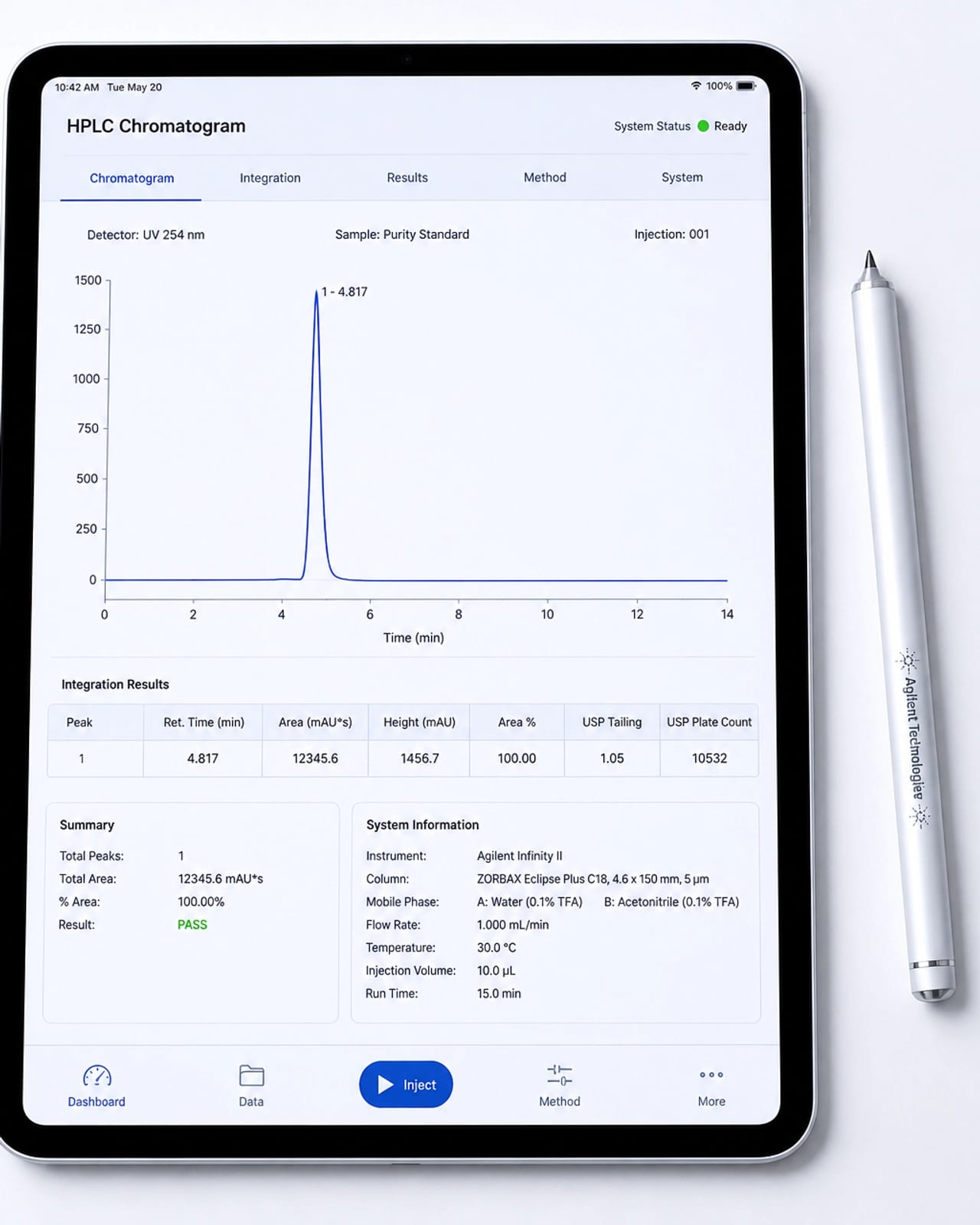
- Purity Testing: Skipping the critical HPLC/MS verification.
- Sterility: Manufacturing in non-clinical environments, leading to contamination.
The Matt Rule: Research isn’t a race to the bottom of the price list; it’s an investment in biological accuracy.
Red Flag #1: The Missing or Generic COA
A Certificate of Analysis (COA) is the only “ID card” a peptide has. If a vendor doesn’t prominently display a batch-specific COA: or refuses to provide one when asked: walk away.
But beware: some vendors are getting “creative” with Photoshop. Look for these specific signals that a COA is authentic:
- Batch-Specific Data: The batch number on your vial must match the batch number on the report.
- Verifiable Lab: The testing should be done by a reputable third-party facility (e.g., MZ Biolabs or Janoshik). You should be able to cross-reference the report on the lab’s own website.
- Recent Dates: Peptides degrade over time. A COA from 2022 isn’t going to tell you much about a vial you’re buying in 2026.