
Hypertrophy vs. Hyperplasia: The New Science of Growth
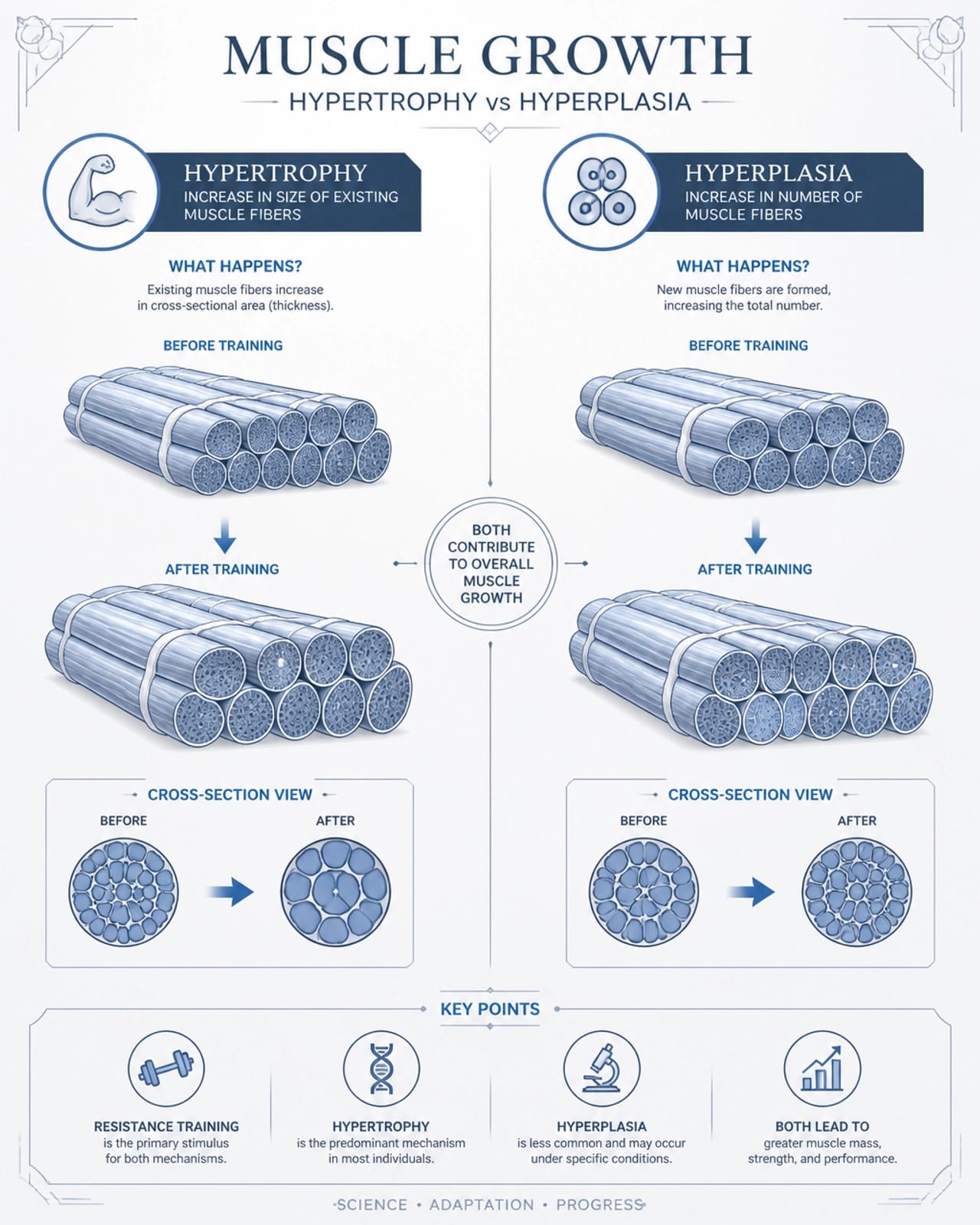
To understand why IGF-1 LR3 is a game-changer, we need to distinguish between two biological pathways: Hypertrophy and Hyperplasia.
- Hypertrophy: This is the traditional “muscle growth” we all know. Your existing muscle fibers get thicker and more voluminous through resistance training and protein synthesis. You aren’t growing new muscle; you’re just making what you have bigger.
- Hyperplasia: This is the holy grail. It refers to the formation of new muscle fibers. By stimulating satellite cell activation and mitogenesis, IGF-1 LR3 helps the body create brand-new muscle cells, effectively increasing the total capacity of your muscle tissue.
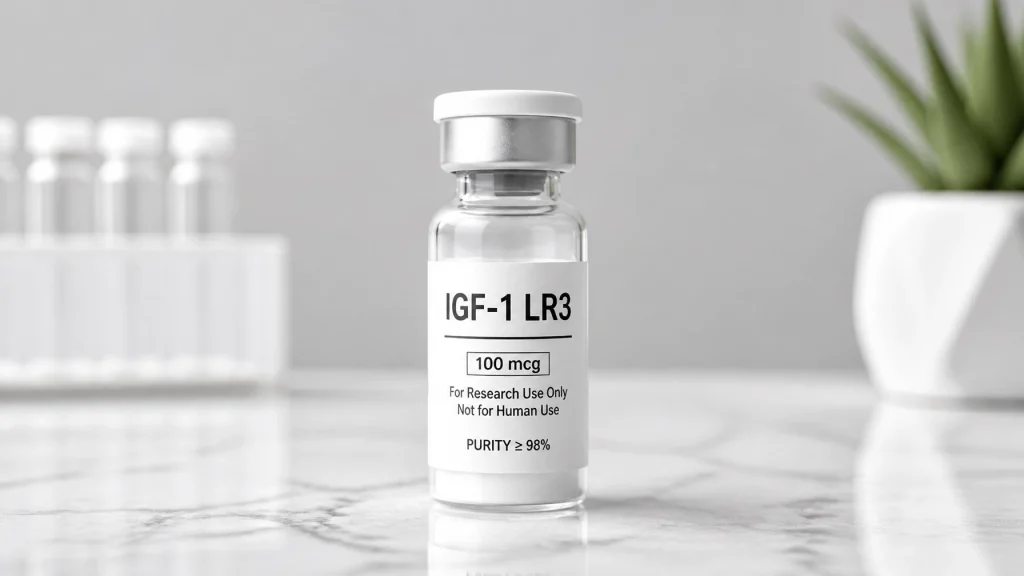
What Makes IGF-1 LR3 the “Gold Standard”?
Not all IGF-1 is created equal. While your body naturally produces Insulin-like Growth Factor-1, it has a notoriously short shelf-life in the bloodstream: roughly 20 minutes.
IGF-1 LR3 (Long R3) is a sophisticated, synthetic analog designed to bypass these limitations through two critical structural modifications:
- The 13-Amino-Acid Extension: This N-terminal extension significantly increases its stability.
- The Arginine Substitution: By swapping Glutamic Acid for Arginine at the 3rd position, the peptide effectively “cloaks” itself from IGF-binding proteins (IGFBPs).
The Result? A 20-30 Hour Half-Life.
Because it doesn’t get bound and neutralized by the body’s regulatory proteins, IGF-1 LR3 remains free and bioactive for up to 30 hours. This creates a sustained anabolic environment that “regular” IGF-1 simply cannot match. It’s the difference between a quick flash in the pan and a steady, high-octane burn.
