
The RICE Fallacy: Why Passive Healing is Failing You
For decades, RICE was the gold standard. Got a sprain? Ice it. Got a tear? Rest it. But modern sports science is pivoting. We now know that complete rest often leads to muscle atrophy and stiffness, while excessive icing can actually combat the very inflammatory processes required to kickstart healing.
Think of your injury as a construction site. Traditional RICE is like putting a “Wet Paint” sign on the fence and walking away for a month. You aren’t actually fixing the structure; you’re just making sure no one touches it.
Modern Active Recovery, however, is about sending in a specialized team of architects and builders. Instead of shutting down the site, we’re optimizing the environment. This is where research compounds and metabolic signaling come into play. By utilizing specific amino acid chains, athletes are revolutionizing the way they approach the proliferation and remodeling phases of healing.

Image Prompt: Clean, minimalistic product photography. A high-end, blurred athlete in the background doing light stretching in a clinical, brightly lit luxury gym. Soft neutral tones.
Enter the Messengers: How P3ptides Signal Repair
So, what exactly are these “p3ptides” everyone in the VIP circles is whispering about?
In simple terms, they are short chains of amino acids that act as biological messengers. They don’t just “add” something to your body; they signal your cells to perform specific functions. Whether it’s producing more collagen, increasing blood flow (angiogenesis), or activating dormant muscle stem cells (satellite cells), these compounds act as the “master key” to your metabolic pathways.
For an Australian athlete facing a 12-month recovery timeline for a ligament tear, the prospect of reducing that downtime by 30% to 50% is transformative. It’s the difference between a lost season and a comeback story.
The “Big Three” of Australian Body Repair
When we talk about injury management, three specific compounds lead the charge in the research community:
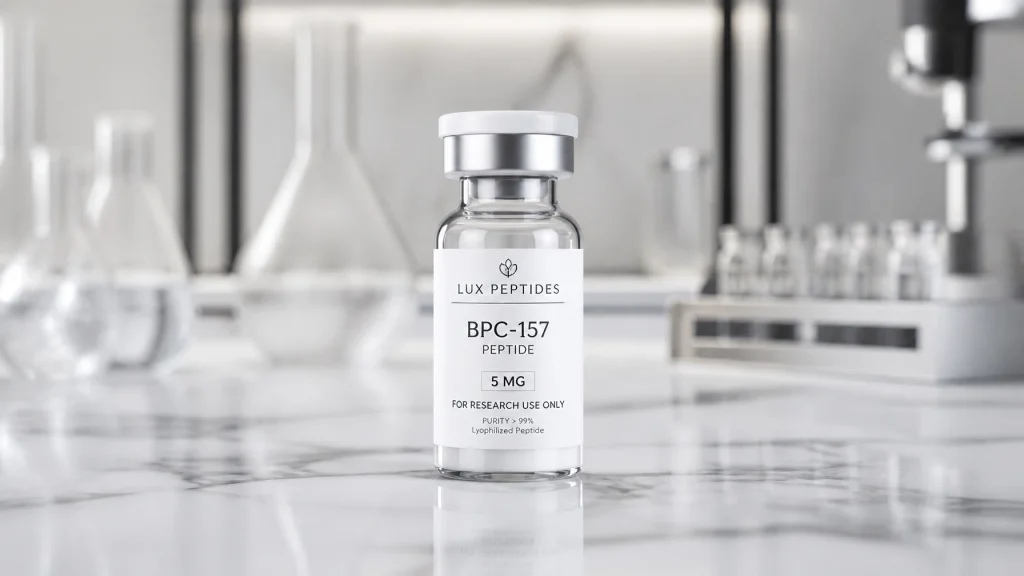
- BPC-157 (The Body Protective Compound): Derived from human gastric juice, this is the “Site Manager.” It excels at repairing tendons and ligaments: areas that naturally have poor blood flow. It triggers angiogenesis, building new “roads” (blood vessels) to deliver nutrients directly to the tear.
- TB-500 (Thymosin Beta-4): This is the “Mobilizer.” It works with actin, a protein that helps cells move. TB-500 signals repair cells to migrate directly to the injury site. If BPC-157 builds the roads, TB-500 drives the trucks.
- MGF (Mechano Growth Factor): This is the “Builder.” Released locally when muscle fibers are stressed, MGF triggers the growth of new muscle fibers and activates satellite cells to repair the damage.
