
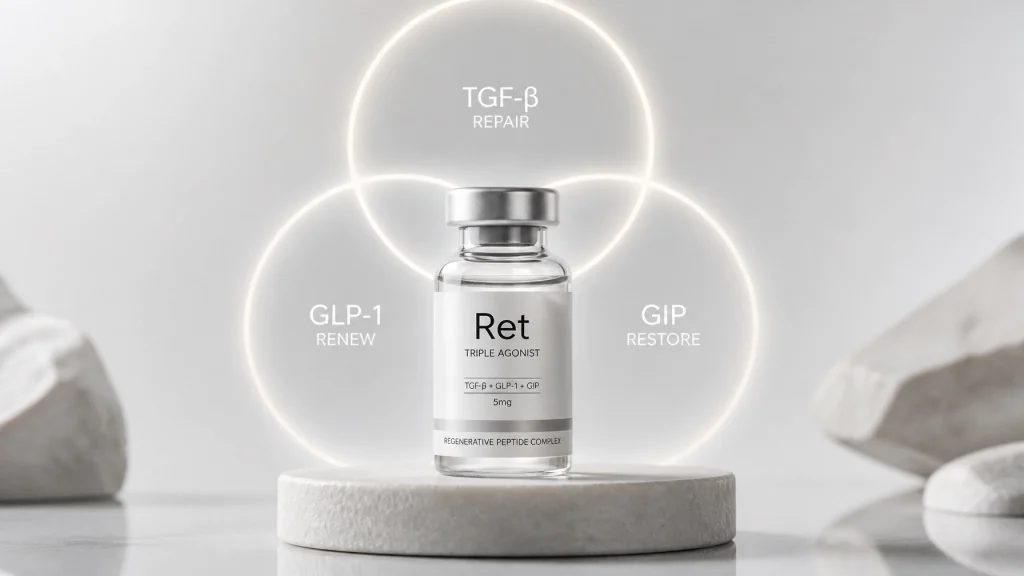
The Evolution of Incretin Science
To understand where we are, we have to look at where we started. The journey of incretin mimetics: peptides that mimic natural gut hormones: has moved through three distinct “generations.”
- 1st Generation (Pure GLP-1 Agonists): Think Semaglutide. These focus on the Glucagon-like Peptide-1 receptor to slow gastric emptying and quiet the brain’s hunger signals.
- 2nd Generation (Dual Agonists): This is where Tirz stepped in. By agonizing both GLP-1 and GIP (Glucose-dependent Insulinotropic Polypeptide) receptors, researchers found a synergistic effect that surpassed pure GLP-1 alone.
- 3rd Generation (Triple Agonists): Enter Ret. This molecule targets three separate pathways simultaneously: GLP-1, GIP, and the Glucagon receptor.
By pulling three metabolic levers at once, Ret doesn’t just reduce your appetite; it actively revolutionizes how your body expends energy.
Breaking Down the “Triple G” Mechanism
The “Secret Sauce” of Ret lies in its triple-agonist profile. Each “G” hormone contributes a specific physiological outcome, creating a symphony of fat loss.
1. GLP-1 Agonism: The Hunger Silencer
The GLP-1 component is your primary defense against “food noise.” It interacts with the satiety centers in your brain to make you feel full with smaller portions and keeps food in your stomach longer. It’s the foundational pillar of modern weight management.
2. GIP Agonism: The Metabolic Stabilizer
GIP works alongside GLP-1 to enhance insulin secretion and improve energy balance. In the brain, GIP receptor activation has been shown to modulate energy intake in obese subjects, effectively potentiating the weight-loss effects of GLP-1.
3. Glucagon Agonism: The Energy Burner (The Game Changer)
This is what sets Ret apart from Tirz. Traditionally, glucagon was thought to simply raise blood sugar. However, the new science shows that when carefully balanced with GLP-1 and GIP, glucagon activation increases energy expenditure and promotes thermogenesis.
In simple terms: While GLP-1 and GIP reduce the “calories in,” the Glucagon component cranks up the “calories out.” It turns your body into a more efficient calorie-burning machine, even at rest.
