
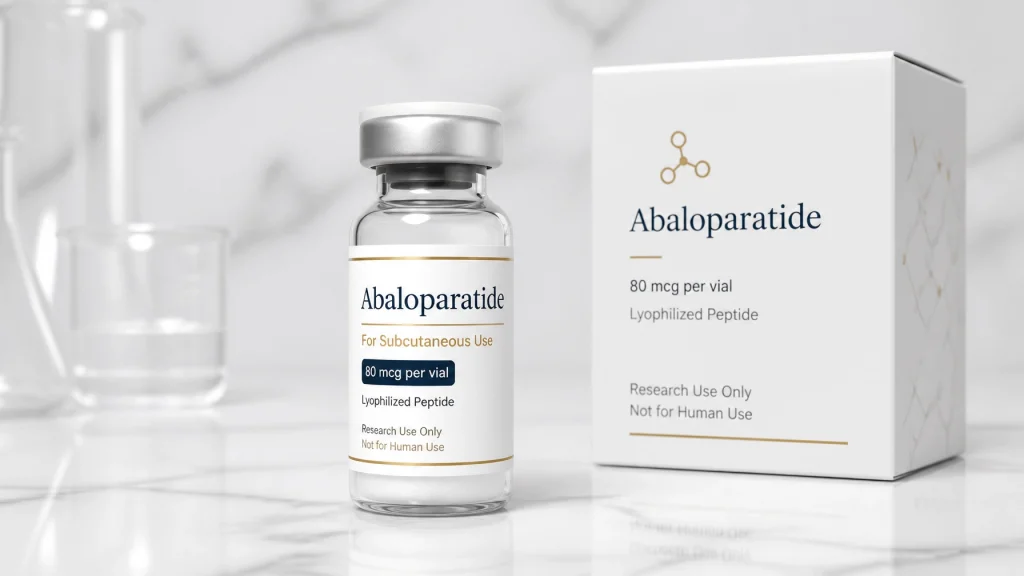
The Bone-Building Renaissance: Why Anabolics Matter
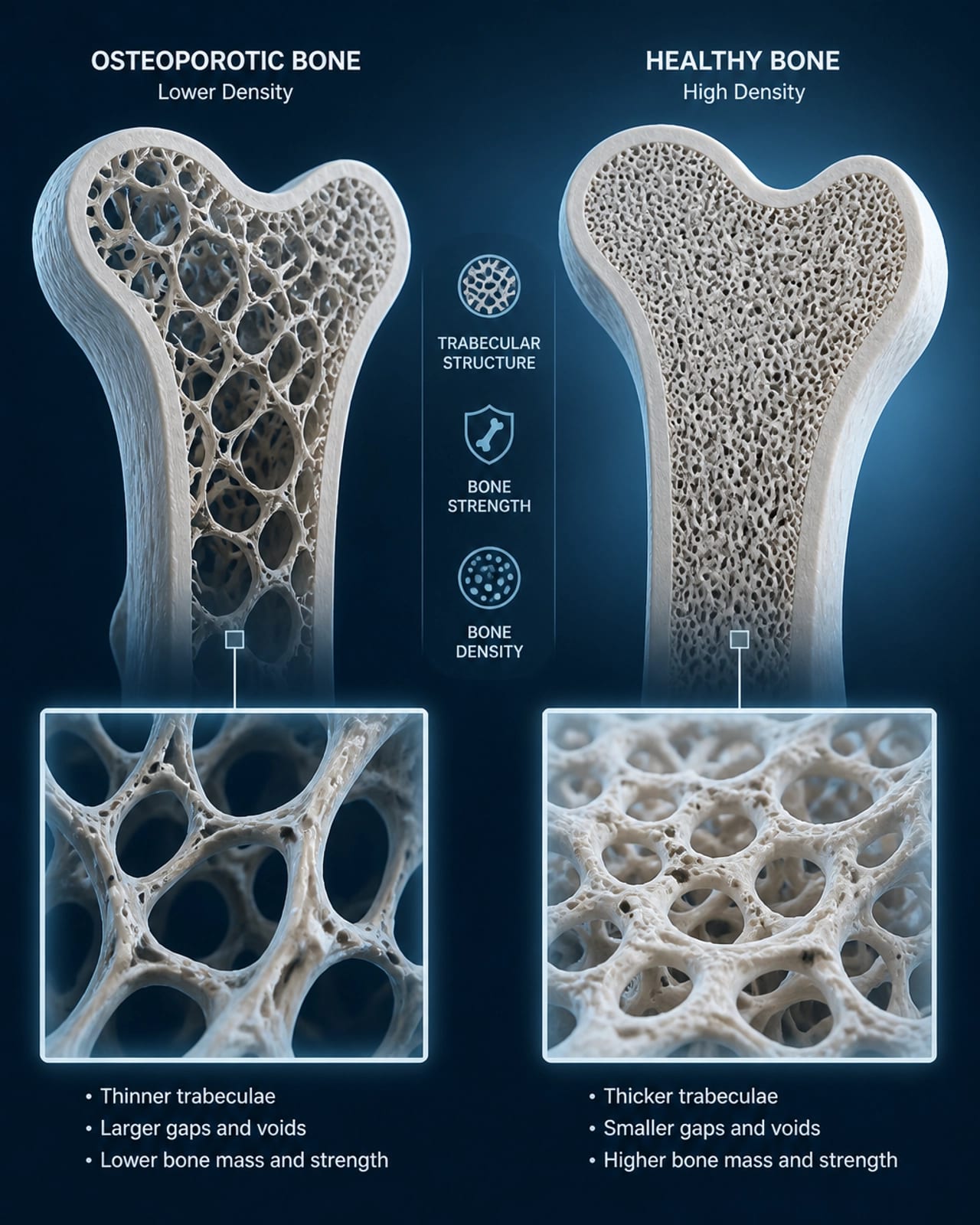
Osteoporosis is often called the “silent thief.” It slowly saps the structural integrity of your skeletal system until a fracture occurs. Traditional treatments, like bisphosphonates, are “antiresorptive”: meaning they stop the bone from breaking down. That’s fine, but it’s a defensive play.
Abaloparatide represents an offensive strategy. It is a parathyroid hormone-related protein (PTHrP) analog. Unlike defensive drugs, Abaloparatide is an anabolic agent; it stimulates the osteoblasts (the cells that build bone) to get to work. It doesn’t just stop the rot: it actively transforms the landscape of your skeleton.
Abaloparatide vs Teriparatide: The Tale of the Tape
When we compare these two, we aren’t just looking at marketing fluff. We’re looking at the hard data from the landmark ACTIVE trial. This 18-month, randomized, double-blind clinical trial compared Abaloparatide directly against both a placebo and Teriparatide.
The goal? To see which compound could provide the most robust defense against fractures while maximizing BMD gains at critical sites like the lumbar spine and hip.
1. BMD Gains: The Cortical Bone Advantage
The ACTIVE trial revealed something fascinating. While both peptides significantly increased bone mineral density compared to the placebo, Abaloparatide showed modestly greater gains, especially in sites rich in cortical bone.
- Total Hip & Femoral Neck: Abaloparatide consistently outperformed Teriparatide at these sites. Why does this matter? Because hip fractures are among the most debilitating injuries in the longevity space. By targeting these areas more effectively, Abaloparatide provides a high-tech solution for one of biology’s most pressing needs.
- Lumbar Spine: Both compounds showed massive gains here, but Abaloparatide maintained a slight edge in speed and density accrual.
2. The Hypercalcemia Hurdle
One of the historical “side effects” of anabolic bone peptides like Teriparatide is hypercalcemia: an excess of calcium in the blood. While often manageable, it’s a hurdle researchers have been trying to clear for years.
This is where Abaloparatide truly shines as a “scientific luxury.” The ACTIVE trial data showed:
- Abaloparatide Hypercalcemia Rate: ~3.4%
- Teriparatide Hypercalcemia Rate: ~6.4%
That is a 51% lower risk of hypercalcemia. For researchers and biohackers prioritizing a clean, refined safety profile, this data point is a game-changer. You get the bone-building power without the same level of calcemic stress on the system.
