The Full-Length HGH Legacy: A Double-Edged Sword
To understand why AOD-9604 is so revolutionary, we have to look at what it’s replacing. Full-length Human Growth Hormone is a 191-amino acid polypeptide. It’s produced naturally in the pituitary gland and governs everything from bone density and muscle growth to cell repair and metabolic function.
In a research setting, HGH is a powerhouse. It triggers the liver to produce IGF-1 (Insulin-like Growth Factor 1), which is responsible for much of its anabolic (growth-promoting) effects. However, for those specifically interested in metabolic mastery and fat loss, HGH is often “too much hormone.”
The Side Effect Struggle
When you introduce systemic HGH, you aren’t just telling the body to burn fat. You’re telling it to grow. This leads to several documented hurdles:
- Insulin Resistance: HGH can significantly disrupt glucose metabolism, leading to elevated blood sugar and decreased insulin sensitivity, a major red flag for metabolic health.
- Acromegaly-lite: Supraphysiological levels can lead to the growth of bone and internal organs.
- Water Retention: The “bloated” look often associated with HGH is due to systemic sodium and water retention.
For researchers focused on lean tissue preservation and fat oxidation, these aren’t just side effects; they’re dealbreakers.
What is AOD-9604? The Precision Fragment
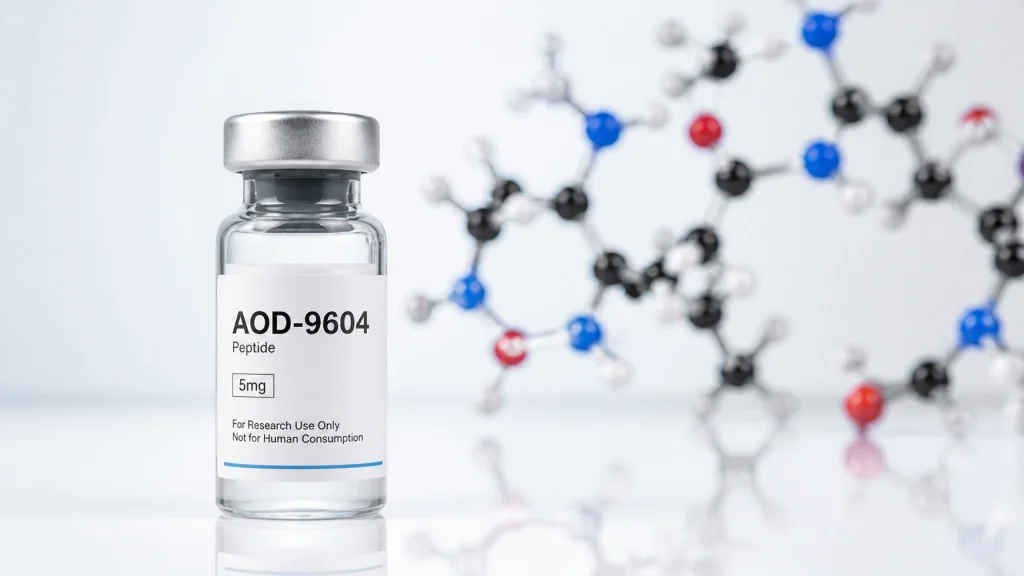
AOD-9604 (Advanced Obesity Drug) is a synthetic analog of the C-terminal fragment of HGH (specifically residues 177–191). Scientists discovered that the fat-burning properties of growth hormone aren’t spread out across the whole 191-amino acid chain. Instead, they are concentrated in this tiny, 15-amino acid tail.
By isolating this fragment and adding a tyrosine molecule to the end for stability, researchers created a peptide that mimics the lipolytic (fat-breaking) effects of HGH without engaging the growth-promoting or insulin-disrupting receptors.
The “Lipolysis Loophole”
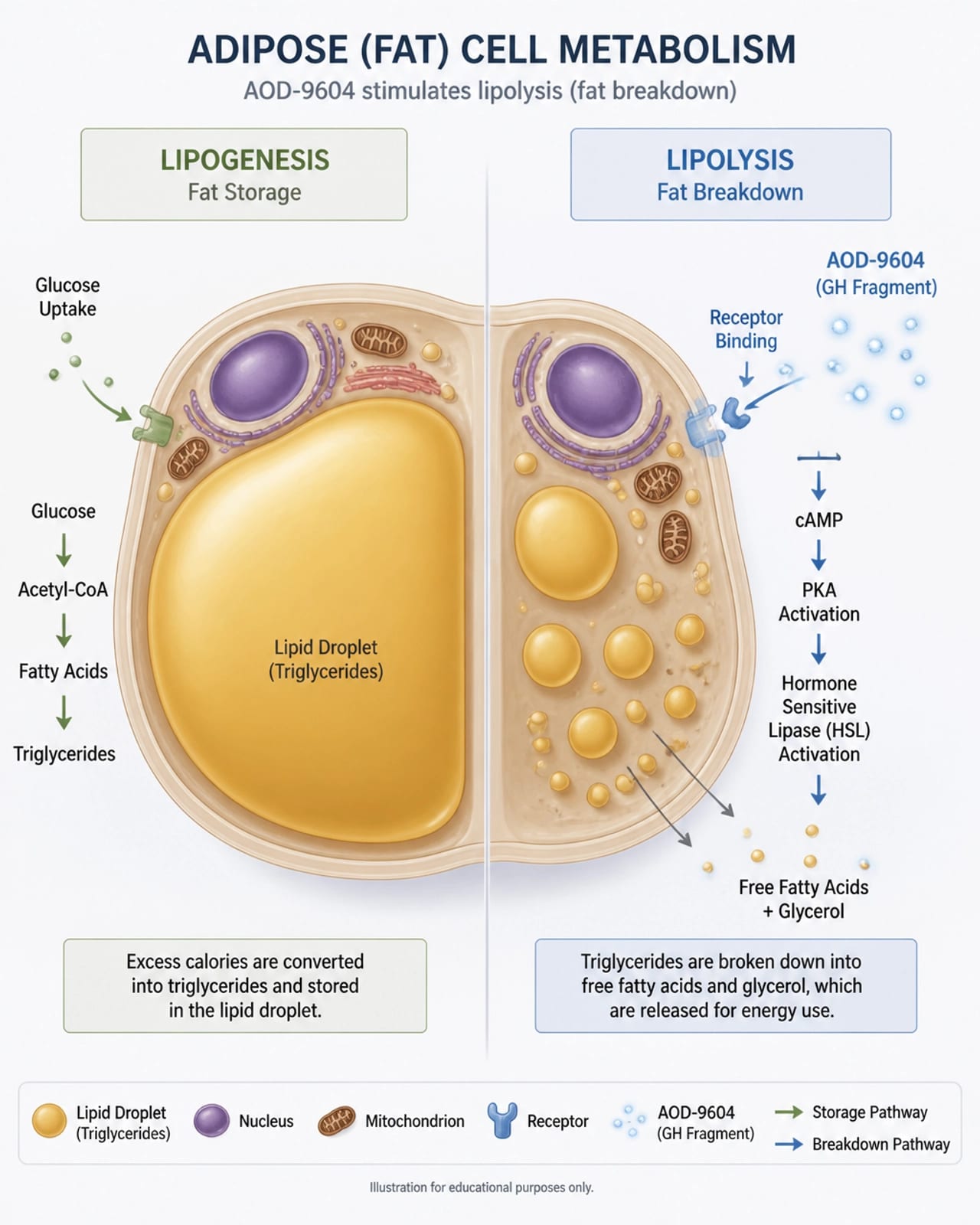
AOD-9604 works by stimulating the Beta-3 adrenergic receptors. These receptors are primarily located in adipose tissue (fat cells). When AOD-9604 binds to these sites, it triggers a cascade that forces the fat cell to release its stored triglycerides into the bloodstream to be used as energy.
At the same time, it inhibits lipogenesis, the process where the body creates new fat cells. It’s a two-pronged attack: it burns what you have and stops what’s coming.