

The Triple-Threat Mechanism: What is Tesofensine?
At its core, Tesofensine is a highly sophisticated research compound. While some metabolic tools focus on the gut or insulin sensitivity (much like our friends Ret and Tirz), Tesofensine goes straight to the source: the Central Nervous System (CNS).
As an SNDRI, it blocks the reuptake of three critical neurotransmitters: Serotonin, Norepinephrine, and Dopamine. By preventing these chemicals from being reabsorbed, Tesofensine effectively “amplifies” their presence in the synaptic cleft, prolonging their signals and fundamentally altering the metabolic and hedonic state of the brain.
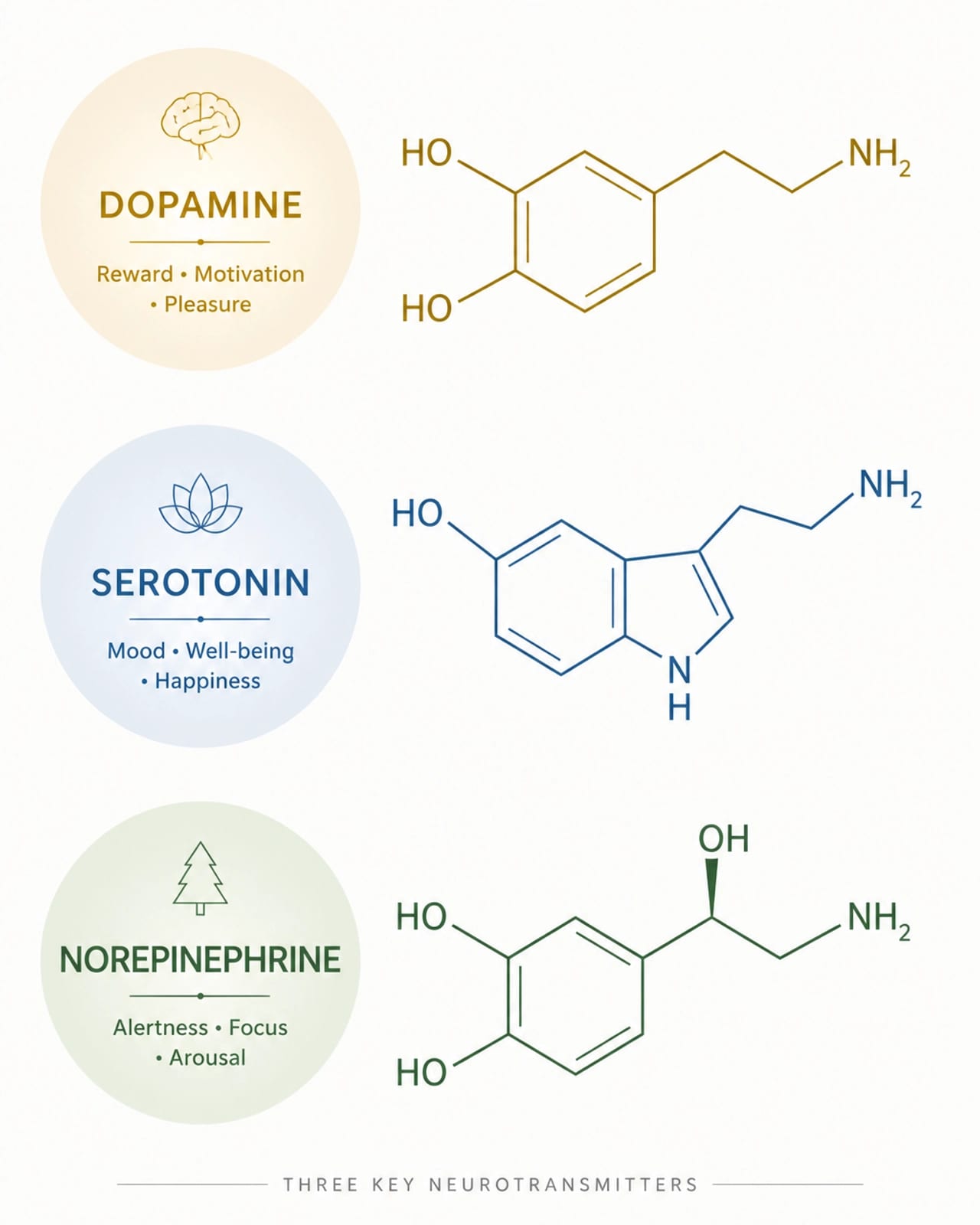
1. Serotonin (The Satiety Signal)
Serotonin is the classic “feel-good” chemical, but in the context of feeding, it’s the primary signal for meal termination. By blocking the Serotonin Transporter (SERT), Tesofensine increases serotonergic activity in the hypothalamus. The result? A research subject feels “fuller” faster and stays satisfied longer after a meal.
2. Norepinephrine (The Metabolic Spark)
By inhibiting the Norepinephrine Transporter (NET), Tesofensine boosts adrenergic tone. This doesn’t just help suppress appetite; it also has a thermogenic effect. Research indicates that increased norepinephrine can elevate resting energy expenditure, making the body a more efficient machine even at a standstill.
3. Dopamine (The Reward Regulator)
This is where the magic happens regarding “food noise.” By blocking the Dopamine Transporter (DAT), Tesofensine increases synaptic dopamine in the brain’s reward pathways. While many associate dopamine with “pleasure,” its role in obesity research is more about normalizing a dysfunctional reward system.
Silencing the Reward Center: Ending the ‘Food Noise’
For many struggling with metabolic plateaus, the issue isn’t just hunger: it’s the reward-driven pull of food. In a healthy state, dopamine spikes when we eat something calorie-dense. However, in states of chronic overnutrition or metabolic dysfunction, the brain’s dopamine receptors can become desensitized. This leads to a frantic search for more food to achieve the same reward: the essence of food noise.
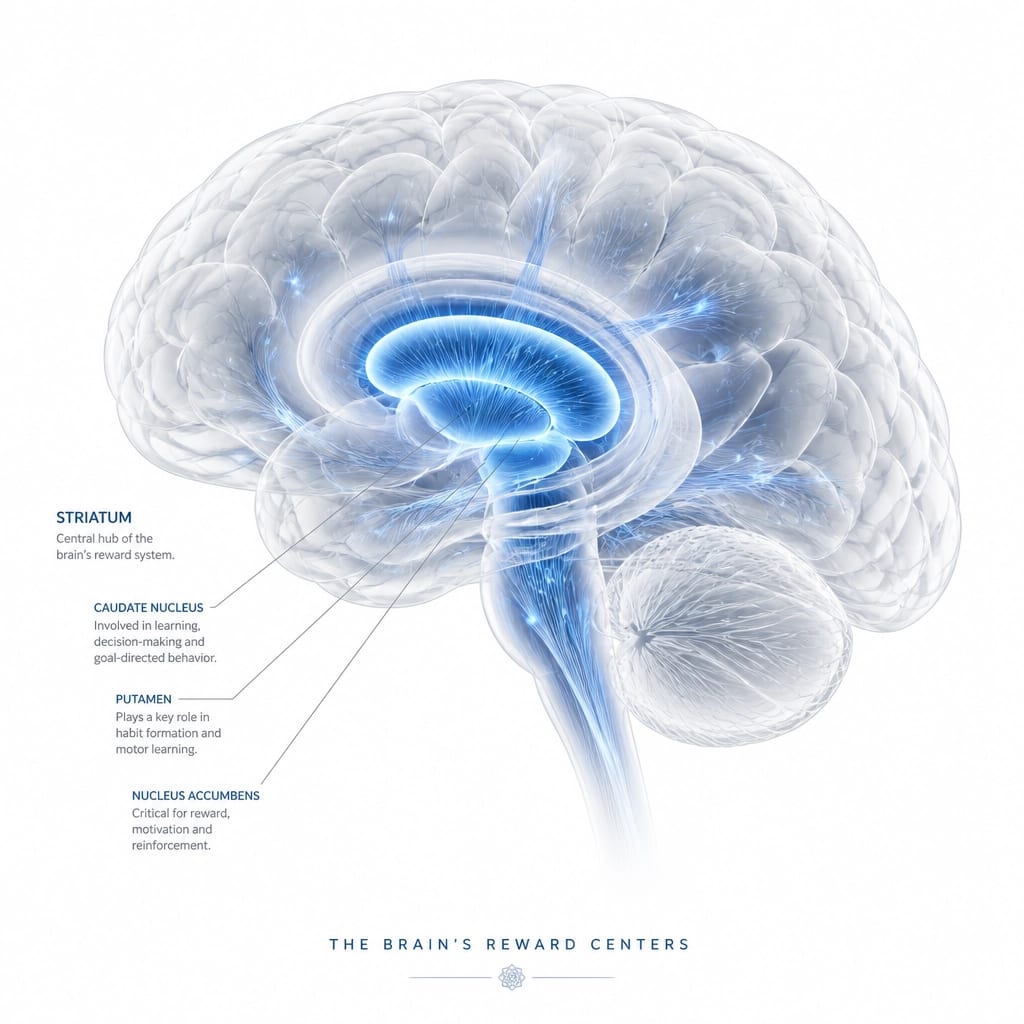
Tesofensine’s ability to reach ~80% DAT occupancy at optimal research dosages means it can effectively “fill the tank” of the dopamine system. When the mesolimbic reward system (the pathway from the ventral tegmental area to the nucleus accumbens) is sufficiently stimulated by circulating dopamine, the desperate, intrusive cravings for high-palatability foods begin to fade into the background.
Essentially, Tesofensine doesn’t just stop you from being hungry; it helps the brain realize it doesn’t need the dopamine hit from the next snack. It’s the difference between willpower (fighting the noise) and peace (silencing the noise).
