
The Science of the “Blue” Molecule
GHK-Cu is a naturally occurring copper complex first identified in human plasma. It’s a tripeptide (glycyl-L-histidyl-L-lysine) that has a freakishly high affinity for copper. When these two bond, they form a powerhouse complex that acts as a signal for tissue repair.
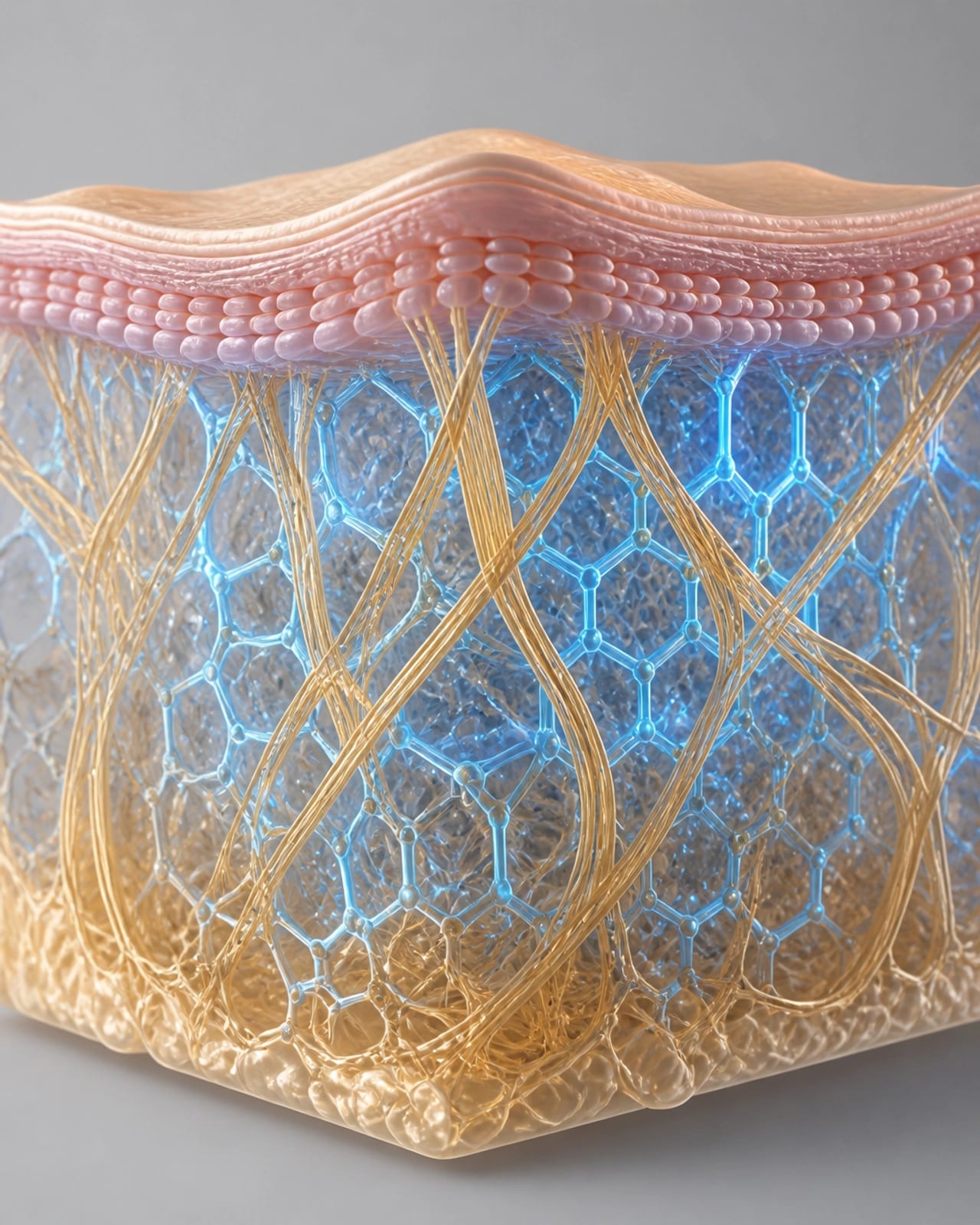
Think of GHK-Cuo as the “General Contractor” of your skin. It doesn’t just show up and throw some paint on the walls; it inspects the foundation, reinforces the beams, and ensures the plumbing is running correctly. In scientific terms, it targets the extracellular matrix (ECM).
1. Unlocking the Matrix: Collagen and Elastin Stimulation
The most famous benefit of GHK-Coo is its ability to Unlock the skin’s natural production of type I collagen and elastin. These are the “scaffolding” proteins that give skin its thickness and “snap.”
Most topical products simply sit on the surface, but in a research setting, GHK-Cuo has been shown to stimulate fibroblasts: the cells responsible for creating these proteins: far more effectively than traditional retinoic acid or Vitamin C. By increasing the density of the dermis, it helps Combat sagging and fine lines from the inside out.
2. The Remodeling Master: MMPs and TIMPs
Here is where GHK-Cuo gets really clever. Skin health isn’t just about dumping more collagen into the system. If you have too much “old,” damaged collagen, your skin looks leathery and stiff.
GHK-Cuo regulates Matrix Metalloproteinases (MMPs): enzymes that break down damaged tissue: and TIMPs, which protect healthy tissue. This dual action ensures that the skin is constantly “remodeling.” It clears out the “trash” (damaged proteins) and replaces it with high-quality, organized fibers. This is the secret to true skin tightening: it’s not just about volume; it’s about the architecture of the skin.
Why Copper? The Cross-Linking Factor
You might wonder why the “Cu” (Copper) part of the name is so vital. Copper is a co-factor for an enzyme called lysyl oxidase. This enzyme is the “glue” that cross-links collagen and elastin fibers together. Without enough bioavailable copper, your collagen is like a pile of loose sticks; with copper, it’s a sturdy, woven basket.
By delivering copper directly to the site of research, GHK-Coo ensures that the newly synthesized proteins are structurally sound and capable of withstanding the mechanical stress of daily life.
