

The Biological “Spark”: Understanding the GPR54 Connection
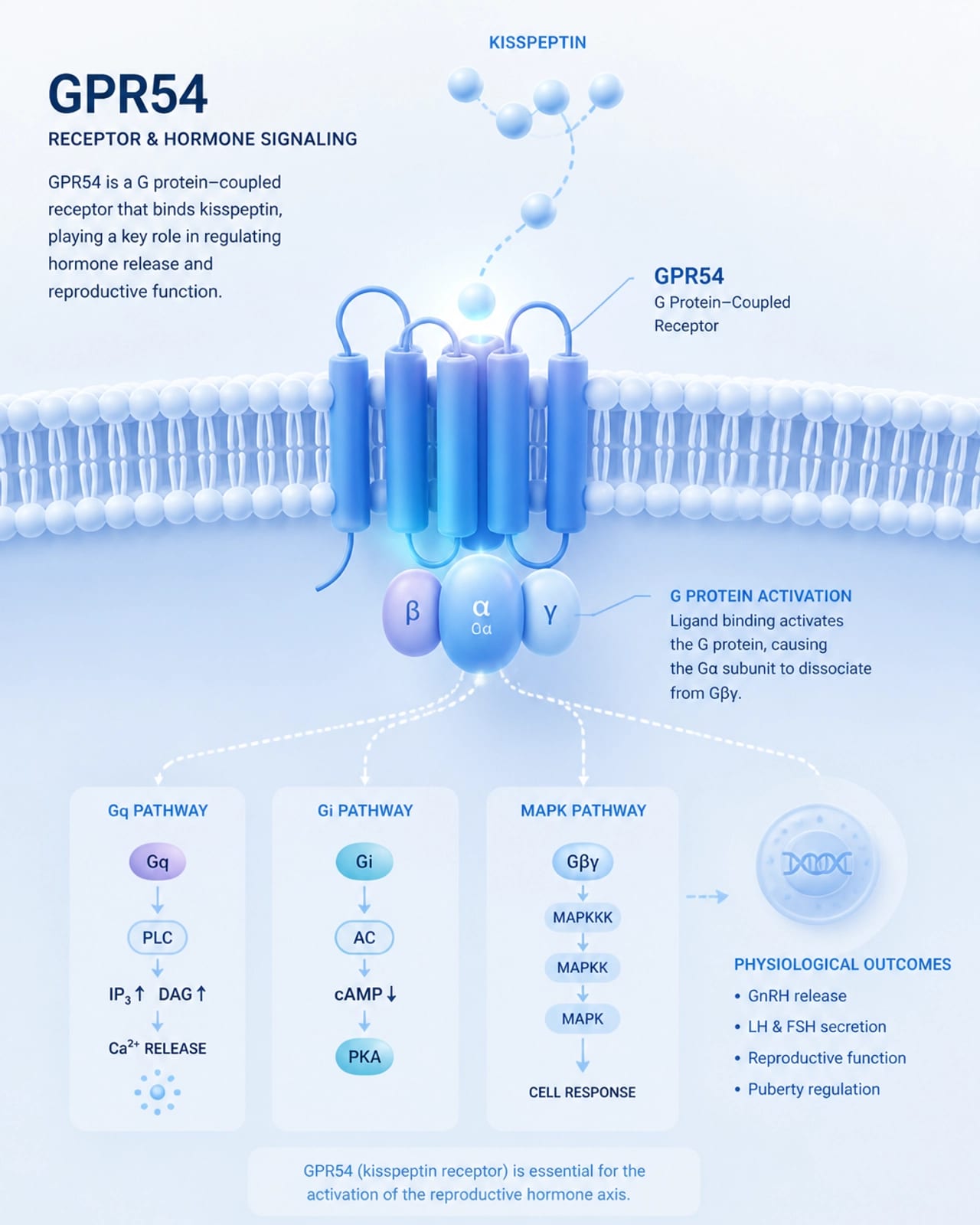
At the heart of Kisspeptin-10 research is its role as a potent agonist of the GPR54 receptor (also known as KISS1R). Think of GPR54 as a dormant switch located on GnRH neurons in the hypothalamus. When KP-10 binds to this receptor, it doesn’t just “nudge” the system; it initiates a high-intensity cascade of intracellular signaling.
Technically speaking, we are looking at the activation of the Gq/11-coupled GPCR pathway, which triggers phospholipase C-β (PLCβ). This leads to the mobilization of intracellular calcium and the activation of protein kinase C (PKC). In simpler terms? It provides the “spark” required for the pulsatile release of Gonadotropin-Releasing Hormone (GnRH).
Why Researchers are Switching to Kisspeptin-10
While there are various forms of kisspeptin (such as 54, 14, and 13), Kisspeptin-10 is the shortest active fragment that retains full potency. This makes it an incredibly efficient research compound for those looking to Revolutionize their understanding of hormonal vitality.
1. Direct GnRH Stimulation
Unlike other compounds that might work through secondary or tertiary pathways, KP-10 acts directly on the “gatekeeper” neurons. This allows for a much more controlled and observable stimulation of Luteinizing Hormone (LH) and Follicle-Stimulating Hormone (FSH).
2. Metabolic and Longevity Research
New data suggests that the Kisspeptin system isn’t just about reproduction. There is a profound link between energy status and kisspeptin signaling. For those of us in the metabolic space, often working with compounds like Ret or Tirz, understanding how the HPG axis interacts with metabolic health is the new frontier. Kisspeptin-10 serves as a vital bridge between these two worlds.
3. Neuroprotective Potential
Beyond the endocrine system, researchers are exploring KP-10 for its potential neuroprotective effects, particularly in how it manages neuronal inflammation and supports cellular resilience.
