
What is Sermorelin? The 1–29 Fragment Explained
At its core, Sermorelin (often referred to as GRF 1-29) is a synthetic analog of the naturally occurring Growth Hormone-Releasing Hormone (GHRH). In the human body, GHRH is produced in the hypothalamus and travels to the pituitary gland, where it acts as the master switch for the production of Growth Hormone (GH).
The full natural GHRH molecule is 44 amino acids long. However, researchers discovered that the first 29 amino acids contain the full functional power of the entire peptide. By isolating this 1–29 amino acid fragment, scientists created Sermorelin: a leaner, more targeted secretagogue that fits perfectly into the GHRH receptors of the anterior pituitary.
In the world of research chemicals, Sermorelin is prized for its ability to stimulate the pituitary “reserve.” As we age, our pituitary gland doesn’t necessarily lose its ability to produce GH; it simply stops receiving the signal to do so. Sermorelin revolutionizes this pathway by providing that missing signal, effectively “waking up” a dormant system.
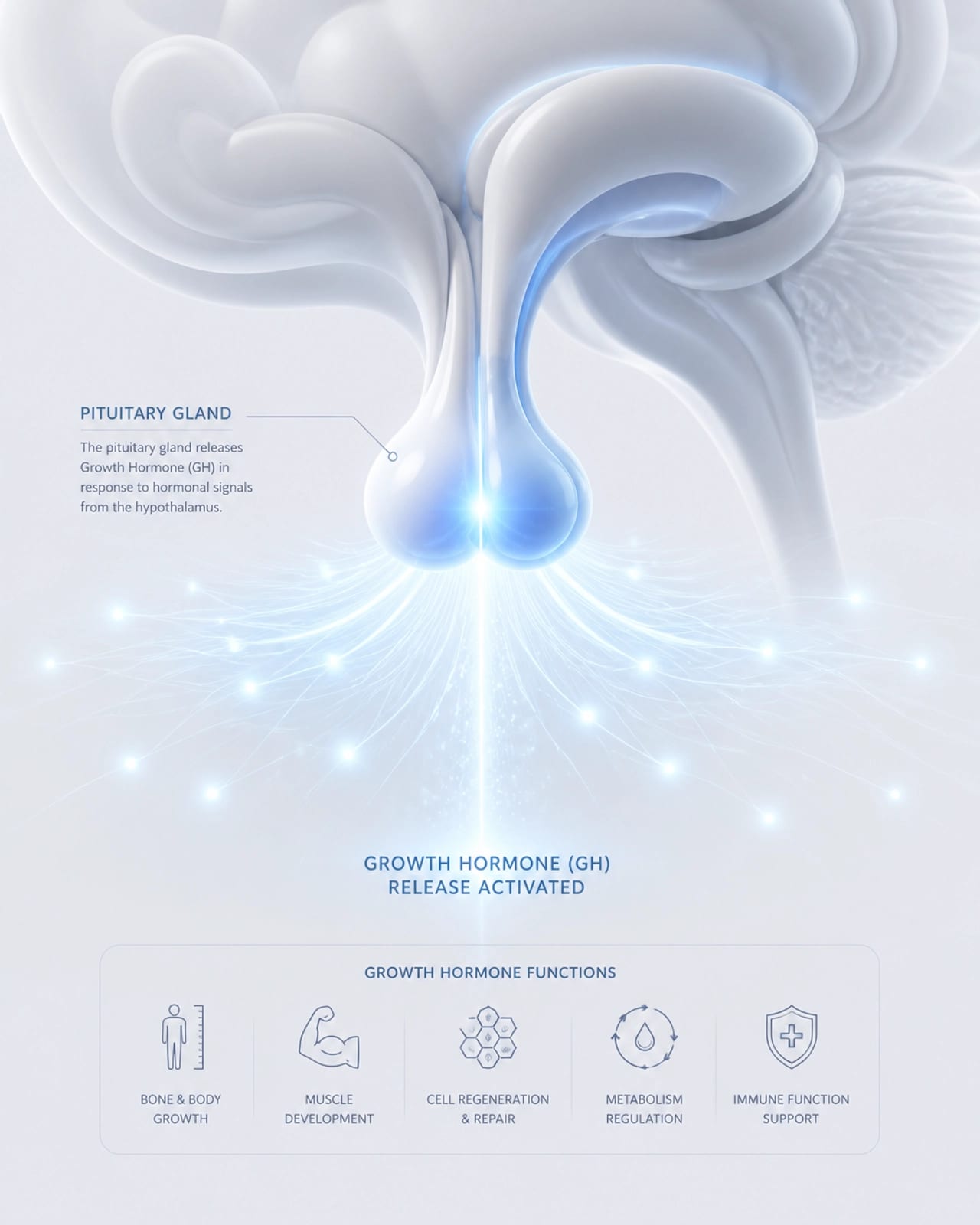
The Mechanism: Precision Pituitary Stimulation
One of the most transformative aspects of Sermorelin is how it respects the body’s internal regulatory systems. Unlike exogenous human growth hormone (rhGH), which floods the system with a flat, continuous wave of hormone, Sermorelin promotes a pulsatile release.
The Somatotroph Symphony
When Sermorelin binds to the GHRH receptors on somatotroph cells, it initiates a cascade of intracellular signaling (including the cAMP and MAPK pathways). This leads to the synthesis and episodic discharge of GH into the bloodstream. This is a critical distinction for researchers:
- Pulsatile Release: Mimics the natural, rhythmic surges of GH that occur during deep sleep (slow-wave sleep).
- Negative Feedback Loop: Because the body is still in control, the hypothalamic-pituitary-somatotropic axis remains active. If GH levels get too high, the body’s own somatostatin (the “off switch”) can still intervene.
This “scientific luxury” approach ensures that the subject doesn’t experience the harsh “shutdown” of endogenous production often associated with direct hormone replacement. It’s about restoring a youthful rhythm, not overriding it.
