
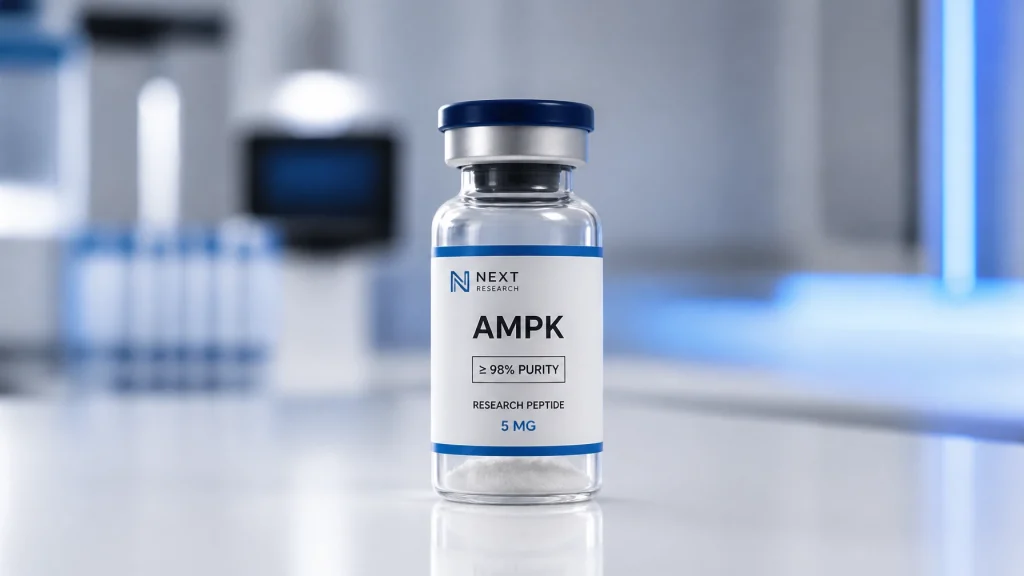
What is AMPK? The Cellular Master Switch
Before we get into the “how,” let’s talk about the “what.” AMPK (Adenosine Monophosphate-activated Protein Kinase) is often referred to by researchers as the “Master Metabolic Switch.”
Think of it as a sophisticated energy sensor located within every single cell of the body. Its primary job? To monitor the ATP:AMP ratio.
In plain English: ATP is your cell’s currency for energy. When ATP levels drop (which happens when you exercise, fast, or face metabolic stress), AMP levels rise. AMPK senses this shift and immediately “switches” the cell from energy-storage mode into energy-production mode.
Why This Matters for Your Research
In a modern environment characterized by sedentary lifestyles and calorie surpluses, many biological systems become “metabolically inflexible.” The AMPK switch gets stuck in the “off” position, leading to what we call metabolic sluggishness. By researching AMPK-activating peptides, we are exploring ways to manually flip that switch, forcing the body to prioritize fat oxidation and glucose efficiency even in the absence of traditional stressors.
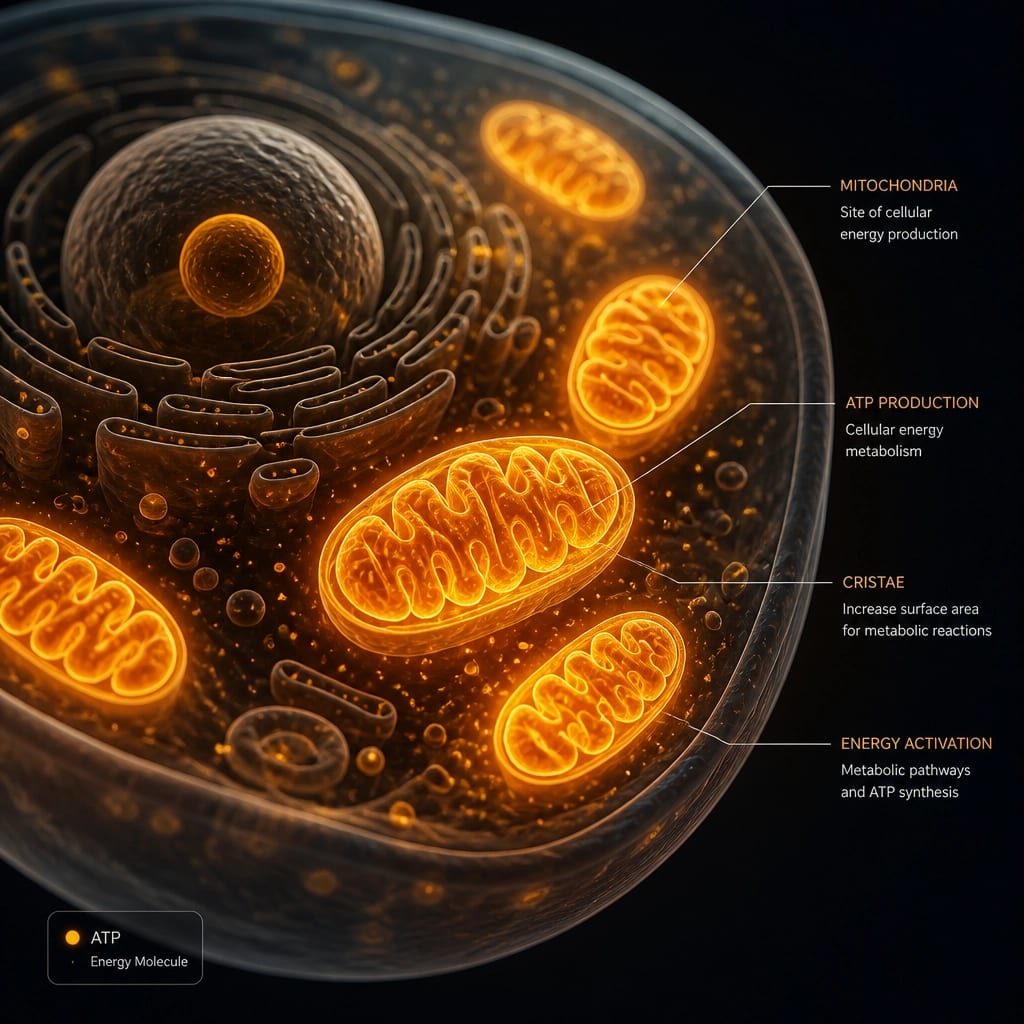
The Triple Threat: Fat Oxidation, Glucose Uptake, and Energy Efficiency
When you introduce an AMPK activator into a research model, you aren’t just targeting one symptom; you are rewiring the entire metabolic pathway. Here is the breakdown of how this compound combats metabolic dysfunction:
1. Accelerating Fat Oxidation
AMPK activation is a direct enemy of stored fat. It inhibits the enzyme acetyl-CoA carboxylase (ACC), which effectively shuts down the synthesis of new fatty acids. Simultaneously, it stimulates the expression of CPT-1, the “gatekeeper” that allows fatty acids to enter the mitochondria to be burned for fuel.
- The Result: A research environment where the body is primed to consume stored adipose tissue rather than hoarding it.
2. Enhancing Glucose Sensitivity
For those researching diabetes management or insulin resistance, AMPK is the holy grail. It promotes the translocation of glucose transporters (like GLUT4) to the cell membrane. This allows cells to suck up glucose from the bloodstream more efficiently, stabilizing blood sugar levels without requiring massive surges of insulin.
3. Shutting Down Lipogenesis
While “Ret” (our investigational triple agonist) works on the GLP-1/GIP/Glucagon receptors to manage appetite and gastric emptying, AMPK works at the site of the fat cell itself to stop it from growing. It’s a “bottom-up” approach to metabolic health that complements the “top-down” approach of Tirz and Ret research.
