
The Bio-Signature of Connection: Social Bonding Science
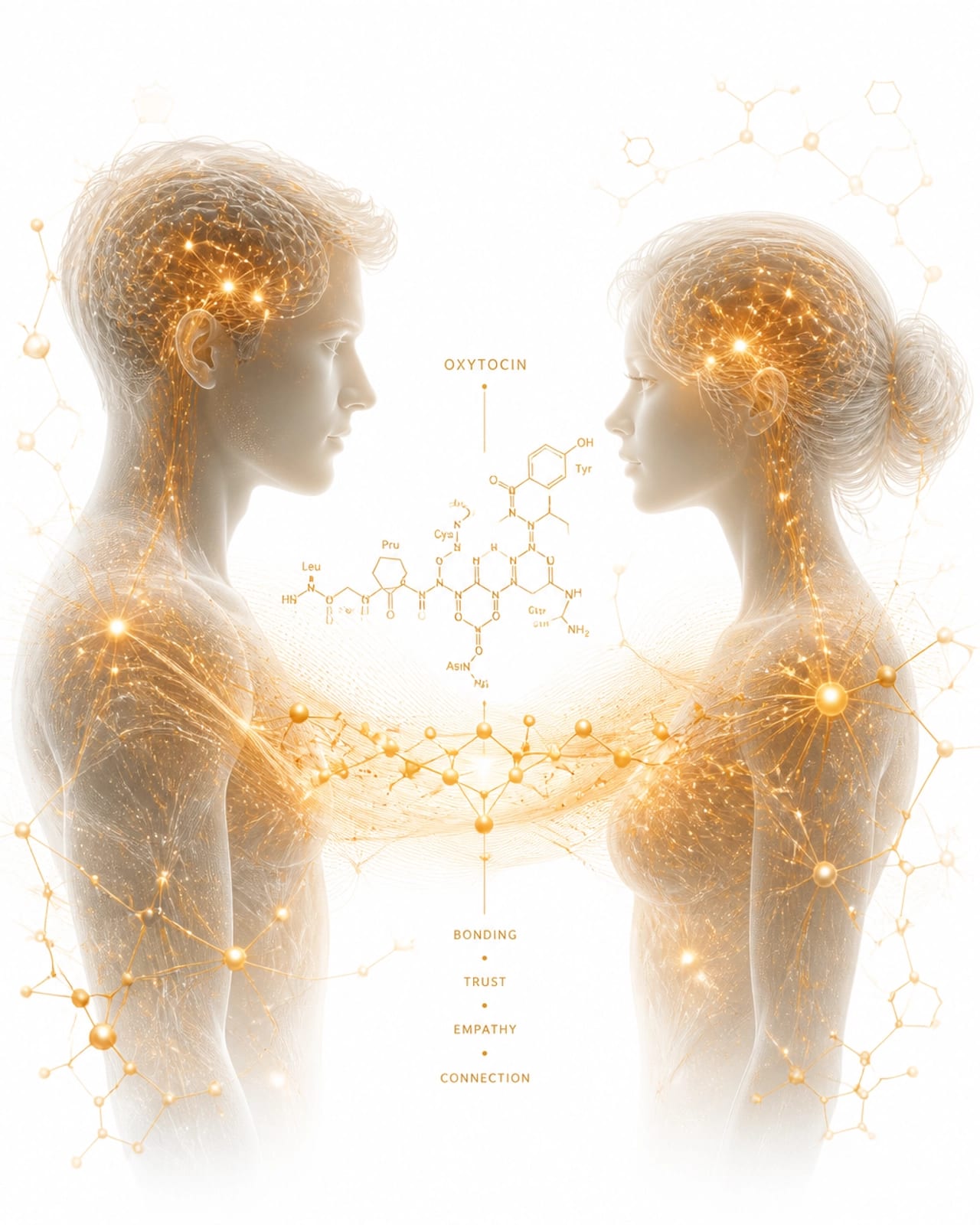
At its core, Oxytocin is a master regulator of prosocial behavior. In the research environment, we look at how this peptide modulates the mesolimbic dopamine system: the brain’s primary reward circuit. When Oxytocin is introduced into a research model, it doesn’t just “make things better”; it revolutionizes the way social cues are processed.
Research suggests that Oxytocin helps to:
- Unlock Trust: By reducing the activity of the amygdala (the brain’s fear center), Oxytocin may lower the threshold for social approach.
- Enhance Empathy: It heightens the salience of social information, making facial expressions and emotional nuances easier to decode.
- Forge Bonds: Whether it’s parent-infant attachment or pair-bonding between partners, Oxytocin acts as the “glue” that stabilizes long-term social structures.
For those exploring cognitive and social enhancers, stacking research protocols with neuro-focused peptides like P21 10mg or Cerebrolysin 60mg can provide a comprehensive look at how neural repair and social signaling intersect.
Stress Reduction and Cortisol Mitigation
We live in a high-cortisol world. Chronic stress isn’t just a feeling; it’s a biological state that degrades metabolic function and accelerates aging. This is where Oxytocin reveals its secondary: but perhaps more vital: research application: Anxiety Regulation.
Oxytocin serves as a potent anxiolytic (anxiety-reducer). In clinical research settings, the administration of Oxytocin has been shown to dampen the “Fight or Flight” response, leading to a measurable reduction in heart rate and blood pressure. By acting as a biological shield against stress, it allows the body to maintain a state of “Scientific Luxury”: a balance where repair and growth take precedence over survival-driven inflammation.
If your research focus is on stress management and recovery, you might also be looking at Triptorellin or Gonodorelin Acetate to understand how the HPG axis responds to various peptide-driven stimuli.
