
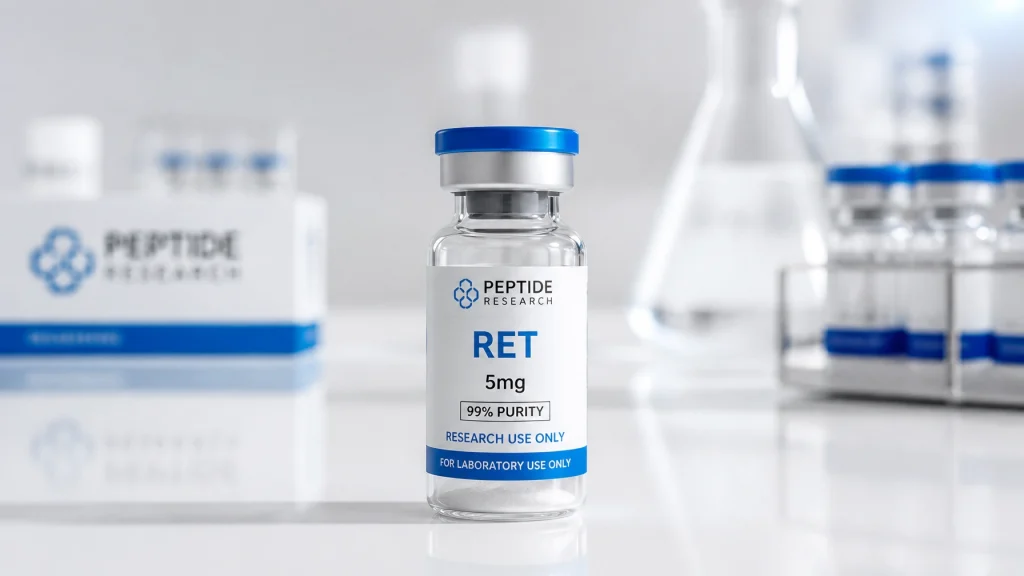
The Triple Threat: A New Era of Metabolic Mastery
For a while, the gold standard was the “dual agonist”: think of compounds like Tirz. These were revolutionary because they targeted two key pathways: GLP-1 and GIP. But Ret has taken it to a whole new level. It is a triple agonist, a high-tech solution designed to unlock your research potential by targeting three distinct metabolic receptors:
- GLP-1 (Glucagon-Like Peptide-1): The classic satiety signal. It helps manage appetite and ensures the body handles glucose with clinical precision.
- GIP (Glucose-Dependent Insulinotropic Polypeptide): This works in synergy with GLP-1 to enhance insulin secretion and, more importantly, may improve how the body manages adipose tissue.
- Glucagon Receptor (GCGR): This is the “secret sauce.” By adding glucagon agonism, Ret aims to revolutionize energy expenditure.
While earlier generations focused primarily on suppressing intake, Retatrutide peptide adds a “thermogenic” component. It’s like having a high-performance engine that not only runs cleaner but actually increases its own output.

Why “Ret” is Revolutionizing Research
The buzz around Retatrutide isn’t just marketing hype; it’s backed by data that has the scientific community stunned. In recent Phase 2 clinical trials, researchers observed that subjects using high-dose Ret achieved weight loss results of up to 24.2% over 48 weeks. To put that in perspective, that’s a significant jump over its predecessors.
Unlock Your Metabolic Potential
When we talk about “Transforming” your research, we mean looking at the body as a holistic system. Retatrutide doesn’t just “mask” hunger; it works to Combat metabolic sluggishness at a cellular level. By activating the glucagon receptor, it signals the liver and fatty tissues to increase fat oxidation. This dual-action: reducing what goes in while increasing what goes out: is why many are calling it the “Holy Grail” of metabolic research.
