
The Problem: The High Cost of a Leaky Barrier
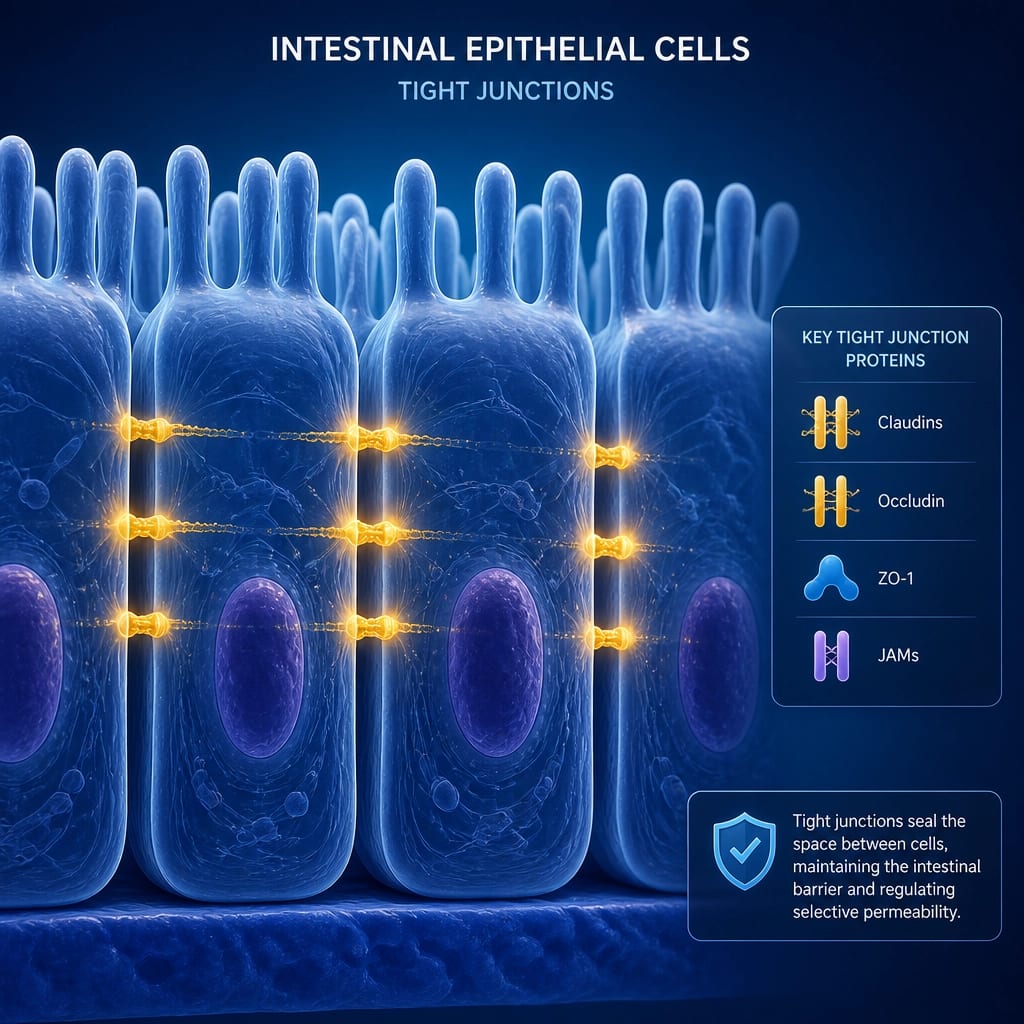
Think of your gut lining as a high-security facility. In a healthy state, it’s guarded by “tight junctions”: cellular gates that decide exactly what gets into your bloodstream and what stays out. When these gates fail, toxins, undigested food particles, and pathogens slip through, triggering a cascade of immune responses.
This isn’t just about a “bloated stomach.” We’re talking about systemic inflammation that can tank your energy, disrupt your hormones, and even affect your cognitive function. For those of us focused on longevity and metabolic function, a compromised barrier is the ultimate progress killer.
What is Larazotide Acetate?
Larazotide (also known in clinical circles as AT-1001) is a synthetic eight-amino-acid peptide. It’s classified as a zonulin receptor antagonist and a tight-junction regulator.
While many gut supports are broad-spectrum, Larazotide is a sniper. It is derived from a protein found in Vibrio cholerae, but don’t let that scare you: it’s been refined into a high-tech tool that mimics the body’s natural regulatory signals to keep the gut barrier “locked down.”
The Scientific Function:
- Classification: Octapeptide Zonulin Antagonist.
- Target: Zonulin Receptors (EGFR and PAR2).
- Mechanism: Prevents the disassembly of tight junctions.
