
What is BAM-15?
BAM-15 (short for N5,N6-bis(2-fluorophenyl) [1,2,5]oxadiazolo[3,4-b]pyrazine-5,6-diamine) is a small-molecule mitochondrial protonophore. In simpler terms, it’s a highly selective mitochondrial uncoupler.
In the world of cellular biology, mitochondria are the “powerhouses” that convert nutrients (fats and sugars) into ATP (adenosine triphosphate), the energy currency of the cell. Usually, this process is “coupled”, meaning the burning of fuel is directly linked to the production of energy. BAM-15 “uncouples” this process, allowing the body to burn calories without necessarily creating more ATP.
The “Wasteful” Advantage
Think of it like a car engine idling at a high RPM but not being in gear. You’re burning petrol, but you’re not moving. In a research context, this “metabolic wastefulness” is a massive advantage. By increasing energy expenditure at the cellular level, BAM-15 helps research subjects utilize stored fat as fuel even in a resting state.
Mechanism of Action: Unlocking Metabolic Pathways
To understand how BAM-15 can Revolutionize weight management research, we have to look at the proton motive force.
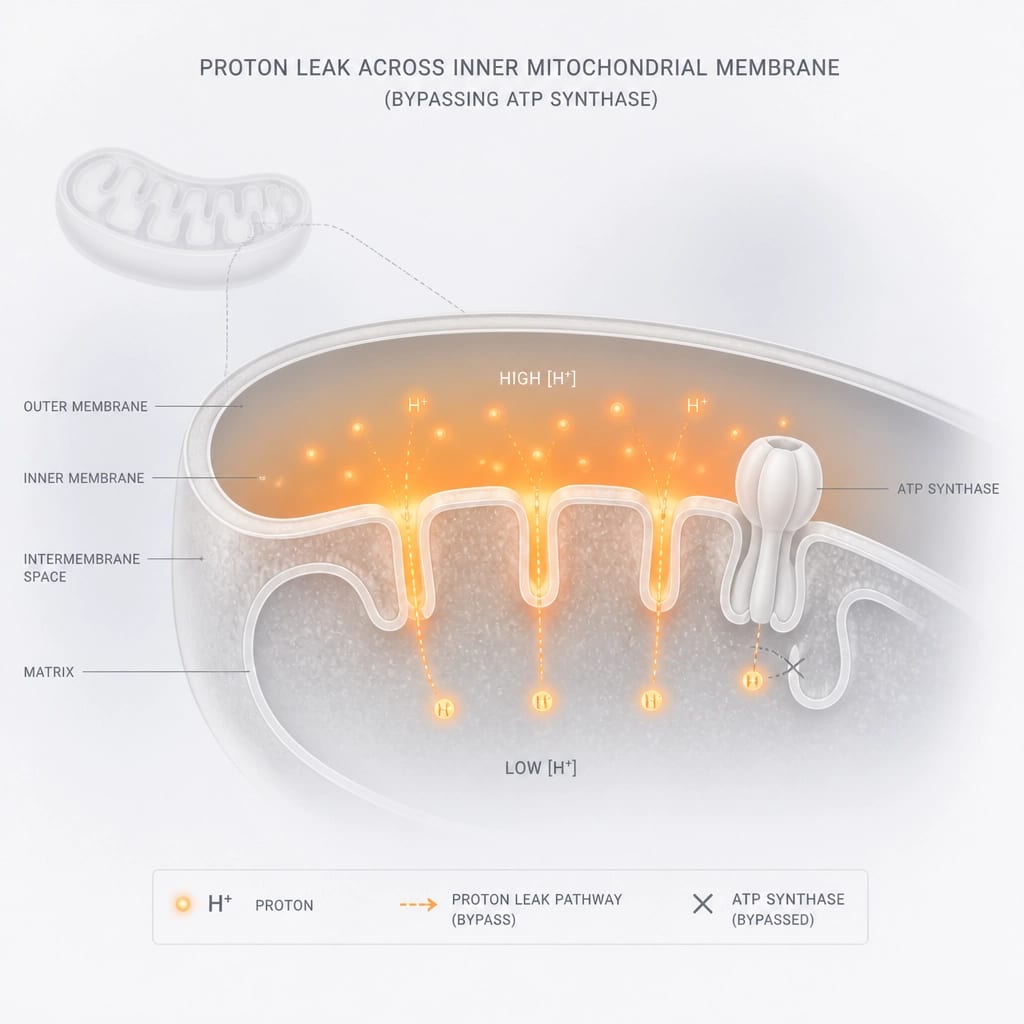
- Normal Respiration: Electrons from nutrients are passed through the mitochondrial membrane, creating a proton gradient. These protons usually flow through a “turbine” called ATP synthase to create energy.
- The BAM-15 Intervention: BAM-15 acts as a carrier, picking up protons and shuttling them across the membrane, bypassing the ATP “turbine.”
- Caloric Burn: Because the gradient is being dissipated, the cell has to work overtime, burning more fat and sugar, to try and rebuild that gradient.
This process essentially lowers the “efficiency” of the mitochondria. While “inefficiency” is usually a bad word, in the context of combating obesity and metabolic dysfunction, it is a high-tech solution to an age-old biological problem.
