
What is Matrixyl? The Synthetic Signal
Matrixyl, known in the lab as Palmitoyl Pentapeptide-4 (or Pal-KTTKS), is a synthetic “signal” peptide. Think of it as a matrikine, a fragment of broken-down collagen that tells your body, “Hey, we’ve got some damage here, let’s build some new structural support.”
Structurally, it’s a powerhouse. It consists of five amino acids (Lysine-Threonine-Threonine-Lysine-Serine) linked to a palmitoyl fatty acid chain. Why the fatty acid? Because raw peptides often struggle to penetrate the skin’s lipid barrier. The palmitoyl addition gives this peptide the “keys to the kingdom,” allowing it to bypass the stratum corneum and reach the deeper dermal layers where the real magic happens.
Key Classification:
- Scientific Name: Palmitoyl Pentapeptide-4
- Sequence: Pal-Lys-Thr-Thr-Lys-Ser
- Category: Matrikine / Messenger Peptide
- Primary Function: Stimulation of the Extracellular Matrix (ECM)
Mechanism of Action: Tricking the Dermis
The way Matrixyl works is almost like a biological “cheat code.” In a healthy, young body, when collagen breaks down naturally, it creates small peptide fragments called matrikines. These fragments bind to specific receptors on the surface of fibroblasts: the cells responsible for building your skin’s scaffolding.
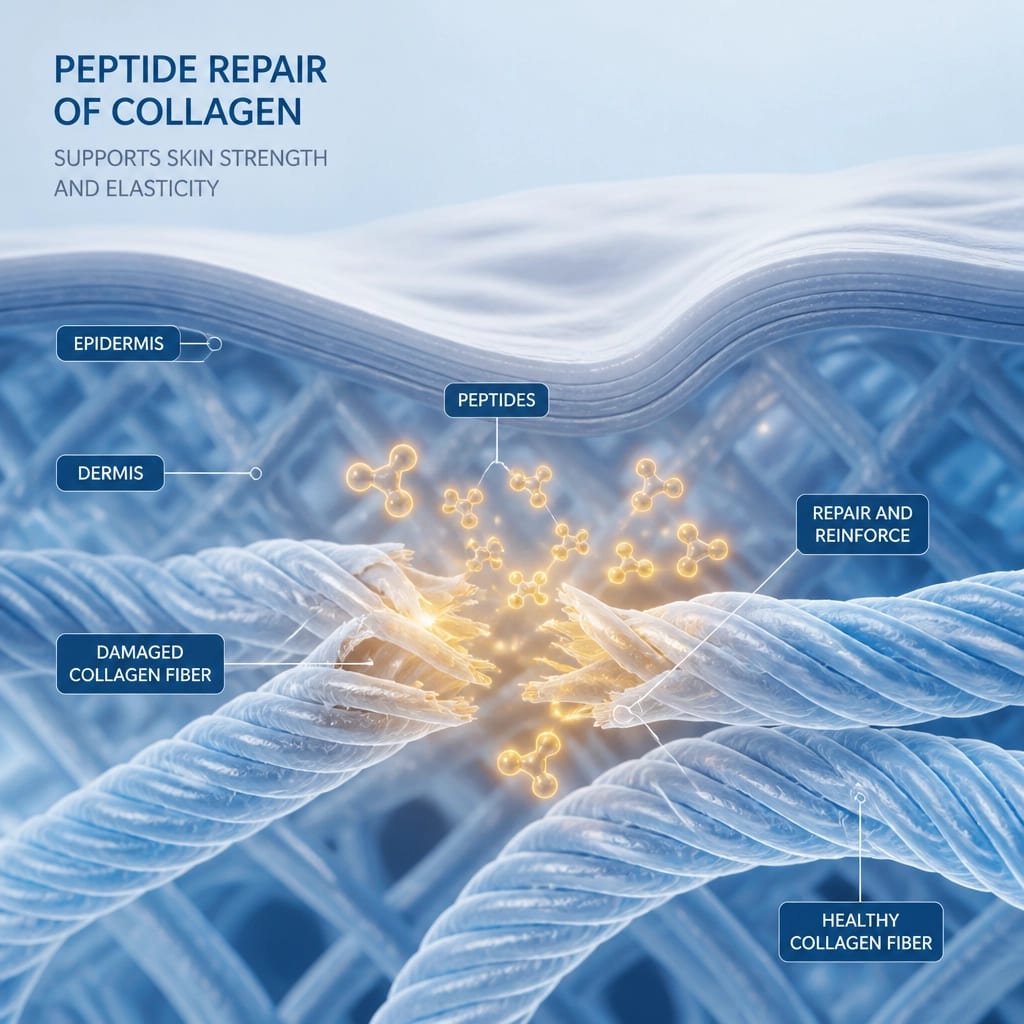
By introducing synthetic Matrixyl into a research environment, you are essentially mimicking this breakdown. You’re “tricking” the fibroblasts into thinking they need to repair and regenerate, even if there hasn’t been a massive traumatic event. This leads to an upregulation of several critical proteins:
- Collagen Type I: The primary structural protein that provides tensile strength.
- Collagen Type III: Often called “youth collagen,” prevalent in supple, elastic skin.
- Collagen Type IV: Crucial for the dermal-epidermal junction (DEJ), ensuring your skin layers stay tightly “glued” together.
- Fibronectin & Elastin: Proteins that manage cell adhesion and the “snap-back” quality of the skin.
- Hyaluronic Acid: The body’s natural sponge, responsible for that plump, hydrated glow.
