
The Master Clock: SCN and Circadian Orchestration
The human body doesn’t just function on a whim; it operates on a strictly timed schedule governed by the Suprachiasmatic Nucleus (SCN) in the brain. Think of the SCN as the conductor of an orchestra. If the conductor loses the beat, the music becomes a chaotic mess of noise. In biological terms, this “noise” manifests as insomnia, metabolic dysfunction, and chronic fatigue.
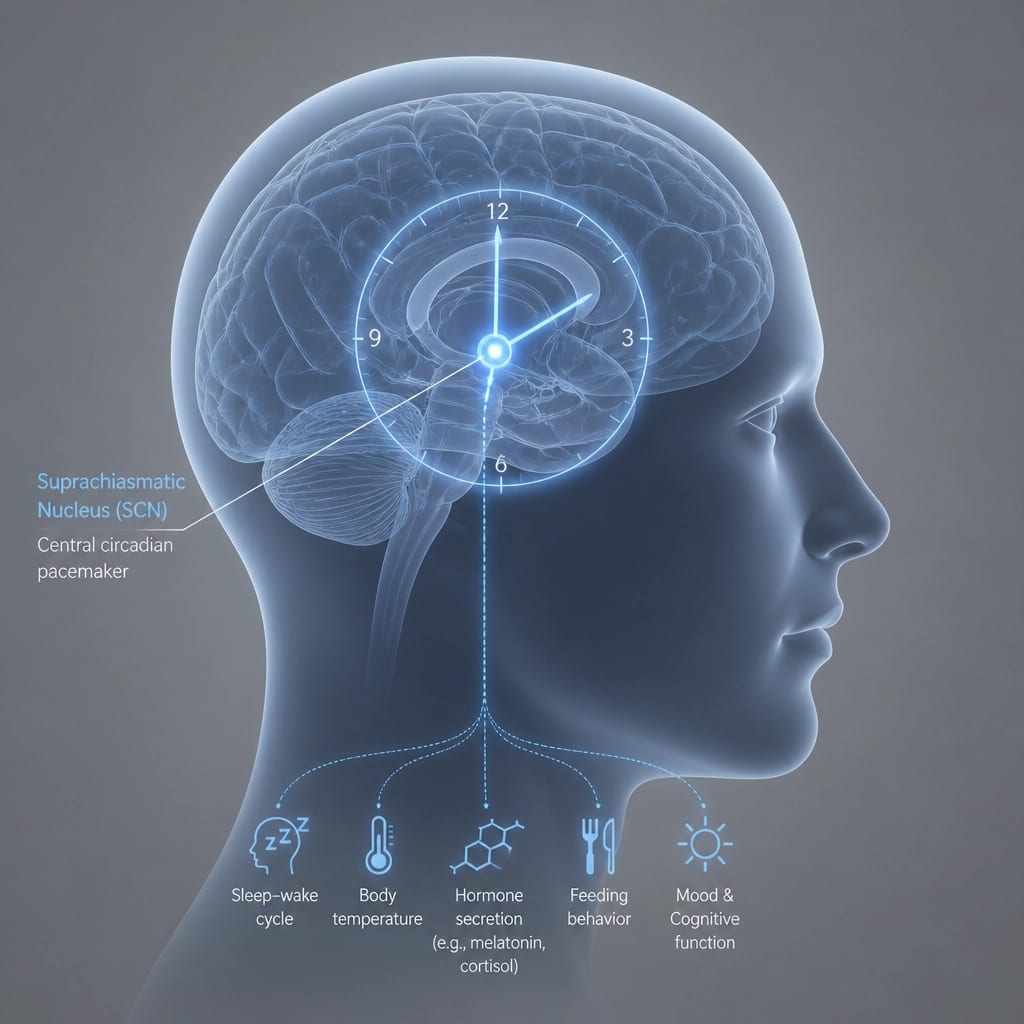
V.I.P. is the primary synchronizing neuropeptide within the SCN. Research suggests that V.I.P. neurons are responsible for coordinating the firing of clock neurons, ensuring that your central and peripheral clocks are aligned with the light-dark cycle of the planet.
When V.I.P. levels are suboptimal, the “Bio-Harmony” of the body is shattered. Animal models have shown that a deficiency in V.I.P. receptors leads to a total loss of coherent circadian rhythms. For researchers, this makes V.I.P. a “Tier-1” candidate for investigating sleep-wake regulation and systemic recovery. By utilizing V.I.P. in a research setting, you are exploring the very foundations of how the body maintains its temporal integrity.
Combatting the “Invisible Fire”: V.I.P. in C.I.R.S.
One of the most transformative applications for V.I.P. research is in the field of Chronic Inflammatory Response Syndrome (C.I.R.S.), often triggered by exposure to biotoxins like mold or certain persistent infections.
In a healthy body, the immune system identifies a threat, neutralizes it, and then turns off. In C.I.R.S., the “off switch” is broken. The body remains in a state of high alert, producing a cascade of inflammatory markers that burn through your energy reserves and cloud your cognitive function. This is where V.I.P. enters the frame as a high-tech solution to biological burnout.
The Mechanism of Immune Tolerance
V.I.P. acts as a potent immune modulator. It doesn’t just “boost” or “suppress” the immune system; it Transforms it. Specifically, V.I.P. research has focused on its ability to:
- Promote Regulatory T Cells (Tregs): These are the “peacekeepers” of the immune system. V.I.P. helps program dendritic cells to increase the production of Tregs, which are essential for dampening excessive inflammation.
- Reduce TGF-beta1 and C4a: These are classic markers of innate immune activation found in C.I.R.S. patients. Research protocols involving V.I.P. have shown a remarkable ability to normalize these markers, effectively “putting out the fire.”
- Restore Pulmonary Function: Many researchers utilize V.I.P. for its potent vasodilatory and bronchodilatory effects. In the context of C.I.R.S., it can help improve exercise tolerance and reduce pulmonary artery systolic pressure.
For those looking to explore these pathways, check out our Immune and Life Extension Category for the latest in research-grade compounds.
