
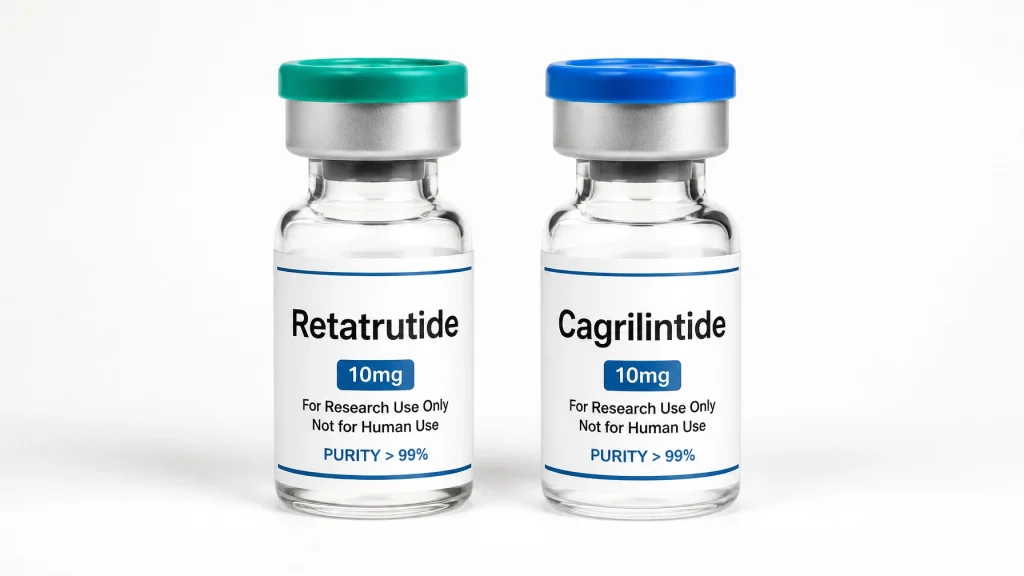
The Problem: The Triple Threat of Metabolic Resistance
Before we dive into the solution, consider why weight loss is often so difficult. Your body is like a highly efficient construction site where the workers (your hormones) are programmed to prevent you from “running out of materials” (losing fat). When you try to eat less, your body sends out hunger signals: think of them as loud sirens: to force you to eat.
Standard treatments often only shut off one of these sirens. But your body has many. To truly conquer appetite, you need a strategy that addresses multiple pathways at once.
Solution Part 1: Retatrutide (The Triple Agonist)
Think of Retatrutide as the “Project Manager” of the stack. It is a Triple Agonist, meaning it activates three different receptors in your body:
- GLP-1 (Glucagon-like Peptide-1): This hormone slows down your stomach (like a speed bump on a highway) and tells your brain you are full.
- GIP (Glucose-dependent Insulinotropic Polypeptide): This works alongside GLP-1 to improve how your body handles sugar and helps reduce nausea.
- Glucagon: This is the “secret weapon.” While the first two focus on intake, glucagon focuses on output. It tells your body to burn more energy, similar to turning up the thermostat in a cold room.
You can read more about how this compares to other single-hormone treatments in our GLP-1 Powerhouse Showdown article.
