
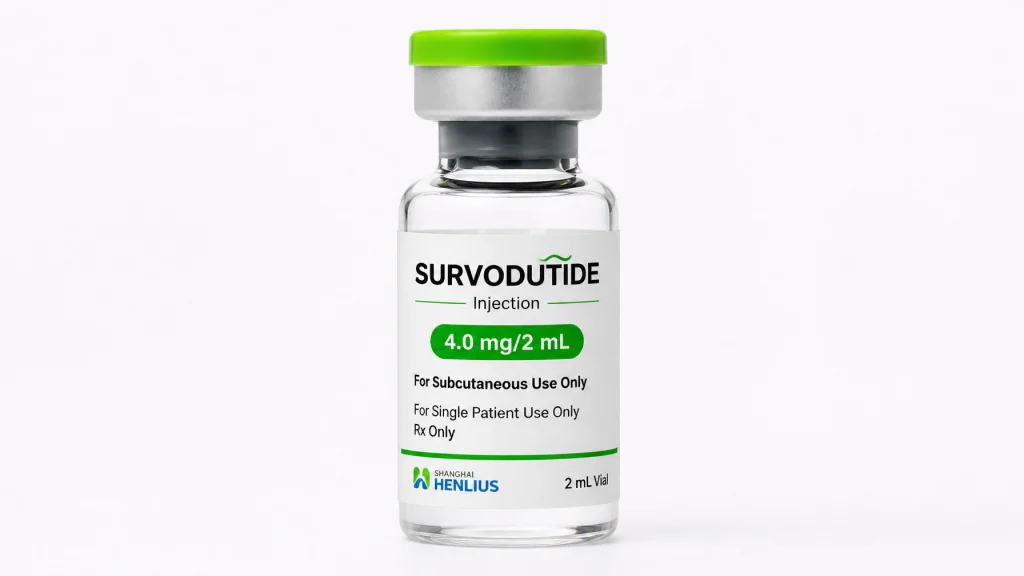
The Problem: Metabolic Stagnation
Most people struggling with weight management face a two-fold problem: excessive hunger signals and a decreasing Basal Metabolic Rate (BMR): the number of calories your body burns at rest. When you reduce your caloric intake, your body often retaliates by slowing down your “engine” to conserve energy. This is a survival mechanism, but it makes long-term progress nearly impossible.
Survodutide addresses this “energy gap” by not only quieting the hunger signals but also instructing the body to increase its energy expenditure.
The Foundation: A Dual-Engine Approach
To understand Survodutide, imagine your metabolism as a hybrid car engine.
- GLP-1 (Glucagon-Like Peptide-1): This is the electric motor. It is quiet, efficient, and manages the “fuel intake.” It tells your brain you are full (satiety) and ensures your “battery” (insulin) is used correctly to stabilize blood sugar.
- Glucagon: This is the high-performance petrol engine. Unlike GLP-1, which focuses on saving and managing fuel, Glucagon’s job is to “burn” stored fuel. It stimulates the liver to release and consume energy, effectively turning up the heat in your internal furnace.
By combining these two, Survodutide doesn’t just help you eat less; it helps your body burn more.

Defining the Terms
Before we go deeper, let’s clarify the technical jargon:
- Dual Agonist: A substance that activates two different types of receptors at once.
- Receptor: A protein on a cell’s surface that receives chemical signals.
- MASH (Metabolic Dysfunction-Associated Steatohepatitis): A condition where excess fat accumulates in the liver, leading to inflammation. You may have previously heard this called NASH.
