
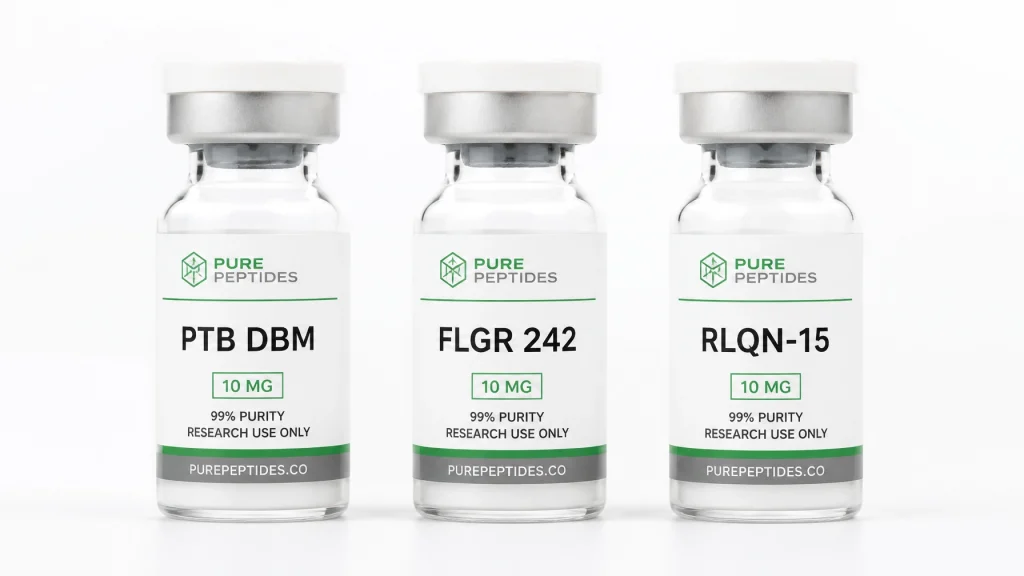
The Foundation: Understanding the Components
Before you explore how to combine these compounds, you must understand their individual blueprints. Research into targeted therapeutics focuses on “unlocking” dormant biological processes that have been suppressed by age, environment, or specific stressors.
1. PTB DBM: Re-Engaging the Growth Switch
PTB DBM (often referred to as PTD-DBM) is a cell-penetrating peptide that focuses on the Wnt/β-catenin pathway. Think of this pathway as the “light switch” for your hair follicles. In many research subjects, this switch has been flipped “off” by a protein called CXXC5.
The Mechanism: PTB DBM acts as a molecular wedge. It physically blocks the interaction between CXXC5 and the signaling protein Dishevelled. By preventing this “brake” from being applied, the Wnt pathway remains active, promoting follicle proliferation and potentially creating new follicular structures. You can find more details on this specific mechanism in our hair health research section.
2. FLGR 242: Releasing the Growth Brakes
While PTB DBM works on the surface, FLGR 242 operates systemically. It is a long-acting follistatin analogue designed to inhibit myostatin. In the analogy of a car engine, myostatin is the “governor” or speed limiter that prevents the engine from revving too high.
The Mechanism: By binding to myostatin and activins, FLGR 242 effectively removes the biological limiters on muscle protein synthesis. This allows for increased lean muscle mass preservation and improved body composition. Because it is engineered with a long half-life (approximately 19 days), it provides a steady, reliable signal for tissue optimization over several weeks.
3. RLQN-15: The Regenerative Repair Crew
RLQN-15 is the most versatile member of the stack. Derived from frog skin secretions (Rana limnocharis), this 15-amino-acid peptide is a master of tissue regeneration.
The Mechanism: RLQN-15 binds to Frizzled receptors (FZD8 and FZD7) on stem cells. This interaction triggers a “repair mode” in the skin and nerves. It speeds up wound healing, promotes the growth of new blood vessels (angiogenesis), and supports the nerves within the skin. If PTB DBM is the architect and FLGR 242 is the builder, RLQN-15 is the specialist repair crew ensuring the structural integrity of the entire site.

The Problem: Biological Stagnation
A common frustration in research is reaching a “plateau.” You might be focusing on follicular health but finding that the underlying tissue lacks the blood flow to support it. Or, you might be optimizing muscle mass but struggling with skin integrity or slow recovery from training-induced micro-tears.
