

The Problem: Why Traditional Bone Support Often Fails
Most people treat bone health like a simple bucket of water: if the bucket is leaking (bone loss), they just pour in more water (calcium and Vitamin D). While essential, this approach ignores the mechanics of the bucket itself. If the structure is compromised, no amount of raw material will fix the underlying weakness.
You may be experiencing:
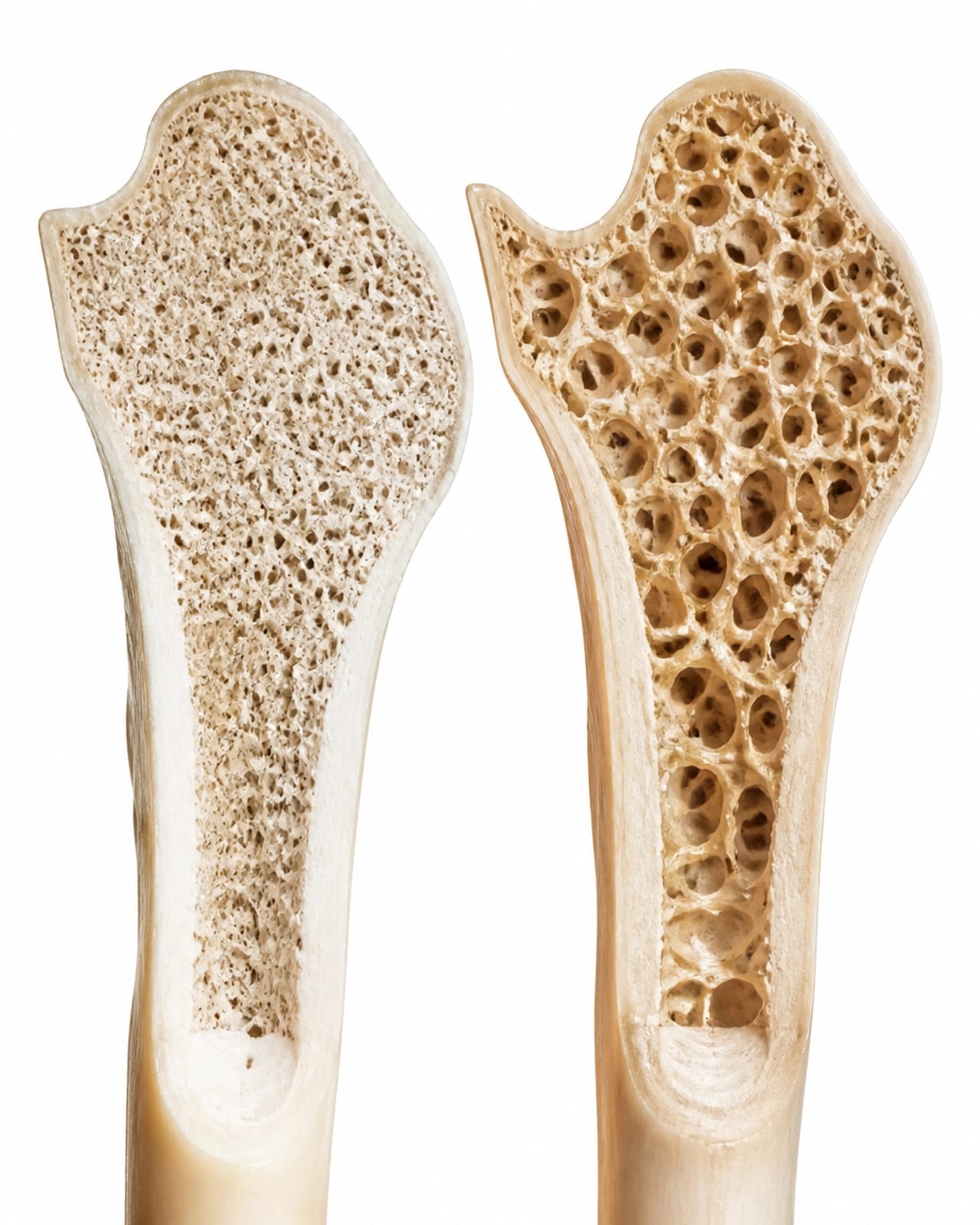
- Reduced Bone Mineral Density (BMD): The lattice structure of your bones is becoming more like a sponge than a solid beam.
- Slow Recovery from Fractures: Injuries that used to heal in weeks are now taking months.
- Joint and Tissue Degradation: Your skeletal “connectors” are wearing thin, leading to chronic discomfort.
Consider this: Your bones are the chassis of your vehicle. If the chassis is rusted or brittle, it doesn’t matter how powerful the engine is: the entire system is at risk.
Teriparatide: The Master Builder (PTH 1-34)
Teriparatide is a synthetic version of parathyroid hormone (PTH 1-34), and in our construction site analogy, it is the Master Builder. While many osteoporosis treatments focus on stopping the “demolition crew” (osteoclasts), Teriparatide is unique because it specifically recruits and activates the “bricklayers” (osteoblasts).
How It Works (The Biological Foreman)
When you introduce Teriparatide into your system: typically via a Teriparatide Pen: it sends a direct signal to your bone cells to start building. It stimulates the formation of new bone on both the inner and outer surfaces, significantly increasing bone mass and architectural strength.
The “Pulse” Mechanism:
Focus on this: Teriparatide works best when given in intermittent, daily pulses. This is like giving the construction crew a morning pep talk and a clear set of blueprints every single day. If the signal were “on” all the time, the crew would get overwhelmed; by “pulsing” the dose, you maintain a steady, productive rhythm of bone formation.
Benefits of Teriparatide:
- Rapid Increases in BMD: Often seeing significant gains within the first 6 to 12 months.
- Architectural Restoration: It doesn’t just add “bulk”; it improves the actual quality and thickness of the bone lattice.
- Fracture Risk Reduction: Clinical data shows a dramatic decrease in vertebral and non-vertebral fractures.
