
The Problem: An Overheated Engine
Imagine your body is a high-performance car. In a healthy state, you can accelerate (stress response) to merge into traffic and then cruise (recovery) once the danger has passed. However, chronic stress is like driving with your foot pinned to the floor for months. Eventually, the engine overheats, the oil burns out, and the sensors stop reporting the correct speed.
This “overheating” is known as HPA axis dysregulation. Your brain keeps sending “emergency” signals, but your adrenal glands are too exhausted to respond correctly. You feel tired, yet you can’t sleep; you feel anxious, yet you lack the drive to get things done.
The Solution: You need a tiered strategy that hits the brakes on the emergency signals, tests the engine’s capacity, and provides the raw fuel needed for repairs.
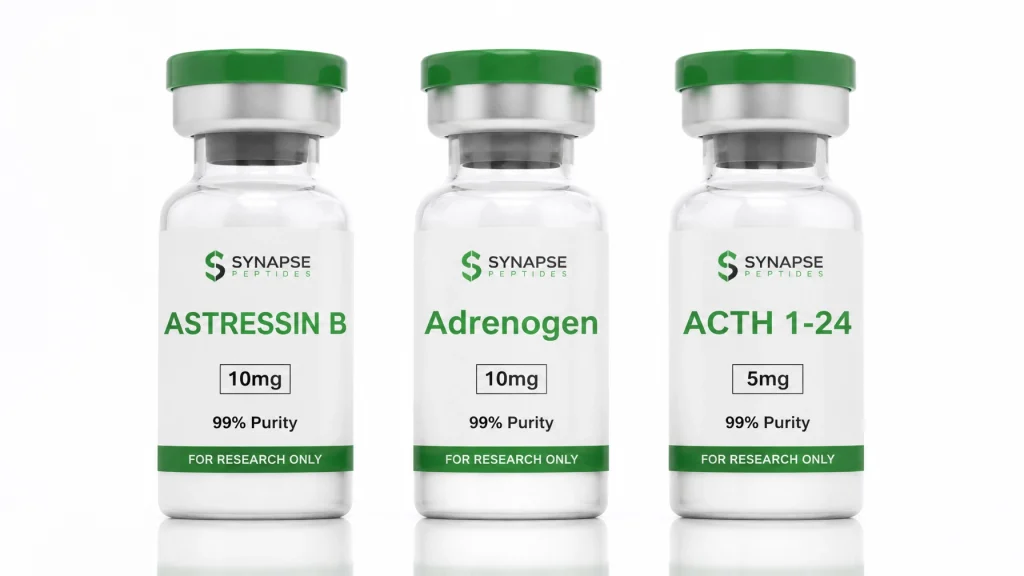
1. ASTRESSIN B: The Precision Brake
The first step in restoring balance is silencing the “alarm” bells ringing in your brain. This is where ASTRESSIN B comes into play.
How it works
Think of Corticotropin-Releasing Hormone (CRH) as the loud siren your brain sets off when it perceives a threat. When this siren blares 24/7, it causes a cascade of cortisol that keeps you in a state of high alert. ASTRESSIN B is a CRH antagonist: it effectively acts as a pair of earplugs for your cells, blocking that siren and allowing your nervous system to “cool down.”
Why it is essential in this stack
By blocking the over-stimulation at the top of the chain, ASTRESSIN B prevents further burnout. It gives your system the “biological silence” it needs to begin the recovery process.
