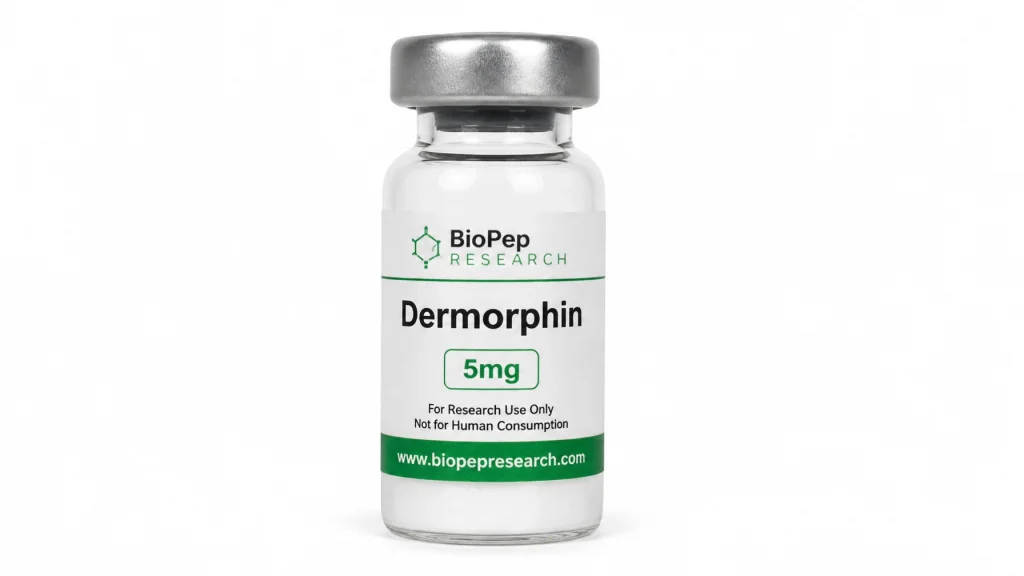
When your body’s internal alarm system: the nervous system: gets stuck in a “high alert” state, the resulting chronic pain can feel like a siren that won’t stop blaring. In the world of biochemical research, finding the right “mute button” for these signals is the ultimate goal. Enter Dermorphin, a naturally occurring heptapeptide (a peptide consisting of seven amino acids) that has captured the attention of researchers worldwide for its staggering potency and unique molecular structure.
You will learn exactly how this compound interacts with the human biology, why its structural “zipper” makes it resistant to breakdown, and how it is currently being utilized in specialized research environments. Consider this your technical guide to one of the most powerful analgesic (pain-relieving) tools in the modern researcher’s toolkit.
The Biological Blueprint: What is Dermorphin?
Dermorphin is not a synthetic creation from a sterile lab; its origins are far more organic. It was first isolated from the skin of the Phyllomedusa frog genus, native to the Amazon. While that may sound like folklore, the science behind it is rigorous.