
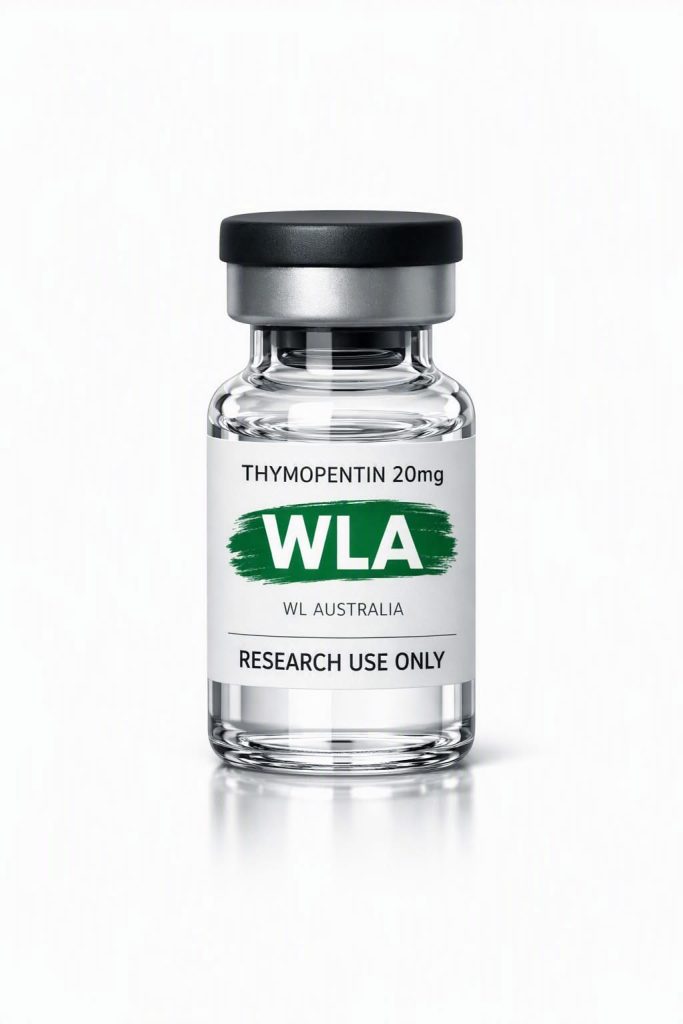
1. The Biology of the Thymus: The Master Construction Site
The Frustration: Immune Atrophy and Delayed Response
As we age or encounter severe systemic stress, the thymus gland: the primary training academy for our cellular defenders: naturally shrinks and loses efficiency. Imagine a premier sports team losing its head coach; even elite players will run disorganized plays, missing crucial defensive cues. This degradation leaves your body sluggish when confronting foreign pathogens or managing chronic inflammatory imbalances.
The Solution: Biomimetic Thymic Activation
You can reverse-engineer this decline by introducing targeted signaling molecules. Thymopentin (TP-5) is a synthetic pentapeptide (a chain of five amino acids: Arg–Lys–Asp–Val–Tyr) that corresponds directly to residues 32–36 of thymopoietin: a vital endogenous thymic hormone.
Think of TP-5 as a master key designed to fit the exact zipper of your cellular receptors, instantly transmitting the command to ramp up production and maturation.
- What you must know: TP-5 acts as a direct structural analogue to natural thymic hormones.
- Why it matters: It bypasses the sluggish signaling of an aging thymus to reboot your immunological command center.
Pulse Check: Optimization requires precision. When your thymic signaling is upgraded, your entire biological roster functions with renewed synergy. Explore our specialized Thymopentin 20mg formulation to support advanced laboratory research protocols.
2. Core Mechanisms: The Cellular Switch for T-Cell Maturation
The Frustration: Immature Defenders and Misfiring Signaling
When precursor T cells (immature lymphocytes) enter the bloodstream without proper education, they resemble a car engine with misfiring spark plugs. They cannot generate the explosive power needed to protect your biological vehicle, leading to either deficient defense or runaway inflammation.
The Solution: Precision Intracellular Signaling
Thymopentin operates through sophisticated intracellular pathways to ensure complete cellular maturation.
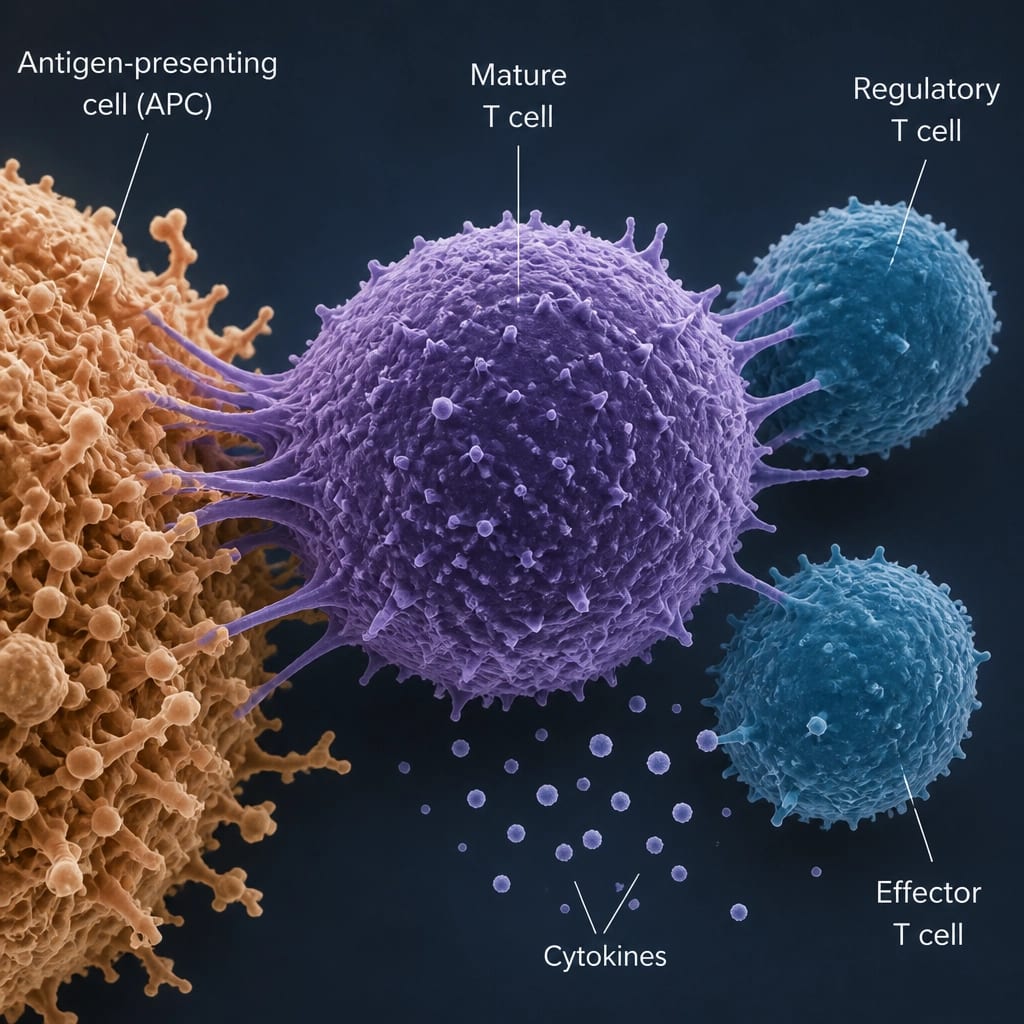
- In precursor T cells, TP-5 triggers an elevation in cyclic adenosine monophosphate (cAMP), which acts like an ignition switch forcing cellular differentiation into mature, battle-ready T lymphocytes.
- In mature peripheral T cells, it modulates cyclic guanosine monophosphate (cGMP), fine-tuning cytokine release and restoring equilibrium.
| Cellular Target | Primary Mechanism | Functional Outcome |
|---|---|---|
| Precursor T Cells | Elevates cAMP via receptor binding | Triggers differentiation into mature, functional T lymphocytes |
| Dendritic Cells (DCs) | Promotes maturation and enhances CD40/CD80/CD86 expression | Boosts antigen presentation and Th1-biased cellular immunity |
| Cytokine Networks | Balances IL-2, IFN-$gamma$, and TNF-$alpha$ production | Restores immune homeostasis without over-stimulation |
Definitions to remember:
- cAMP & cGMP: Specialized intracellular signaling molecules (cyclic nucleotides) that instruct cells how to behave.
- Th1 Profile: A subset of helper T-cell responses dedicated to neutralizing intracellular threats and pathogens.
Actionable Takeaway: Focus on cellular balance. TP-5 does not act as a blunt hammer; it functions as a homeostatic regulator, boosting depressed immunity while restraining dysregulated inflammation.
