
1. The Molecular Architecture: Understanding Opiorphin and Enzyme Inhibition
The Problem: Molecular Degradation
In a construction site, materials arrive constantly, but if workers leave them unprotected, harsh weather destroys them before they can be used. Similarly, your nervous system constantly produces enkephalins: endogenous opioid peptides that act as natural painkillers. However, enzymes in your biological tissues act like ravenous demolition crews, instantly shredding these healing signals before they can bind to cellular receptors.
The Solution: Targeted Protease Defense
You can solve this degradation dilemma by utilizing Opiorphin (sequence QRFSR), an endogenous human pentapeptide. Opiorphin functions as a dual physiological inhibitor. Think of it like a precision zipper lock that temporarily jams the enzymatic scissors inside your tissues. By blocking specific degradative enzymes, opiorphin ensures your natural enkephalins remain intact and active.
Before proceeding further, let us define key terminology used throughout this protocol:
- NEP (Neutral Endopeptidase / Neprilysin – EC 3.4.24.11): A zinc metallo-ectopeptidase responsible for cleaving and inactivating signaling peptides.
- AP-N (Aminopeptidase N – EC 3.4.11.2): A membrane-bound enzyme that rapidly degrades enkephalins at the amino terminus.
- CNS (Central Nervous System): The complex of nerve tissues that controls bodily activities, comprising the brain and spinal cord.
- PK/PD (Pharmacokinetics / Pharmacodynamics): The study of how a substance moves through the body versus the biological effects it produces.
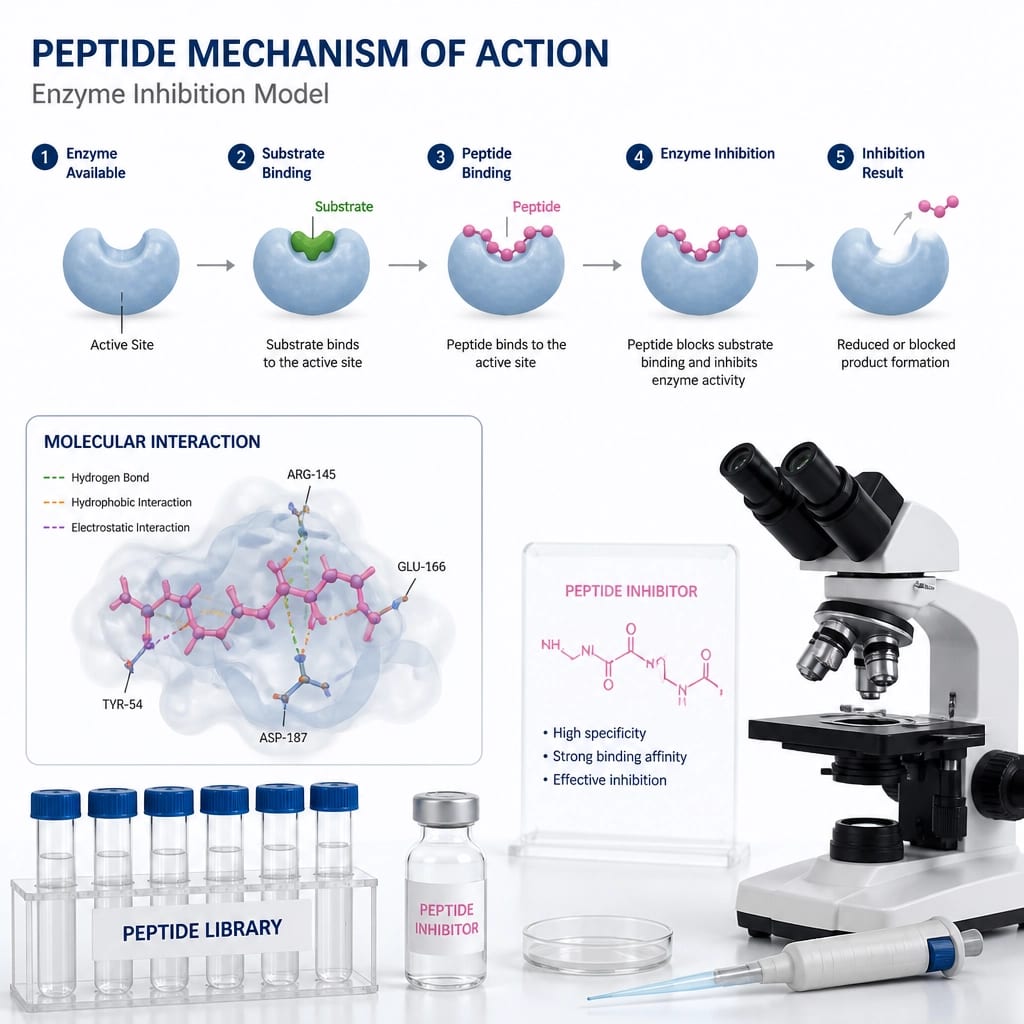
2. Mechanism of Action: The Enkephalin Conservation Pathway
The Problem: Receptors Running Dry Under Stress
When acute or inflammatory pain strikes, your body releases enkephalins into the spinal cord and peripheral tissues. However, due to rapid enzymatic breakdown, the concentration of these natural messengers drops too quickly to provide sustained relief.
The Solution: Amplifying Endogenous Opioidergic Tone
Focus on the core mechanism: opiorphin does not act as a direct receptor agonist like morphine. Instead, it acts upstream by protecting your natural supply.
- Enzyme Inactivation: Opiorphin binds to and inhibits NEP and AP-N, halting their degradative action.
- Half-Life Extension: Enkephalins remain in the extracellular space significantly longer, boosting their local concentration.
- Receptor Engagement: Prolonged enkephalin presence enhances binding to μ- (mu) and δ- (delta) opioid receptors on nociceptive neurons.
- Signal Dampening: This receptor activation inhibits neuronal excitability, successfully blocking pain signals from traveling up to the CNS.
To clarify how this differs from classic pharmacology, review the comparison table below:
| Feature | Traditional Opioids (e.g., Morphine) | Opiorphin-Mediated Enkephalin Preservation |
|---|---|---|
| Primary Action | Direct exogenous receptor agonist | Indirect endogenous enzyme inhibition |
| Pathway Recruitment | Overrides natural signaling loops | Amplifies stress-evoked natural release |
| Tolerance & Addiction Liability | High risk due to receptor overstimulation | Lower risk; regulated by physiological feedback |
| Enzymatic Interaction | Unaffected by tissue peptidases | Directly targets NEP and AP-N |
