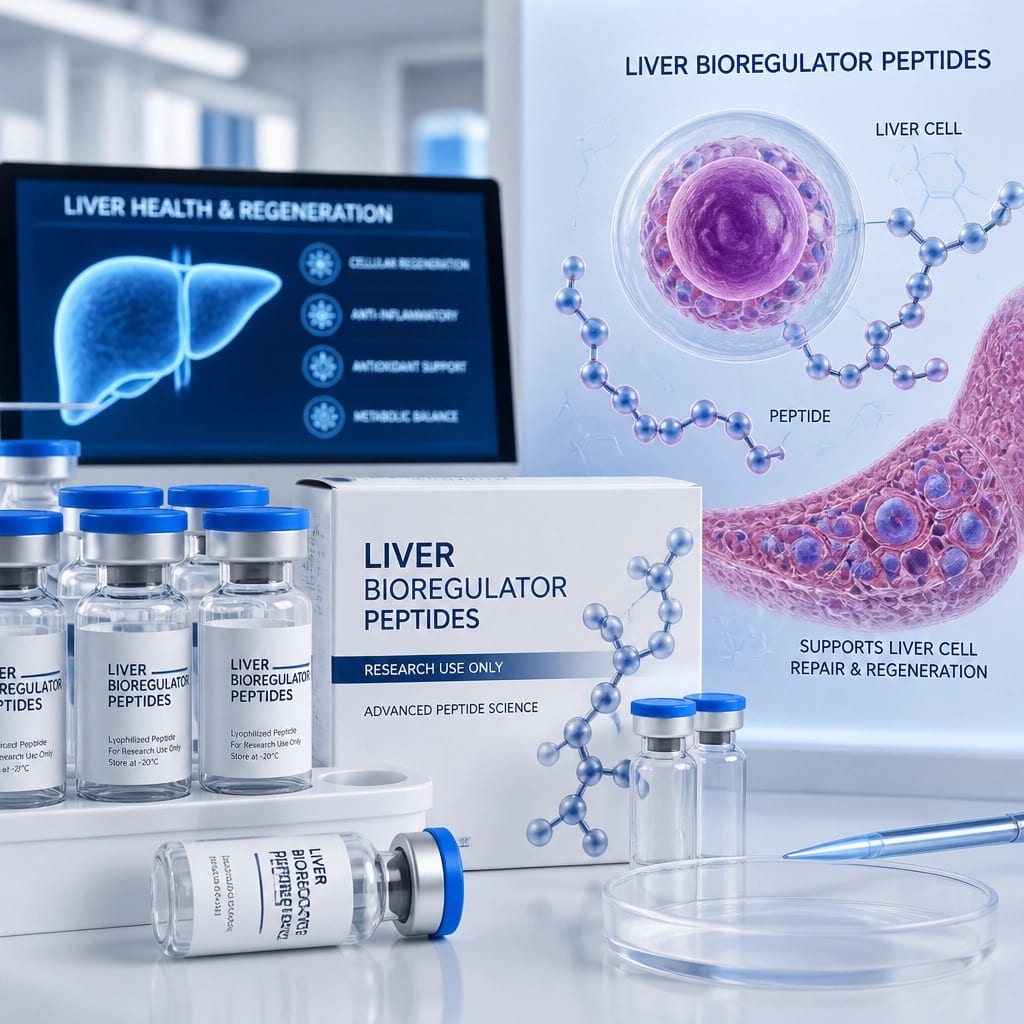
1. Foundational Biology: Understanding Liver Bioregulators
Think of your liver as a massive, multi-story construction site. Over time, blueprints get damaged, machinery wears down, and construction crews slow to a crawl. Peptide bioregulators act like master project managers carrying precise instruction sets, instructing cellular machinery to rebuild, repair, and optimize function.
[Cellular Stress / Toxicity]
       │
       ▼
[Targeted Peptide Bioregulator (Svetinorm / Livagen / HEP-1)]
       │
       ▼
[Chromatin Activation & Hepatocyte Regeneration]
       │
       ▼
[Restored Metabolic Efficiency & Detoxification]
Focus on cellular efficiency. Unlike blunt-force pharmacological agents, short-chain peptides and bioregulators function via highly specific signaling pathways. They engage intracellular receptors like molecular zippers, locking into precise genetic sequences to stimulate protein synthesis and reduce oxidative damage.
Core Principle: True biological optimization is built on recovery, synergy, and cellular regeneration.
[Video: Watch our deep dive on how peptide bioregulators support internal organ health and metabolic detoxification]
2. Head-to-Head Comparison: Svetinorm vs Livagen vs HEP-1
When evaluating advanced liver support options available at wlaustralia, distinguishing between natural extracts, synthetic tetrapeptides, and hexapeptides is crucial. Let’s break down their origins, mechanisms, and structural profiles.
| Feature / Metric | Svetinorm | Livagen | HEP-1 |
|---|---|---|---|
| Classification | Natural liver peptide complex (A-7 complex) | Synthetic tetrapeptide (Cytogen class) | Synthetic hexapeptide hepatoprotective agent |
| Source / Structure | Extracted from young animal hepatic tissue; multi-peptide blend | Chemically synthesized defined tetrapeptide sequence | Defined short hexapeptide targeting inflammatory pathways |
| Primary Mechanism | Broad hepatocyte metabolism, tissue repair, detox enzyme upregulation | Chromatin-level gene expression, circadian & protein synthesis support | Kupffer cell modulation, anti-inflammatory cytokine regulation |
| Clinical Documentation | Small-scale human clinical trials in Eastern European studies | Preclinical lab data and mechanistic in vitro research | Experimental preclinical models of toxic liver injury |
| Primary Use Case | Comprehensive liver recovery, age-related decline, metabolic support | Advanced anti-aging stacking, metabolic optimization | Targeted management of acute inflammatory or toxic liver stress |
Svetinorm: The Clinical Benchmark
Problem: Age-related wear and tear combined with chemical exposures leads to progressive loss of liver resilience and sluggish lipid metabolism.
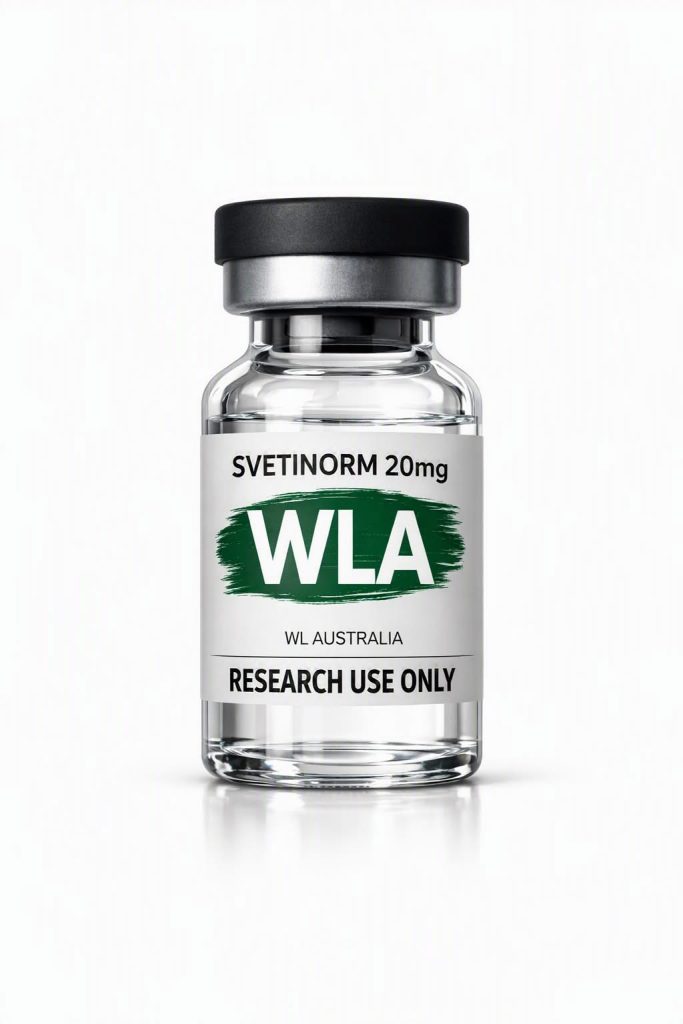
Solution: Svetinorm 20mg utilizes a natural liver peptide complex designed to restore intracellular homeostasis. Because it is derived as a multi-peptide fraction, it exerts a broad, holistic influence across multiple liver cell lineages.
- How it works: It encourages natural hepatocyte regeneration and improves detoxification enzyme activity.
- Best for: Individuals seeking robust, clinically-documented support for chronic liver fatigue, post-medication stress, and metabolic health.
Livagen: The Synthetic Chromatin Modulator
Problem: You want targeted genetic expression support without relying on whole-organ extracts, but you need to know where the evidence stands.
Solution: Livagen is a synthetic tetrapeptide modeled to interact directly with chromatin structure in liver cells.
- How it works: It influences protein synthesis and supports metabolic pathways while offering broader systemic anti-aging benefits.
- Best for: Biohackers building comprehensive longevity stacks alongside complementary agents like Thyreogen 10mg or Cerluten 10mg.
HEP-1: The Precision Anti-Inflammatory Hexapeptide
Problem: Inflammatory triggers and acute toxic insults create severe oxidative stress within hepatic architecture.
Solution: HEP-1 acts as a specialized hexapeptide designed to modulate Kupffer cells: the resident macrophages of the liver: dampening harmful inflammatory cascades.
- How it works: It suppresses pro-inflammatory cytokine surges and shields hepatocytes from apoptotic (cell death) signals.
- Best for: Specialized research protocols focusing on acute inflammatory management and cellular protection.