
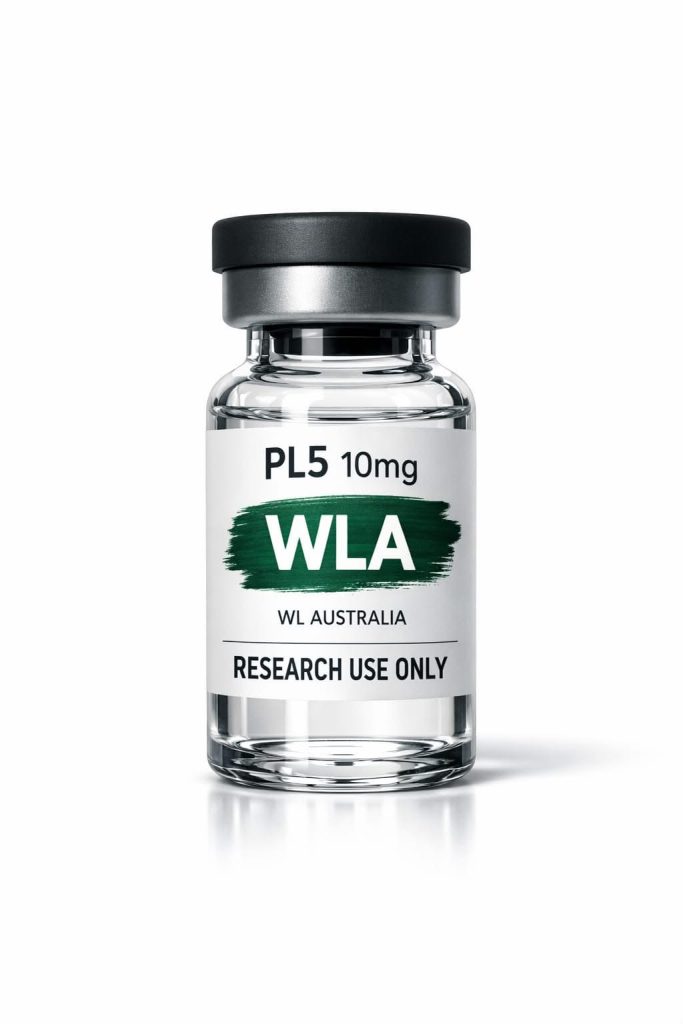
1. Unlocking Cellular Precision: What is PL5?
The Problem: Diagnostic Ambiguity in Complex Biological Models
In standard cellular research, investigators frequently encounter the frustrating barrier of non-specific binding. When studying microbial infections or cellular matrix alterations, standard compounds often attach indiscriminately to both healthy and target tissues, clouding your data with background noise. Imagine trying to deliver a vital replacement part into a bustling automotive factory, only for the delivery truck to drop packages at random assembly lines instead of the designated workstation. Total chaos ensues.
The Solution: Targeted Antimicrobial and Cellular Mechanics
You can eliminate this ambiguity by utilizing PL5, an advanced antimicrobial and cell-targeting peptide engineered for exceptional specificity. PL5 works by interacting directly with targeted biological structures: such as bacterial cell membranes or specific extracellular matrix components: disrupting pathological threats while sparing healthy surrounding models.
Core Principle: Optimization begins with exact molecular recognition. When your targeting agent operates with lock-and-key precision, your experimental recovery and data clarity skyrocket.
For researchers aiming to elevate their laboratory standards, exploring specialized options such as the PL5 10mg catalog entry provides an immediate upgrade in experimental fidelity. Furthermore, pairing these investigations with complementary immune-modulating peptides like Alloferon-1 10mg creates powerful cellular synergy.
2. Cellular Mechanisms and Interaction Pathways
The Problem: Incomplete Disruption of Resistant Pathogens
Traditional experimental treatments often struggle against resilient microbial strains that fortify their cell walls, rendering standard investigative reagents ineffective. If your model fails to penetrate these defenses, your assays stall, and your timeline is compromised.
The Solution: Tiered Membrane Disruption and Matrix Targeting
To overcome this barrier, you must understand the dual-action mechanics of PL5:
- Initial Surface Attachment: The peptide hones in on specific electrostatic and hydrophobic signatures on target cell membranes.
- Membral Perforation: Once anchored, PL5 inserts into the lipid bilayer, acting like a molecular zipper unravelling a protective casing.
- Internal Cascade Inhibition: Cellular integrity is compromised, halting replication and enabling precise observation of antimicrobial response pathways.
Below is a comparison table illustrating how PL5 compares to traditional broad-spectrum agents in research settings:
| Feature | Traditional Reagents | PL5 Peptide |
|---|---|---|
| Target Specificity | Low (Broad, non-selective) | High (Targeted membrane/matrix affinity) |
| Resistance Profile | High susceptibility to bacterial tolerance | Engineered for resistant strain studies |
| Experimental Noise | High background interference | Clean, reproducible binding metrics |
| Matrix Preservation | Often degrades surrounding healthy cells | Minimal off-target cytotoxicity |
[Video Placeholder: Detailed breakdown of PL5 peptide cellular membrane interaction and binding kinetics in laboratory models]
