
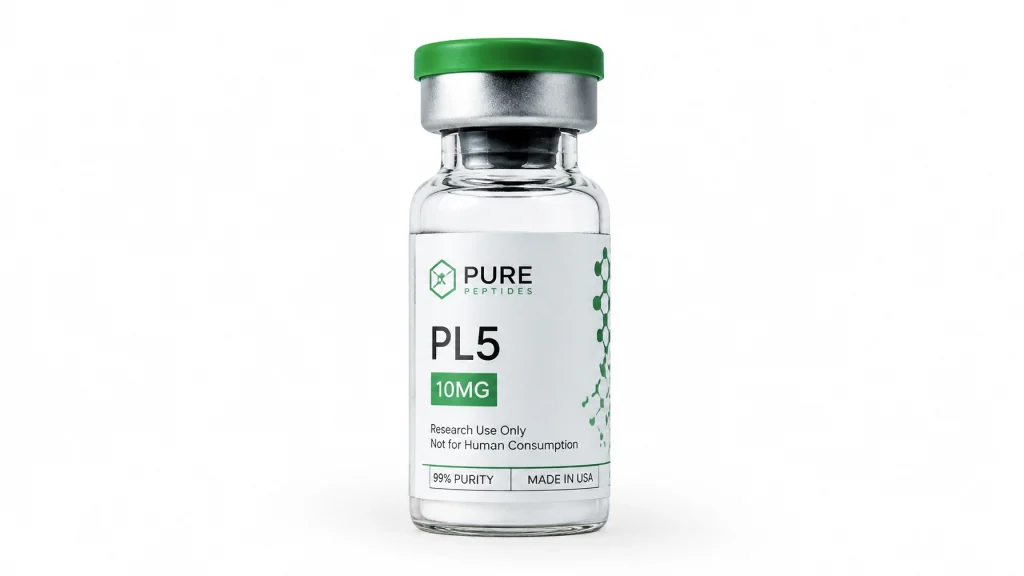
1. Demystifying PL5: Sequence Variants and Core Principles
The Frustration: Many researchers struggle with ambiguous peptide classifications, leading to incompatible solvent choices and distorted in vitro readouts. When your baseline materials are poorly defined, every subsequent data point becomes compromised.
The Solution: Establish exact chemical identification before opening the vial.
Think of a peptide’s amino acid sequence like a precision zipper: every single tooth must align perfectly for the structure to function. In scientific literature, “PL5” can refer to distinct molecular structures, including Peceleganan (PL-5) (a synthetic antimicrobial peptide utilized in wound healing studies), Palmitoyl Tripeptide-5 (PT-5) (a hydrophobic cosmetic lipopeptide), or pig-derived hybrid defensin variants.
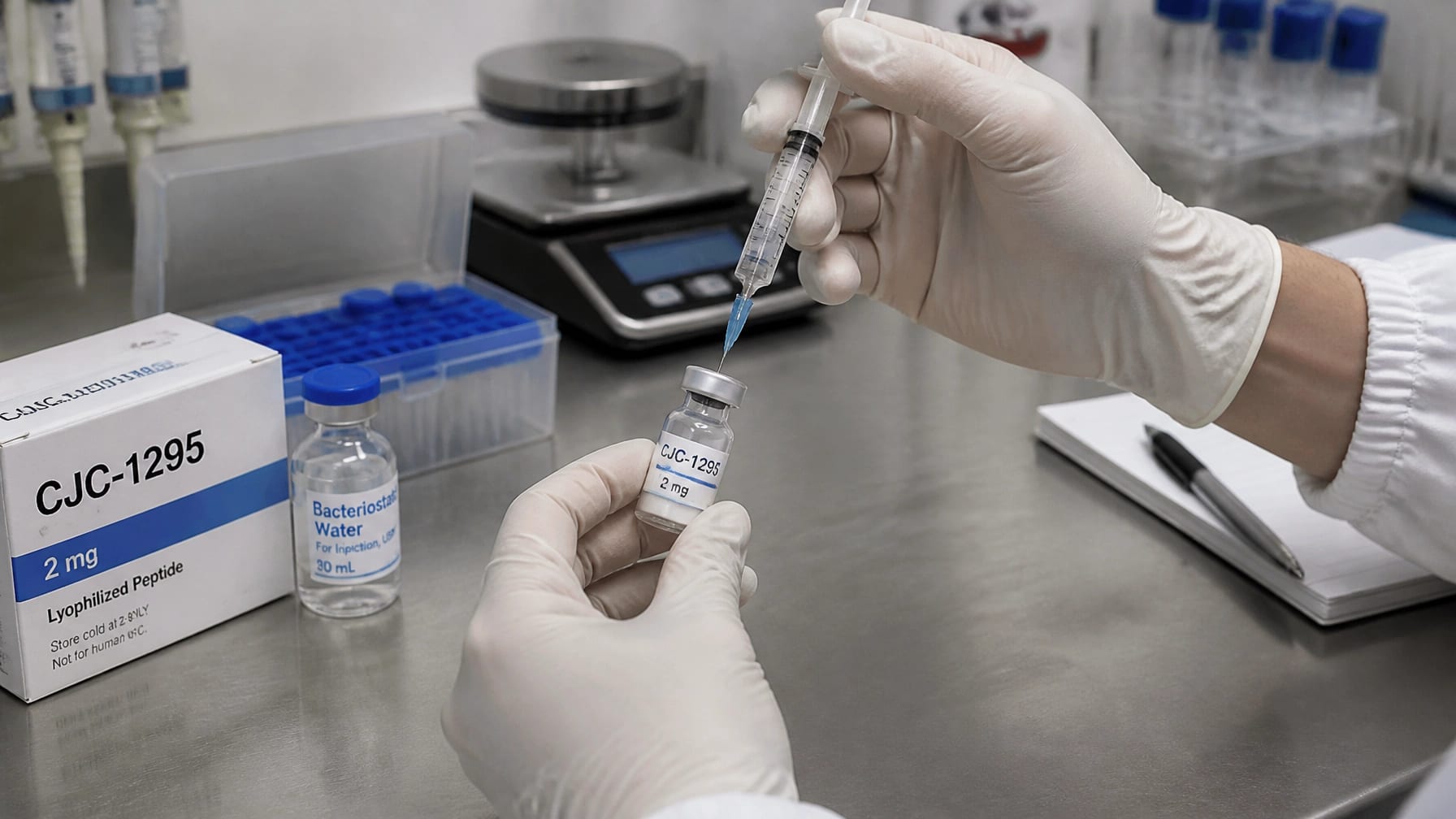
Before initiating any protocol, you must review the Certificate of Analysis (COA) to confirm:
- Sequence and Purity: Ensuring greater than 98% HPLC purity.
- Counter-Ion Profile: Determining whether the peptide is supplied as an acetate or trifluoroacetate salt.
- Hydrophilic vs. Hydrophobic Character: Guiding your precise solvent selection.
Focus on precision. By locking down these foundational parameters early, you establish complete control over your biological optimization pipeline.
2. Reconstitution Mechanics: Conquering Solubility Challenges
The Frustration: Watching lyophilized powder clump together or form cloudy suspensions in standard aqueous buffers can ruin an entire vial in seconds.
The Solution: Implement a tiered, solvent-specific reconstitution protocol tailored to your PL5 variant’s chemical properties.
Like mixing concrete at a construction site, getting the ratio and liquid type wrong results in a structural failure. Depending on whether your PL5 variant is hydrophilic or hydrophobic, your approach must differ:
For Hydrophobic Lipopeptide Variants (e.g., Palmitoyl Tripeptide-5)
- The Problem: Poor direct solubility in pure water or standard phosphate-buffered saline (PBS).
- The Strategy: First dissolve the weighed peptide in a minimal volume of organic solvent such as ethanol, dimethyl sulfoxide (DMSO, an organosulfur solvent used to dissolve recalcitrant compounds), or dimethylformamide (DMF, an organic solvent with high solvation power) to achieve a high-concentration stock (10–30 mg/mL). Gently vortex until fully dissolved.
- The Dilution: Slowly dilute this organic stock into aqueous buffer (e.g., PBS pH 7.2) keeping the final organic fraction below tolerated cellular thresholds ($le 0.1%$ to $0.5%$ v/v).
For Hydrophilic Antimicrobial Variants (e.g., Peceleganan)
- The Problem: Rapid degradation or precipitation if pH is improperly adjusted.
- The Strategy: Dissolve directly in sterile water or 10 mM PBS (pH 7.4) to a convenient stock concentration (1–10 mM). Adjust pH to near-neutral before filter-sterilization through a 0.22 µm syringe filter.
| Parameter | Hydrophilic PL5 Variants | Hydrophobic PL5 Variants |
|---|---|---|
| Primary Solvent | Sterile Water / PBS (10 mM, pH 7.4) | Ethanol / DMSO / DMF |
| Max Initial Stock | 1–10 mg/mL | 10–30 mg/mL |
| Aqueous Dilution | Direct dissolution | Gradual step-down with buffer |
| Filtration | 0.22 µm PES membrane | Compatible organic-resistant filter |
[Video Placeholder: PL5 Reconstitution & Handling Demonstration]
