
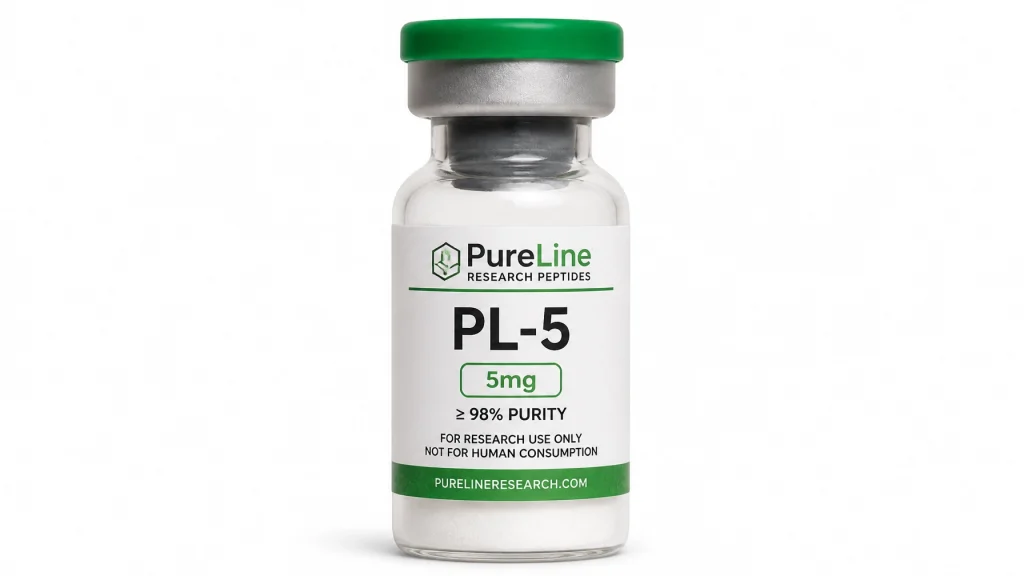
The Core Frustration: Navigating Complex Peptide Selection
The Problem: Researchers often struggle with distinguishing between structurally similar compounds, leading to experimental ambiguity, poor cellular binding specificity, and inconsistent in vitro reproducibility. When studying microbial resistance or tissue repair pathways, choosing the wrong agent is like installing a car engine part into a bicycle: it simply will not interface correctly with the target system.
The Solution: Implement a systematic, tiered evaluation framework. By comparing PL-5 directly with parallel investigative agents like Alloferon-1 10mg and Dalargin 10mg, you establish rigorous experimental boundaries.
Focus on cellular architecture. Optimization starts at the membrane level.
Understanding PL-5: Architecture and Mechanisms
To appreciate how PL-5 operates, let us define its foundational terminology. PL-5 (commonly designated as Peceleganan acetate) is a synthetic 26–amino–acid AMP (Antimicrobial Peptide) featuring an alpha-helical conformation. Think of this molecule as a molecular key designed with absolute geometric precision to slip past outer cellular defenses and destabilize specific lipid bilayers.
In Australian research facilities operating under strict Therapeutic Goods Administration (TGA) compliant laboratory guidelines, investigators examine PL-5 for its potent membrane-disrupting capabilities against both Gram-positive and Gram-negative microbial strains.
Key Structural Characteristics of PL-5:
- Conformation: Amphipathic alpha-helix allowing seamless interaction with hydrophobic lipid cores.
- Primary Target: Bacterial cell membranes, promoting rapid pore formation and selective lysis.
- Research Focus: Investigating novel pathways to overcome multi-drug resistance in experimental skin and soft-tissue models.
