
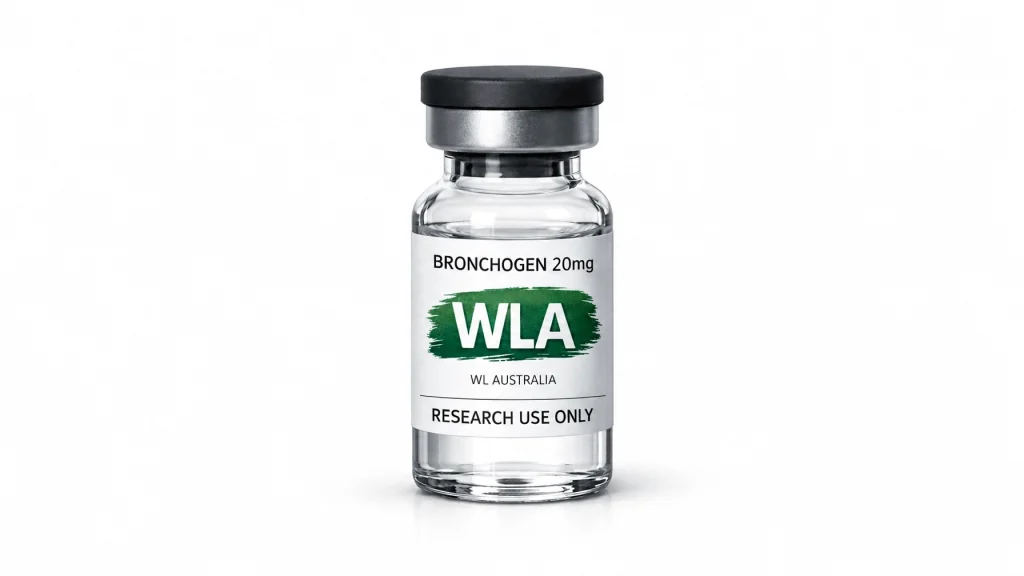
What Is Bronchogen?
The problem: respiratory biology is difficult to understand
The lungs are more than inflatable air bags. They contain branching airways lined with specialised epithelial cells. These cells form a protective barrier between your internal tissues and the outside world.
Think of the bronchial epithelium as the walls, doors and security system of a building:
- The epithelial barrier forms the protective outer wall.
- Mucus traps dust, particles and microorganisms.
- Cilia, microscopic hair-like structures, move mucus towards the throat.
- Local immune factors help identify and respond to unwanted material.
- Deeper lung structures exchange oxygen and carbon dioxide.
When this system becomes irritated, the “security and cleaning team” can struggle. Mucus may become harder to move, inflammation may increase, and the airway lining may be placed under greater stress.
The research concept: a targeted peptide signal
Bronchogen is commonly described as a synthetic tetrapeptide, meaning it contains four amino acids. The product information identifies the sequence as AEDL: alanine, glutamic acid, aspartic acid and leucine.
In bioregulator research, short peptide sequences are explored as possible biological signals. The analogy is a software instruction sent to a specific department rather than a fuel that powers the entire building. Researchers investigate whether the peptide can influence cellular activity connected with tissue maintenance, repair and normal function.
That is the theory. It is not proof of a clinical effect.
Why the Bronchial Epithelium Matters
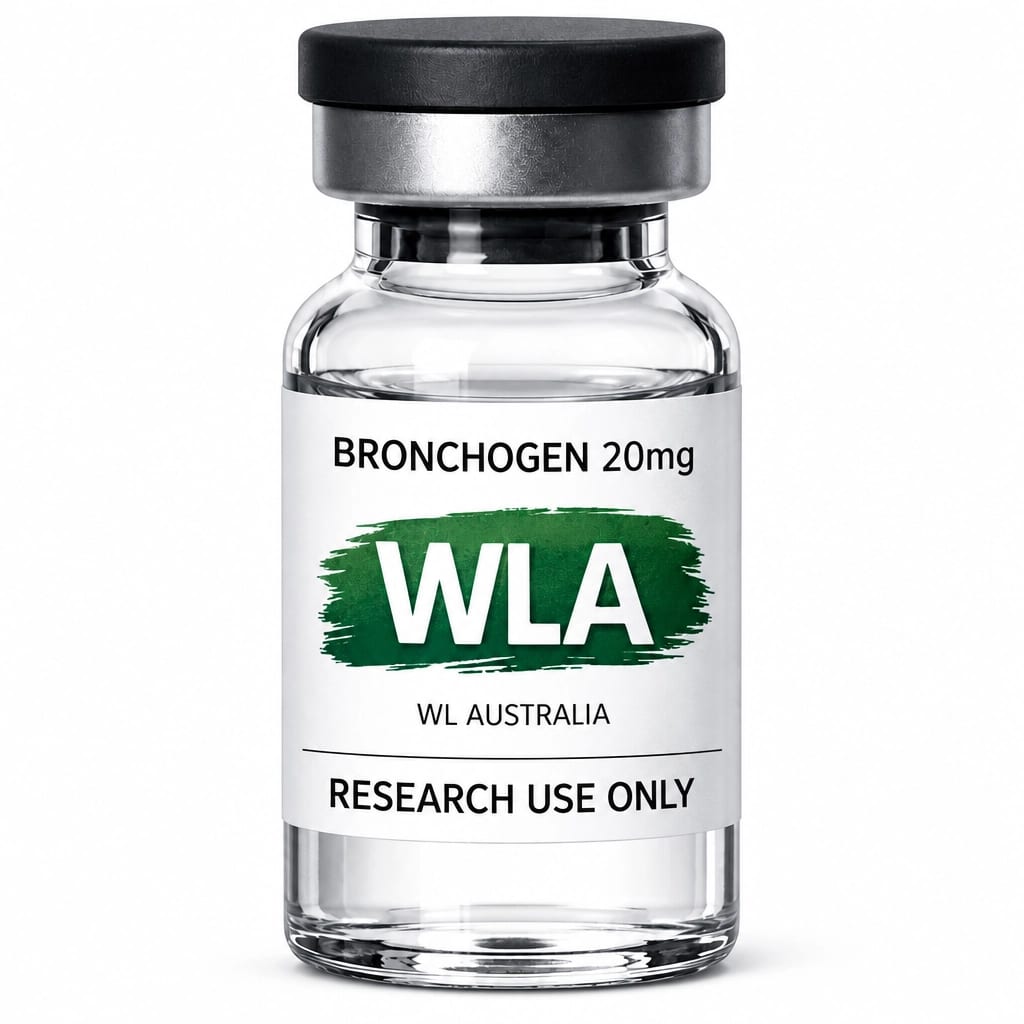
The problem: the airway lining faces constant exposure
Every breath brings your respiratory system into contact with the environment. In Australia, that may include urban particulate pollution, dust, seasonal allergens, workplace irritants and bushfire smoke.
The airway lining must continually manage this exposure while maintaining a controlled amount of mucus and inflammation. If the balance is disrupted, the result may be coughing, irritation or slower clearance of inhaled particles.
The solution being explored: support the airway’s maintenance system
Preclinical Bronchogen research has focused on the bronchial epithelium and related lung-tissue changes. Researchers have examined whether the peptide may influence:
- Epithelial integrity: the strength and organisation of the airway lining.
- Cell turnover: the normal replacement of ageing or damaged cells.
- Ciliary function: the movement of mucus and trapped particles.
- Mucus-producing cells: cells that help create the airway’s protective coating.
- Inflammatory signalling: chemical messages involved in immune activation.
Picture an airport conveyor belt. Mucus is the belt, trapped particles are the luggage, and cilia are the tiny motors moving everything towards the exit. If the motors slow down or the belt becomes overloaded, clearance becomes less efficient. Bronchogen is being investigated as a possible biological signal involved in maintaining that system.
Short summary: Bronchogen research is centred on airway structure and function: not instant relief and not a replacement for respiratory medicine.
