
Why testosterone can change with age
The problem: symptoms that are easy to misread
Testosterone production can gradually decline with age. This does not mean every man will develop clinically low testosterone, and it does not mean that feeling tired automatically indicates a hormone problem.
Possible symptoms include:
- Reduced sexual desire
- Fewer spontaneous or morning erections
- Lower energy and stamina
- Reduced muscle strength or recovery
- Increased body fat
- Low mood or irritability
- Difficulty concentrating
- Reduced motivation
- Sleep disruption
The frustration is that these symptoms overlap with many other conditions. Poor sleep, chronic stress, depression, obesity, alcohol use, thyroid disorders, medication effects and sleep apnoea can all affect energy, mood and sexual function.
Think of your body like a dashboard. A warning light may point to the engine, but it may also reflect the battery, fuel system or electrical wiring. You need a proper inspection before replacing a part.
The solution: investigate before intervening
If you are concerned about low testosterone, speak with a qualified Australian general practitioner, endocrinologist or urologist. Diagnosis should generally combine relevant symptoms with repeatedly low blood testosterone results.
A clinician may recommend:
- Two separate morning total testosterone tests
- Free testosterone or sex hormone-binding globulin (SHBG) testing when appropriate
- Luteinising hormone (LH) and follicle-stimulating hormone (FSH)
- Prolactin and thyroid testing where indicated
- Blood count, metabolic screening and other investigations
- Assessment of sleep, medications, alcohol, exercise and fertility goals
Do not diagnose yourself from one result. Test first. Interpret with a clinician.
What is Testagen?
The problem: conventional hormone support can be misunderstood
When men hear “testosterone support,” they may think of taking testosterone from outside the body. That is the central distinction between a signalling approach and hormone replacement.
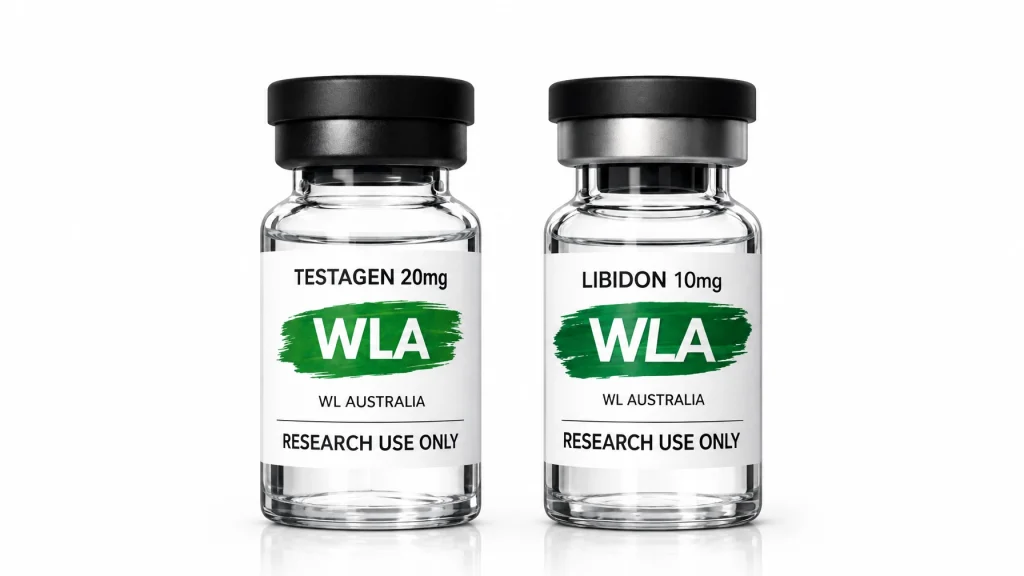
Testagen is described in the foundational chapter as a synthetic peptide bioregulator with the precise amino acid sequence:
Lys-Glu-Asp-Gly
It is also known as KEDG. A peptide is a short chain of amino acids: the same basic building blocks used to construct proteins. A synthetic peptide bioregulator is designed to act as a biological signal rather than as a replacement hormone.

The solution: a tissue-targeted signalling concept
The foundational model positions Testagen as a signal directed toward testicular tissue. The testes contain specialised cells involved in testosterone and sperm production, including Leydig cells and Sertoli cells.
Think of the testes as a manufacturing plant. Testosterone is one of the products, while the cells and enzymes inside the testes are the machinery. Testagen is presented as a short instruction note intended to support the machinery, rather than delivering finished testosterone from outside.
The proposed goal is to encourage the body’s own testicular systems to function efficiently. This is the basis for describing Testagen as supporting natural testosterone production.
However, a proposed mechanism is not the same as proven clinical effectiveness. Current mainstream guidelines do not recognise Testagen as an established treatment for male hypogonadism, and robust, high-quality human evidence demonstrating reliable testosterone, fertility or long-term health benefits is limited.
That distinction matters.
Testagen is a research concept: not a confirmed treatment for low testosterone.
