
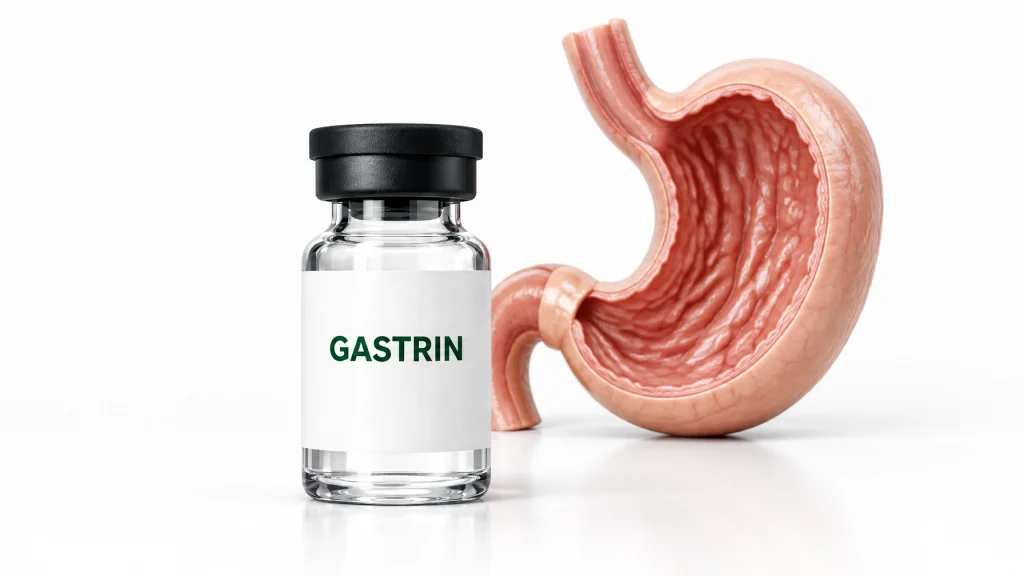
A discovery that helped build endocrinology
The problem: digestion was once explained mainly through nerves
In the early twentieth century, scientists understood that nerves influenced digestion. However, they did not yet fully appreciate how strongly organs could communicate through chemical signals travelling in the blood.
That changed with the discovery of secretin in 1902. Physiologists William Bayliss and Ernest Starling showed that the intestine released a blood-borne substance that stimulated pancreatic secretion. They introduced the term hormone for this type of chemical messenger.
The discovery created a new question: could the stomach also release a hormone?
The solution: Edkins proposed “gastrin”
In 1905 and 1906, British physiologist John Sydney Edkins studied extracts from the pyloric region of the stomach. The pylorus is the lower section that connects the stomach to the small intestine.
When Edkins injected these extracts into experimental animals, gastric acid and digestive secretions increased. He proposed that the pyloric mucosa produced a chemical messenger and called it gastrin, from “gastric”.
The idea was controversial. Histamine was already known to stimulate acid secretion, and some researchers believed histamine explained the activity in stomach extracts. Later work by Simon Komarov helped demonstrate that the stomach contained a distinct acid-stimulating substance separate from histamine.
In the 1960s, Roderic Gregory and Hilda Tracy isolated and characterised gastrin peptides. Their work confirmed that gastrin was a genuine peptide hormone rather than an experimental illusion.
Short summary: gastrin helped move medicine from a nerve-only model of digestion to a broader model involving hormones, receptors and feedback loops.
Where gastrin is made
The problem: the stomach must respond to food without producing acid constantly
Acid is useful. It helps break down proteins, activates digestive enzymes and creates a hostile environment for many swallowed microorganisms. But continuous, uncontrolled acid production could damage the stomach lining.
The body solves this problem with a signalling network. One of its central components is the G cell.
G cells are specialised enteroendocrine cells. Hormone-producing cells within the digestive tract. They are found mainly in:
- The gastric antrum, the lower part of the stomach
- The pyloric region
- The upper small intestine, especially the duodenum
You can think of G cells as sensors and dispatchers at a food-processing plant. They detect changes in the digestive environment and release gastrin when the system needs more coordinated stomach activity.
Gastrin release can be stimulated by:
- Protein fragments called peptides
- Individual amino acids
- Stretching of the stomach after a meal
- Vagal signalling through gastrin-releasing peptide, or GRP
- Reduced acidity in the stomach
The hormone then travels locally and through the circulation to influence other cells.