
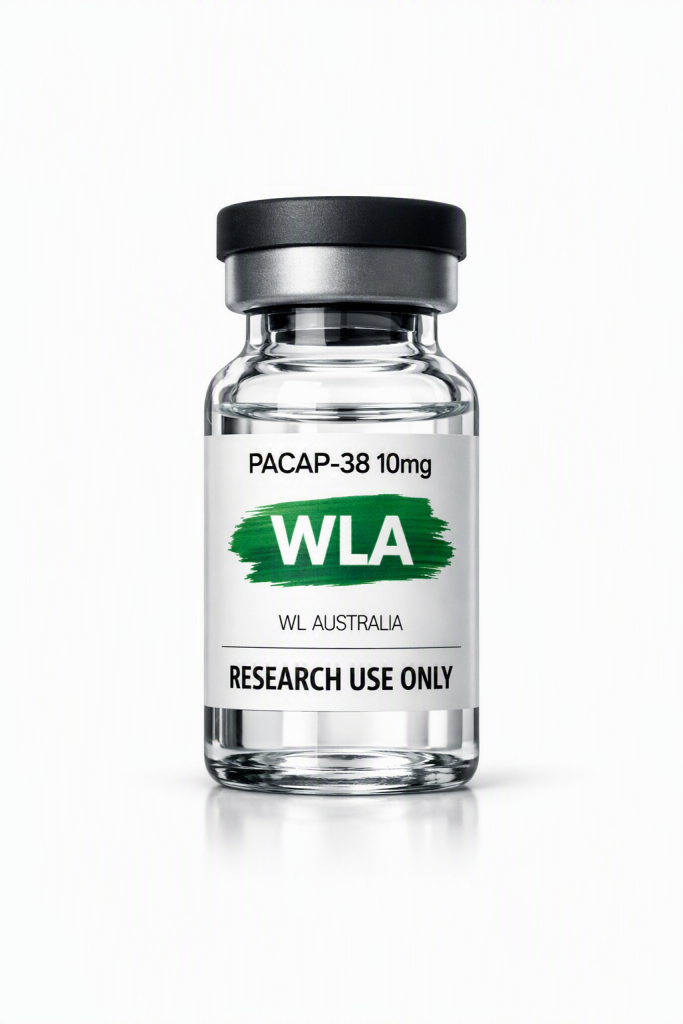
Why PACAP-38 matters: the “full-length” signal
The problem: treating PACAP-27 and PACAP-38 as interchangeable
PACAP-27 and PACAP-38 share the first 27 amino acids, so it is tempting to treat them as the same molecule with different lengths. That is like comparing a short radio antenna with a full-length antenna: they may connect to the same station, but their range, signal strength and operating behaviour can differ.
The research solution: study the dominant physiological form
PACAP-38 makes up the majority of PACAP detected in the body and is widely distributed throughout the central and peripheral nervous systems. It is found in areas involved in:
- Neuronal survival and repair
- Pain and headache signalling
- Stress and endocrine regulation
- Blood-vessel tone
- Pancreatic and metabolic control
- Adrenal and gonadal signalling
- Immune and inflammatory communication
PACAP-38 is therefore studied as both a neuropeptide, a messenger used by nerve cells, and a broader peripheral hormone-like regulator.
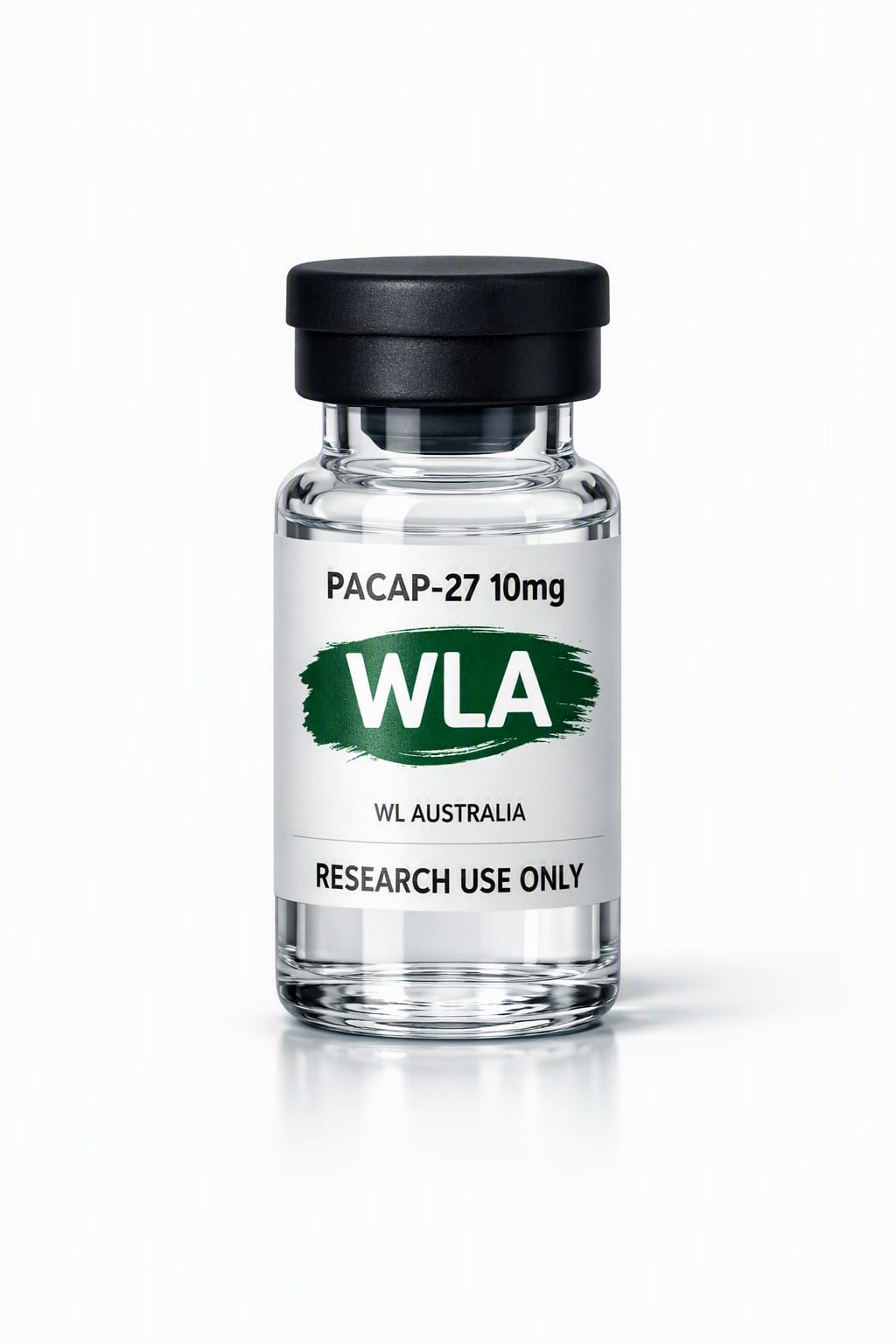
PACAP-38 vs PACAP-27: what really changes?
The problem: focusing only on amino-acid count
The difference between 27 and 38 amino acids may look small on paper. In biology, however, a short sequence can change how a peptide folds, travels, resists breakdown and activates receptors. Think of the final 11 amino acids as extra components added to a multi-tool: they can change how the entire tool operates.
The solution: compare structure, distribution and signalling together
| Feature | PACAP-38 | PACAP-27 |
|---|---|---|
| Length | 38 amino acids; full-length form | 27 amino acids; shorter form |
| Physiological abundance | Dominant form in circulation and many tissues | Less abundant form |
| Distribution | Broad distribution across central and peripheral nervous systems, adrenal, gonadal and pancreatic tissue | Present in overlapping systems but generally less dominant |
| Circulating role | More prominent as a circulating, hormone-like signal; plasma protein binding may influence its persistence and measurement | More often studied as a shorter local signalling form |
| Receptor profile | Activates PAC1, VPAC1 and VPAC2, with isoform-specific differences in downstream signalling | Also activates all three receptor families, but relative efficacy can differ |
| Kinetics | Longer-lived in some circulating and physiological contexts, although estimates vary with species, assay and preparation | Kinetics may be different because of altered degradation and tissue handling |
| Neuroprotection research | The main physiological form studied in neuronal survival and stress-resilience models | Shows overlapping activity, but has a smaller research base in some applications |
| Migraine research | Central focus of PAC1-related headache research | Also biologically active, but less prominent in modern clinical migraine studies |
| Peripheral endocrine research | Strong focus in adrenal, gonadal, pancreatic and vascular studies | Studied as a related isoform with overlapping actions |
A careful interpretation is important: PACAP-38 is not automatically “better” than PACAP-27. The appropriate form depends on the research question.
