
The Adrenal System: Your Body’s Power Plant
To understand ACTH 1-24, you must first understand the “Power Plant” of your body: the adrenal glands. Imagine your body is a large manufacturing facility. The adrenal glands are the power stations located just above your kidneys. Their job is to produce Cortisol, the “electricity” that keeps the lights on, the machines running, and the facility protected from external threats (stress).
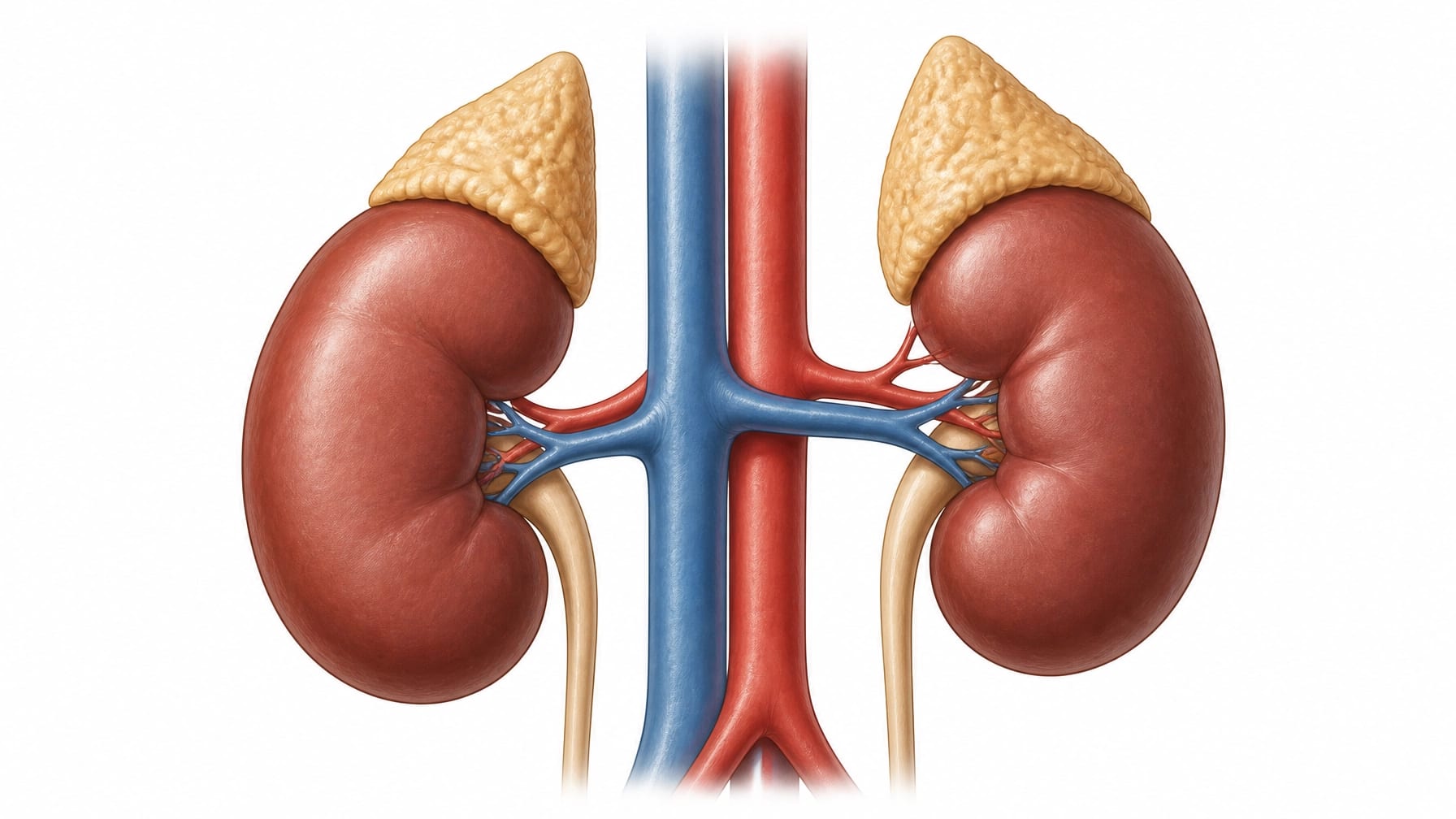
When this power plant is functioning correctly, you experience steady energy, clear focus, and a resilient immune system. However, when the signal from the “Head Office” (your brain) to the “Power Plant” (adrenals) becomes garbled or weak, energy production drops. This is where ACTH 1-24 enters the picture.
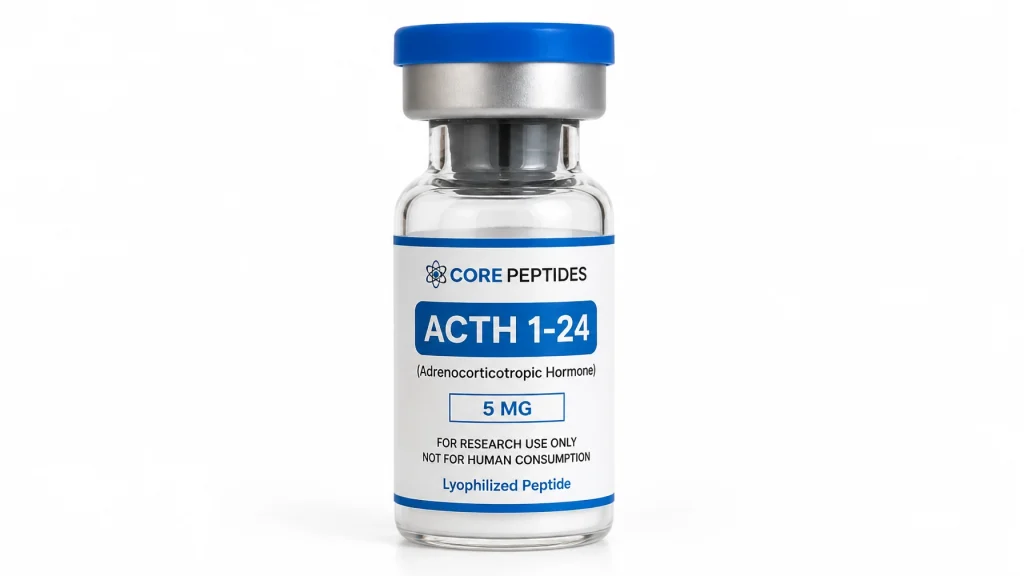
ACTH 1-24 is a synthetic fragment of the natural Adrenocorticotropic Hormone (ACTH) produced by your pituitary gland. While the natural hormone consists of 39 amino acids, ACTH 1-24 contains the first 24: the specific sequence that carries the full “on switch” capability for your adrenal cortex.
[VIDEO PLACEHOLDER: Understanding the HPA Axis and Adrenal Response]
Problem: The “Burnout” Signal Failure
Many individuals between 20 and 60 struggle with what is colloquially known as adrenal fatigue or HPA (Hypothalamic-Pituitary-Adrenal) axis dysregulation.
Focus on this frustration: You do everything right: you sleep eight hours, you eat well: but you still feel like a car engine trying to start with a flat battery. This is often because the signal to produce cortisol is either too low or the adrenal “engines” have become sluggish and unresponsive.
The solution? Testing and optimizing the response. ACTH 1-24 provides a direct, highly purified signal to the adrenals. Think of it like a zipper: when the peptide binds to its receptor (the MC2R), it “zips” into place perfectly, initiating a rapid chain reaction of cellular energy production.
