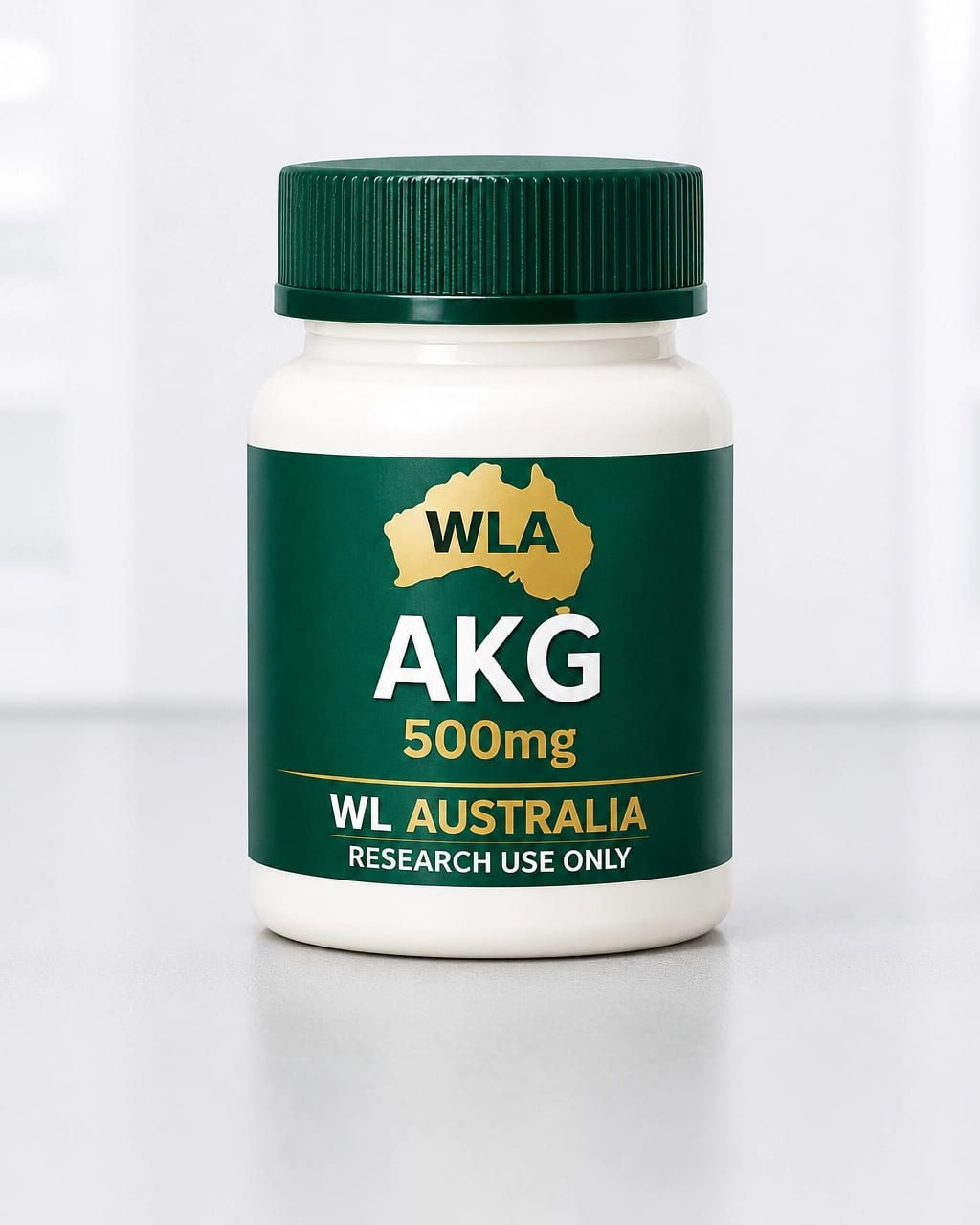
Why AKG is attracting longevity researchers
The frustration in ageing research is simple: ageing is not controlled by one switch. It is more like a large construction site, with energy supply, waste removal, inflammation, DNA regulation and tissue repair all operating at once.
Alpha-ketoglutarate, commonly abbreviated as AKG, is attracting attention because it sits at the centre of several of these systems. It is an endogenous metabolite, meaning your cells naturally produce it. It is also known as 2-oxoglutarate.
Researchers study AKG because it connects:
- Mitochondrial energy production
- Amino-acid and nitrogen metabolism
- Redox balance, which describes the movement between oxidation and reduction
- Epigenetic regulation, or chemical controls that influence gene activity without changing the DNA sequence
- Cellular ageing and inflammation
That does not mean AKG has been proven to extend human life. It means the molecule occupies an important biological junction: like a roundabout where several major roads meet.
The research goal: understand whether changing AKG availability can influence healthspan, cellular resilience and age-related decline.
What is AKG?
AKG is a five-carbon molecule found inside cells, particularly within the mitochondria. Mitochondria are often described as the cell’s power stations, but a more useful analogy is a hybrid engine: they process fuel, respond to demand and supply energy in different forms.
AKG performs several roles at the same time:
- It acts as an intermediate in the Krebs cycle.
- It provides a carbon framework for producing amino acids such as glutamate and glutamine.
- It participates in nitrogen handling.
- It serves as a required co-substrate for enzymes involved in oxygen sensing, collagen formation and epigenetic regulation.
In practical research terms, AKG is not merely “an energy ingredient”. It is a metabolic messenger and raw material.