
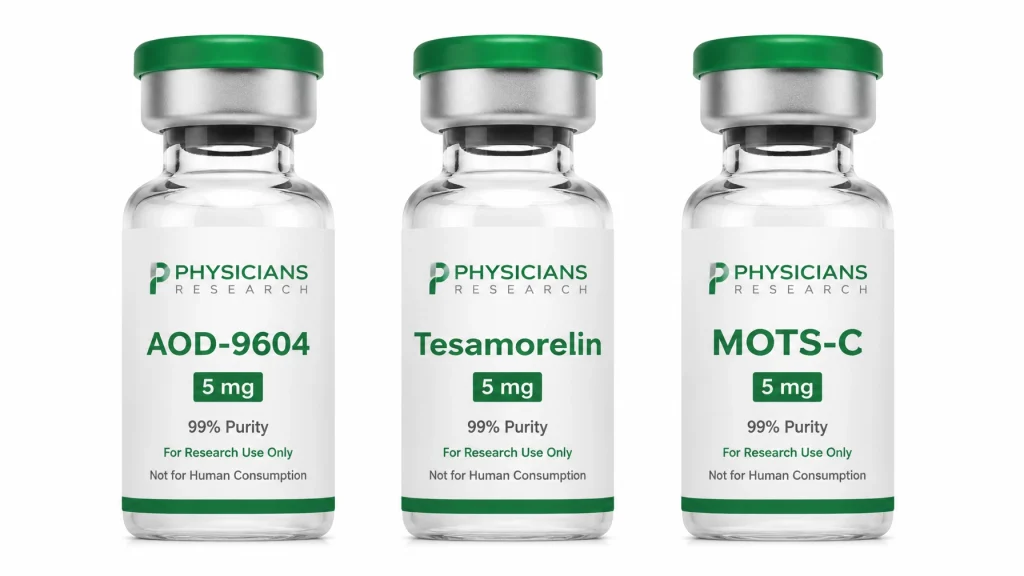
The Problem: Why Traditional Weight Loss “Stalls”
Before we dive into the solution, we must identify the frustration. Your body is a master of survival. When you reduce calories, your metabolism often slows down to compensate, a process known as adaptive thermogenesis. It is like a construction site where the workers have stopped receiving supplies; they don’t work faster to finish the job; they simply sit down and wait.
Furthermore, visceral adipose tissue (VAT), the deep belly fat surrounding your organs, is notoriously resistant to traditional methods. This fat isn’t just an aesthetic concern; it is metabolically active and can drive inflammation. If you are focused on long-term health, shifting this “stubborn” fat is your primary objective.
1. AOD 9604: The “Locksmith” for Your Fat Cells
The first component of this stack is AOD 9604 (Anti-Obesity Drug 9604). Think of your fat cells as locked storage units. For the fat to be used, you first need a key to open the door.
AOD 9604 is a small fragment of the Human Growth Hormone (HGH) molecule. Specifically, it is the C-terminal end (amino acids 177-191) which governs fat metabolism. Unlike full-spectrum HGH, AOD 9604 does not significantly affect blood sugar levels or promote tissue growth in other areas. It is a specialist.
How it Resolves the Stall:
- Lipolysis Stimulation: It “unlocks” the fat cells, encouraging the release of stored fatty acids into the bloodstream.
- Inhibition of Lipogenesis: It acts as a barrier, preventing the formation of new fat stores (lipogenesis).
- Focus on Subcutaneous Fat: It is particularly effective at addressing the fat just beneath the skin, helping to refine body composition.
Key Definition: Lipolysis is the metabolic process through which your body breaks down fats (lipids) through enzymes and water, or hydrolysis, to release fatty acids.
