
The Problem: The “Sticky” Fire Alarm of Chronic Stress
Consider your body’s stress response as a high-tech fire alarm system. Under normal circumstances, when a fire (a stressor) starts, the alarm sounds, sirens blare (cortisol is released), and the building is evacuated so repairs can begin. This is a survival mechanism designed for short-term safety.
The problem occurs when the alarm handle gets “stuck.” In many individuals, the signal for stress: Corticotropin-Releasing Factor (CRF): remains active long after the threat has passed. This leads to a constant flood of ACTH (Adrenocorticotropic Hormone) and Cortisol, the primary stress hormone. Think of this like a car engine being redlined while parked; eventually, the gaskets blow, the oil burns off, and the machinery fails.
Focus on these common symptoms of HPA axis (Hypothalamic-Pituitary-Adrenal) dysfunction:
- Persistent Fatigue: Feeling “tired but wired” regardless of sleep quality.
- Stress-Induced Hair Loss: Noticing thinning or shedding during periods of high pressure.
- Mood Volatility: Irritability or an inability to “switch off” at night.
- Metabolic Resistance: Difficulty managing weight despite clean eating and exercise.
The Solution: Introducing Astressin B
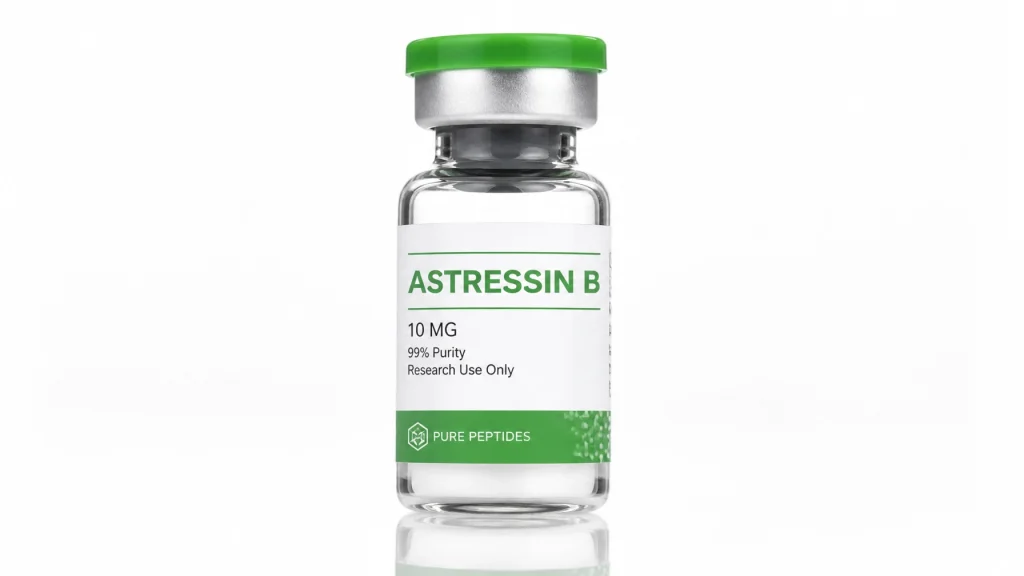
Astressin B is a synthetic peptide engineered to act as a potent CRF receptor antagonist. In simpler terms, it is a molecular “cap” that fits over your stress receptors, preventing the stress signal from being received. If CRF is the finger pulling the fire alarm, Astressin B is the protective cover that stops the alarm from being triggered unnecessarily.
How It Works: The “Lock and Key” Mechanism
To understand how Astressin B optimizes your biology, imagine a zipper. For a zipper to close, the teeth must align perfectly. In your brain and peripheral tissues, CRF acts as the “slider” that pulls the stress response together. Astressin B acts as a block in that zipper track. It binds to the CRF1 and CRF2 receptors with high affinity, effectively locking the door so the stress signal cannot enter.

By blocking these receptors, you are essentially telling your body that the “fire” is out. This allows the pituitary gland to reduce its production of ACTH, which in turn tells your adrenal glands to stop overproducing cortisol. This downward regulation is the key to optimization: returning your body to a state of calm, focused readiness rather than panicked exhaustion.
[INSERT VIDEO PLACEHOLDER: Understanding the HPA Axis and Peptide Modulation]
