
What is B7-33? The Evolution of Relaxin-2
To understand B7-33, you first have to understand Relaxin-2. In the human body, Relaxin is a naturally occurring hormone that plays a critical role in cardiovascular health and tissue remodeling. It’s essentially the body’s “softener”: it prevents the overgrowth of connective tissue (fibrosis) and helps blood vessels dilate.
However, native Relaxin-2 has a massive drawback for researchers: it’s a complex, two-chain peptide that is incredibly difficult to synthesize and has a very short half-life in the body.
Enter B7-33.
B7-33 is a functional, single-chain analog of the Relaxin-2 B-chain. By isolating and refining the specific part of the molecule responsible for its anti-fibrotic effects, scientists have Revolutionized the way we approach tissue repair. This research compound is smaller, more stable, and specifically engineered to target the receptors that stop scarring in its tracks.
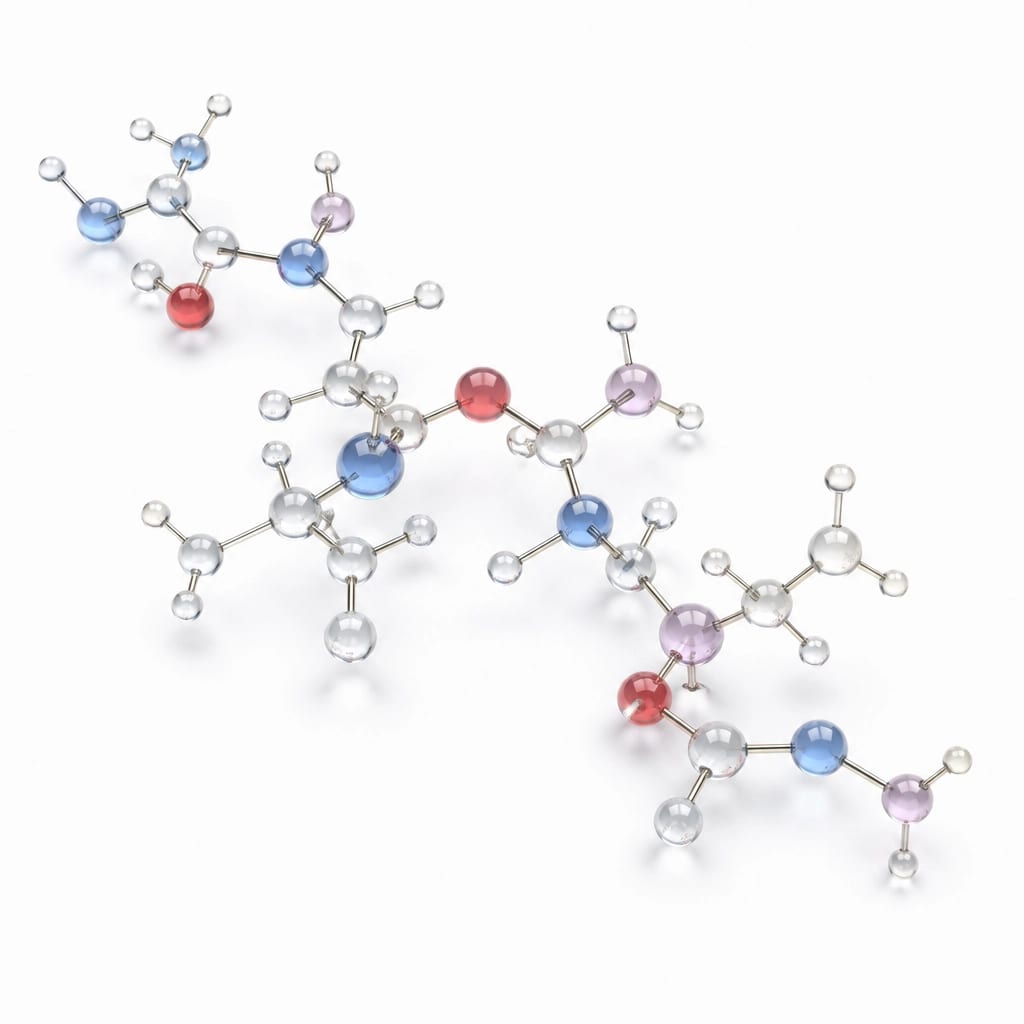
The Science: How B7-33 Unlocks Tissue Regeneration
B7-33 operates via a fascinating “problem-solution” biological framework. When an organ is damaged: whether it’s the heart after an event or the lungs due to environmental stress: the body responds by laying down collagen. This is essentially biological “superglue.” While helpful in the short term, too much of this “glue” leads to fibrosis, making the organ stiff and dysfunctional.
B7-33 targets the RXFP1 (Relaxin Family Peptide Receptor 1). Unlike native Relaxin, which triggers a broad range of signals, B7-33 uses what we call Biased Agonism.
The MMP-2 Pathway
B7-33 selectively activates the ERK1/2–MMP-2 signaling pathway. In simpler terms, it signals the body to produce Matrix Metalloproteinase-2 (MMP-2). Think of MMP-2 as a high-precision molecular “chainsaw” that specifically breaks down excess collagen and scar tissue, allowing healthy cells to breathe and function again.
- Traditional Relaxin-2: Increases cAMP (which can lead to unwanted systemic effects).
- B7-33: Focuses on pERK and MMP-2 (purely anti-fibrotic and vasoprotective).
