Foundation: BAC Water vs. Sterile Water
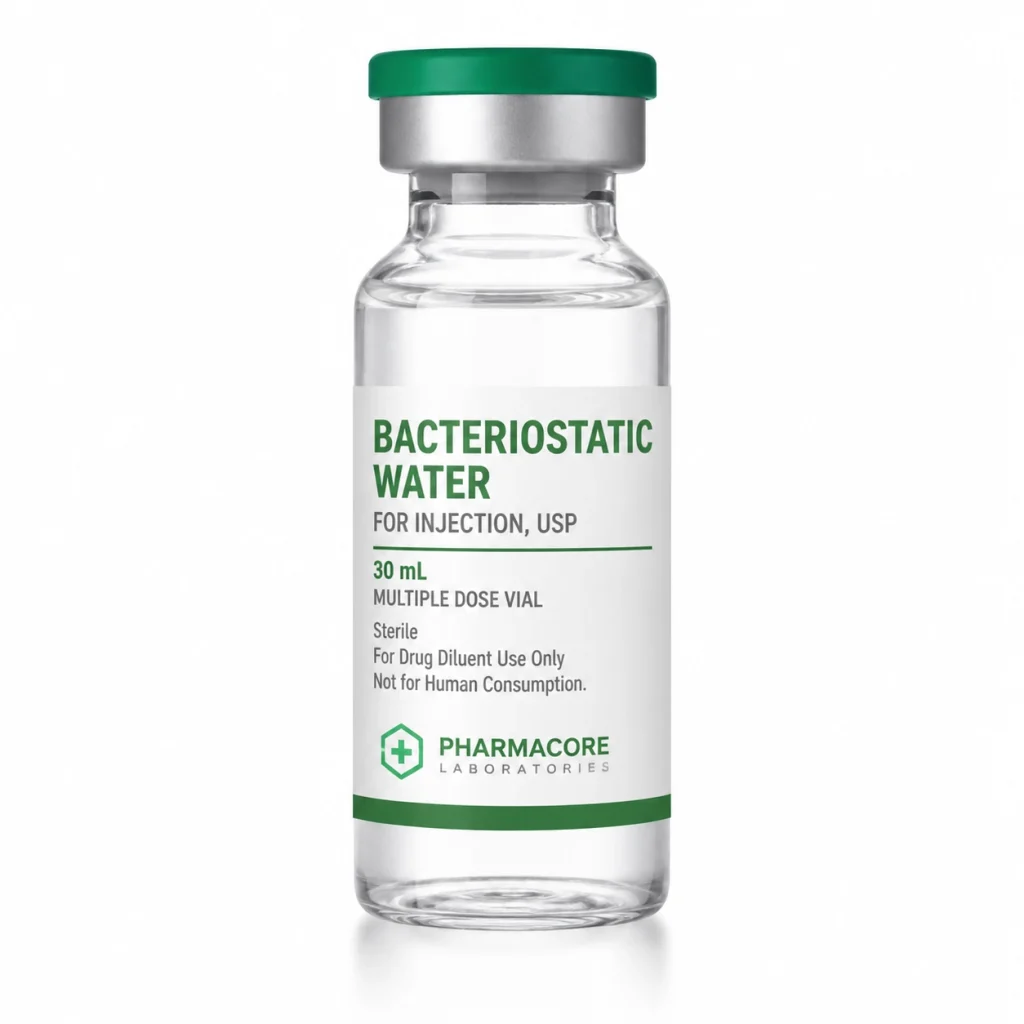
Before we can tackle pH, we must understand the primary medium: the solvent. You generally have two choices: Sterile Water for Injection (SWFI) and Bacteriostatic (BAC) Water.
Sterile Water is like a clean, empty room. It is purified and contains no additives. It’s perfect for a single use, but the moment you open it, the “room” is no longer sterile. On the other hand, BAC Water contains 0.9% Benzyl Alcohol (BA). This BA acts like a security guard at the door of your vial, preventing bacteria from setting up shop and multiplying.
| Feature | Sterile Water (SWFI) | Bacteriostatic (BAC) Water |
|---|---|---|
| Preservative | None | 0.9% Benzyl Alcohol |
| Usage | Single-use only | Multi-use (up to 28 days) |
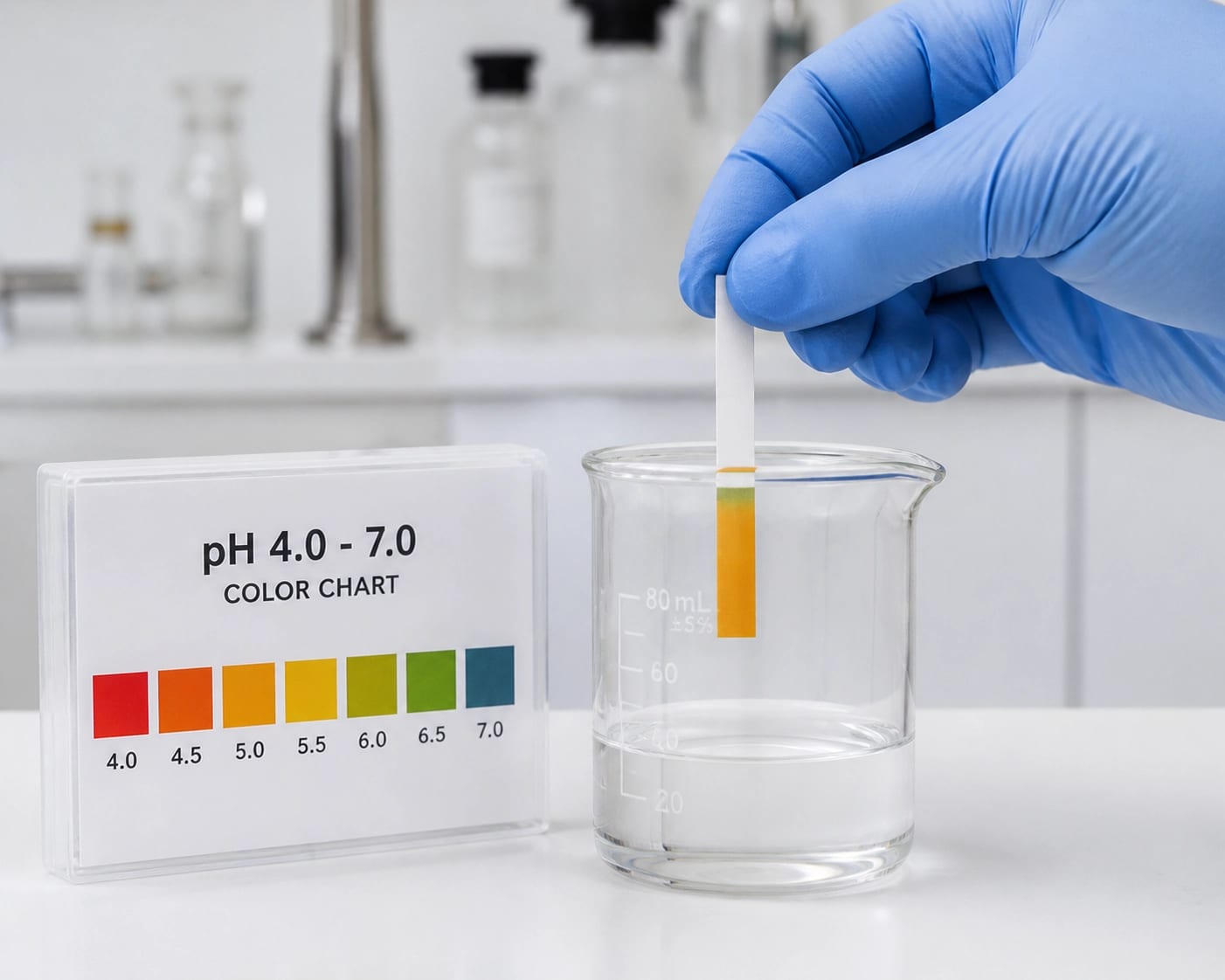
| Typical pH | 5.0 – 7.0 | 4.5 – 7.0 (Target ~5.7) |
| Stability | 24–72 hours post-reconstitution | Up to 28 days post-reconstitution |
Focus on this: For most multi-dose protocols common in Australia, BAC water is the industry standard. It offers a level of microbial stability that sterile water simply cannot match. However, that security guard (benzyl alcohol) can slightly alter the pH, which brings us to our next critical concept.
The Preservation Puzzle: Why pH is the “Zipper” of Stability
Every peptide is a chain of amino acids held together by peptide bonds. Imagine these bonds as the teeth of a zipper. For the zipper to function correctly, it needs to be aligned. If the environment (the solvent) is too acidic or too alkaline, it’s like trying to zip up a jacket in a hurricane: the teeth don’t line up, and the whole structure fails.
This is known as peptide integrity. When the pH of your solvent drifts too far from the peptide’s “sweet spot,” the chain can unfold (denature), aggregate (clump together), or undergo hydrolysis (break apart).
The “Sweet Spot”
Most research peptides are happiest in a mildly acidic environment, typically between pH 4.5 and 7.0. Specifically, a pH of 5.5 to 6.0 is the gold standard for long-term stability. If you are also using other health optimisers, like vitamin d supplements, you already know that environmental factors dictate how well your body: and your research: absorbs and utilizes active compounds.