
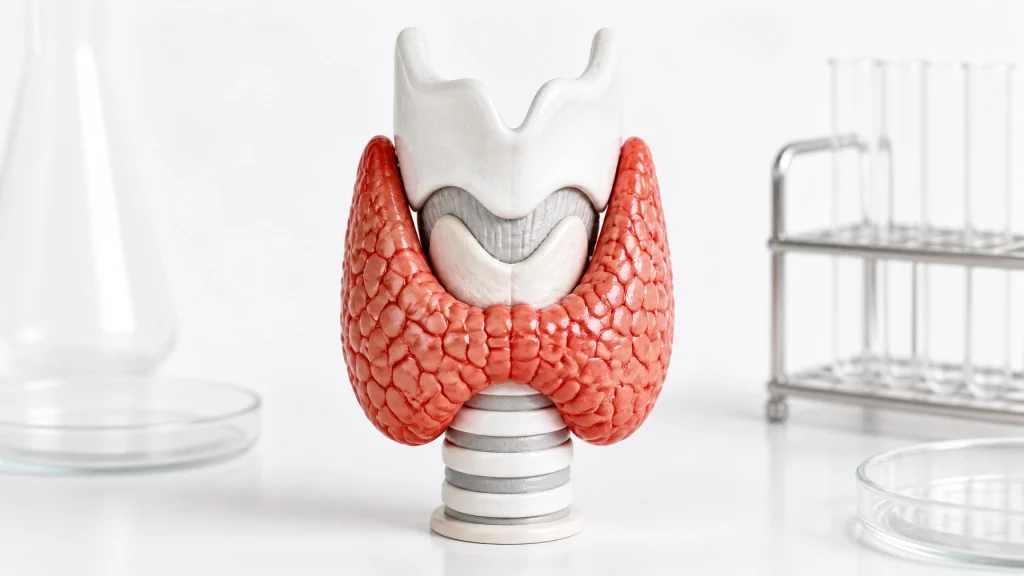
The thyroid: your body’s metabolic thermostat
The thyroid is a small, butterfly-shaped gland at the front of your neck. Its size is modest, but its influence is broad.
Think of your thyroid as a central thermostat and energy-control system. It does not simply turn your metabolism “up” or “down” like a switch. Instead, it responds to instructions from the brain and adjusts hormone production according to the body’s needs.
The main thyroid hormones are:
- T4, or thyroxine: the primary hormone released by the thyroid.
- T3, or triiodothyronine: the more active thyroid hormone at many tissues.
- TSH, or thyroid-stimulating hormone: a signal released by the pituitary gland that tells the thyroid how much hormone to produce.
- TRH, or thyrotropin-releasing hormone: a signal from the hypothalamus that prompts the pituitary to release TSH.
The process works like a management chain:
- The hypothalamus releases TRH.
- TRH signals the pituitary gland.
- The pituitary releases TSH.
- TSH signals the thyroid gland.
- The thyroid produces and releases T4 and T3.
- The brain monitors hormone levels and adjusts the signals through feedback.
This is called the hypothalamic–pituitary–thyroid axis. It is a communication loop, much like a thermostat checking a room and adjusting the heating system.
The problem: If one part of this communication loop is underactive, overactive or damaged, your energy regulation may change.
The solution: Start with accurate testing and diagnosis rather than guessing from symptoms alone.
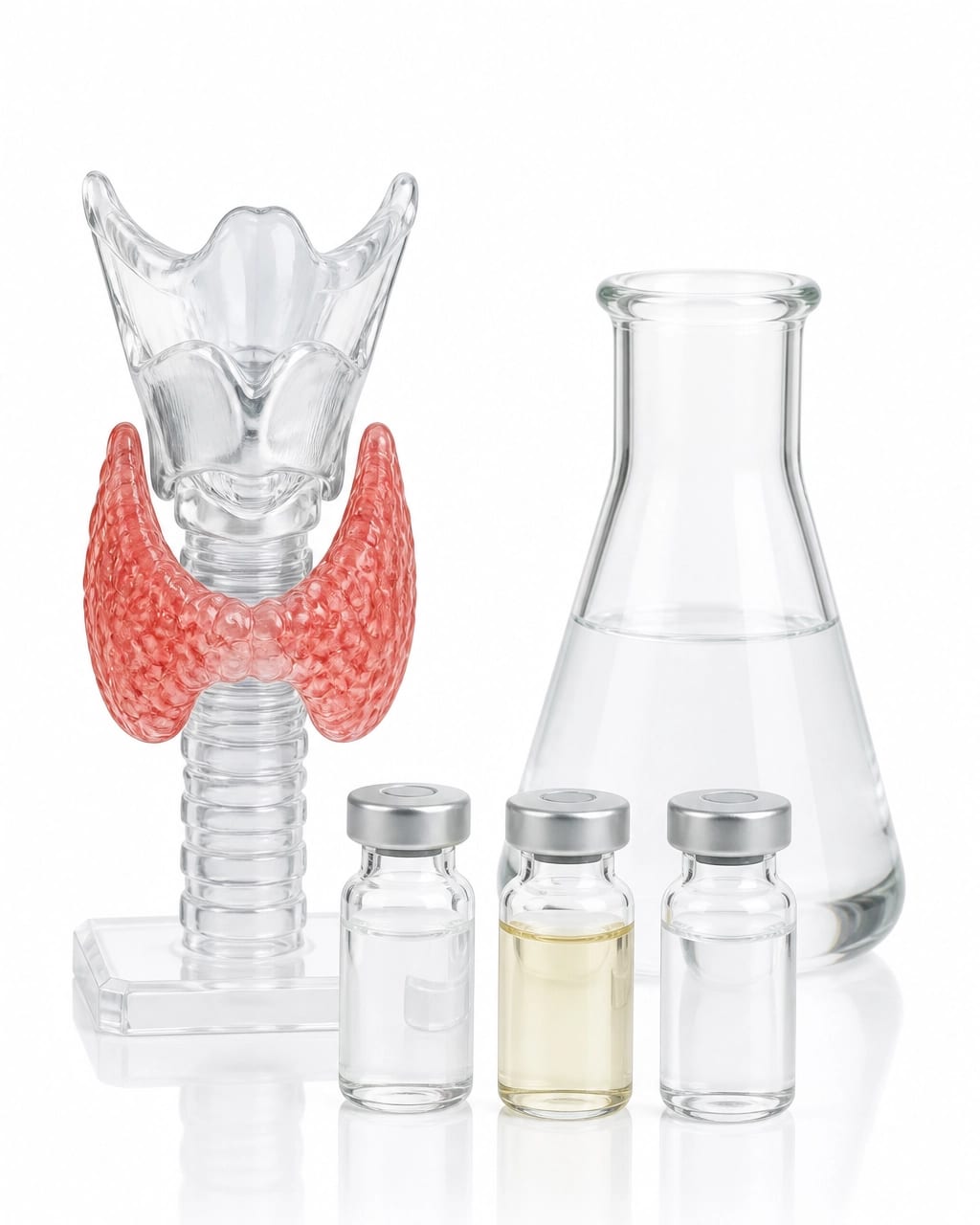
What is Thyreogen?
Thyreogen is described as a natural extract derived from thyroid tissue. In the foundational document, it is presented as a source of short-chain peptides that may provide signals or building blocks associated with thyroid tissue maintenance.
Peptides are short chains of amino acids. You can think of them as small messages sent between cells. They do not automatically rebuild an organ, but some peptides may influence cellular communication in laboratory or experimental settings.
The proposed concept behind Thyreogen is different from taking thyroid hormone directly. Rather than supplying T4 or T3 from outside the body, Thyreogen is discussed as a way to support the thyroid’s own cellular environment.
That distinction is important: but so is the evidence.
Claims about thyroid tissue regeneration, hormone normalisation or long-term restoration should be described as proposed or experimental, not established clinical outcomes. High-quality, independent human evidence remains limited. There is not enough evidence to conclude that Thyreogen can reliably regenerate thyroid tissue or replace standard treatment for hypothyroidism, hyperthyroidism, Hashimoto’s disease, Graves’ disease or thyroid nodules.
The problem: Promotional language can make experimental products sound like proven therapies.
The solution: Separate the proposed mechanism from the demonstrated clinical result. Ask what has been tested, in whom, under what conditions and with what safety monitoring.
For general information about research products, you can browse WL Australia’s bioregulator collection. Always review the company’s legal information before proceeding.
