The Foundation: Your Internal Opioid System
To understand beta-endorphin, you must first understand the mu-opioid receptor. Imagine your brain is a high-performance sports car. The mu-opioid receptors are like the fine-tuning components of the engine. When beta-endorphin binds to these receptors, it doesn’t just “mask” pain; it recalibrates your reward pathways and your resilience to stress.
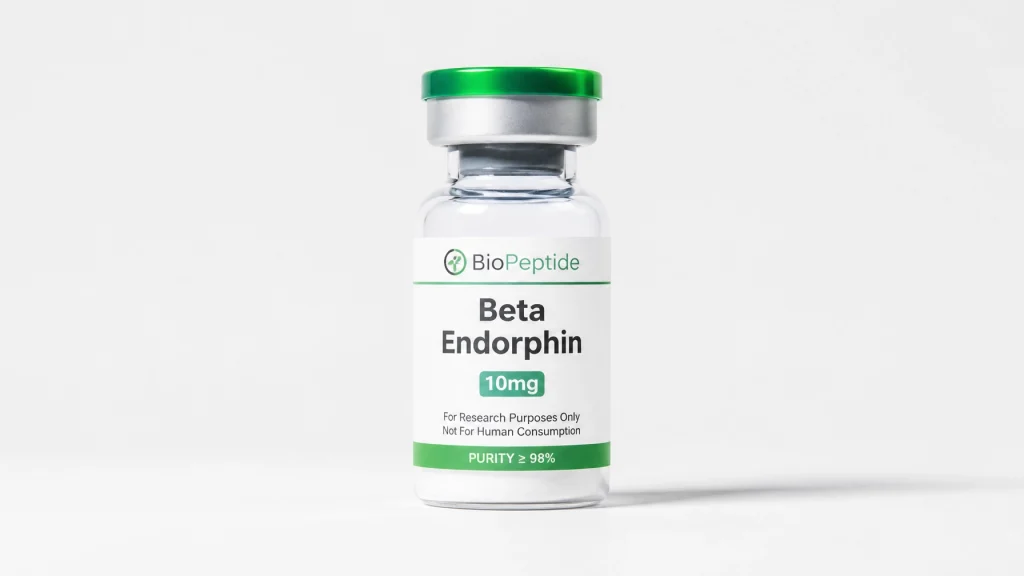
Focus on this: Beta-endorphin is produced primarily in the pituitary gland and the hypothalamus. Its job is to bind to receptors throughout the nervous system to dampen the “noise” of stress and pain. When your levels are optimal, you experience emotional stability and a sense of calm. When they are low, the engine begins to rattle: anxiety, low mood, and chronic pain often follow.
Problem: The “Brain Fog” and Emotional Burnout
Many of our customers come to us feeling “stuck.” They describe a persistent grey cloud, a lack of motivation, or a feeling that their brain is working twice as hard to achieve half as much. This is often the result of neuroplasticity failure. Without the right chemical signals, your brain cannot repair the “wiring” damaged by chronic stress.
The Solution: The BDNF Connection
This is where the science gets exciting. Beta-endorphin is not a “dead-end” molecule. Recent research has confirmed that it acts as a trigger for BDNF (Brain-Derived Neurotrophic Factor).
Think of BDNF as “brain fertilizer.” It is the primary protein responsible for the growth, maintenance, and survival of neurons. You will find that beta-endorphin upregulates BDNF through two specific pathways:
- The Mu-Opioid Pathway: Primary for mood regulation.
- The Delta-Opioid Pathway: Essential for cognitive resilience.
By optimizing your endorphin levels, you aren’t just feeling better in the moment: you are literally “fertilizing” your brain to build more resilient structures for the future.