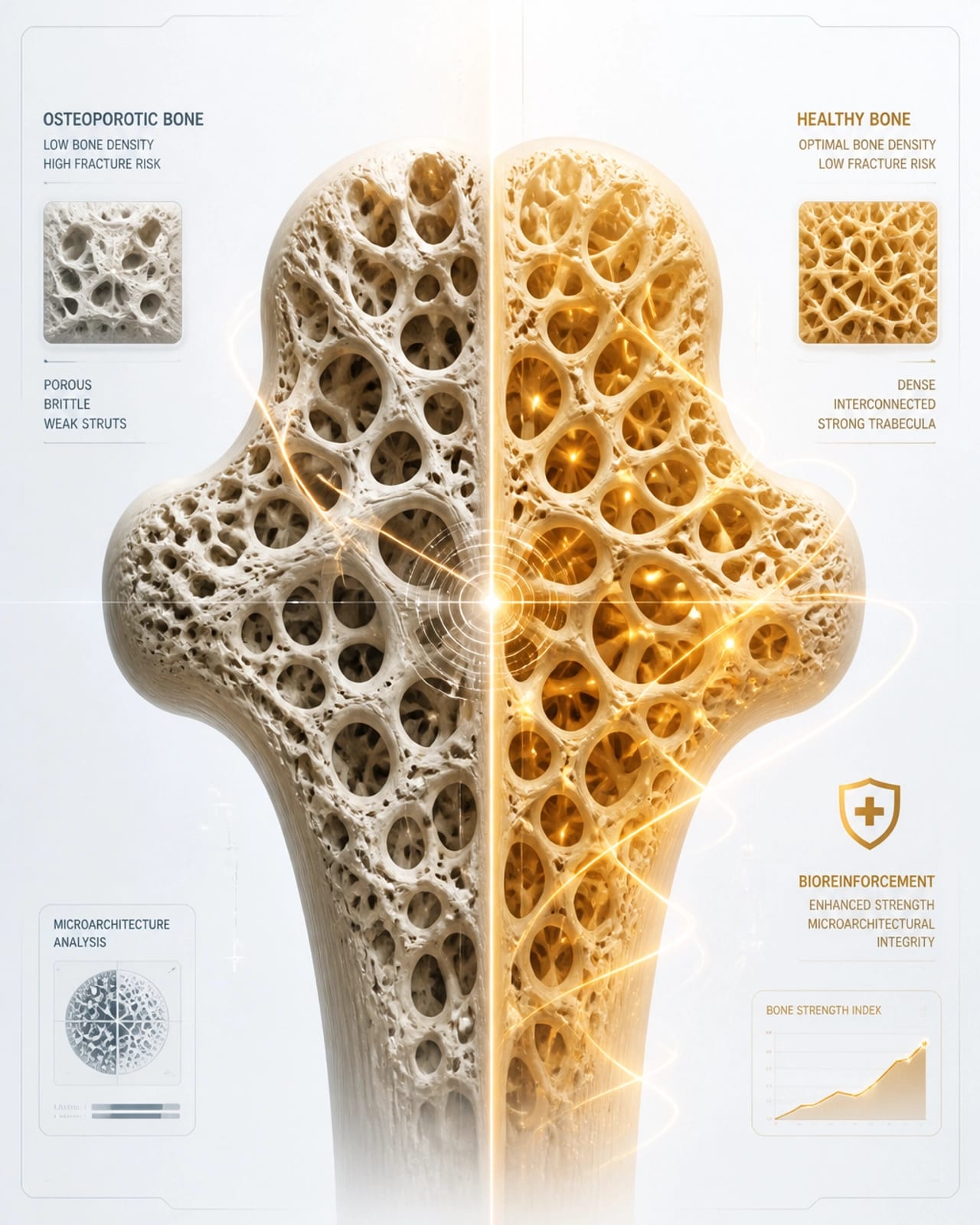
The Problem: The “Skeletal Leak”
As we age, or during periods of intense metabolic stress, our bodies enter a state of “net resorption.” Essentially, the cells that break down bone (osteoclasts) start outworking the cells that build it (osteoblasts). Think of it like a bank account where you’re withdrawing $100 for every $80 you deposit. Eventually, you go bankrupt: which, in skeletal terms, means brittle bones and increased fracture risk.
Standard treatments often focus on stopping the withdrawals (antiresorptives). But what if you could dramatically increase the deposits?
The Solution: Abaloparatide’s Anabolic Switch
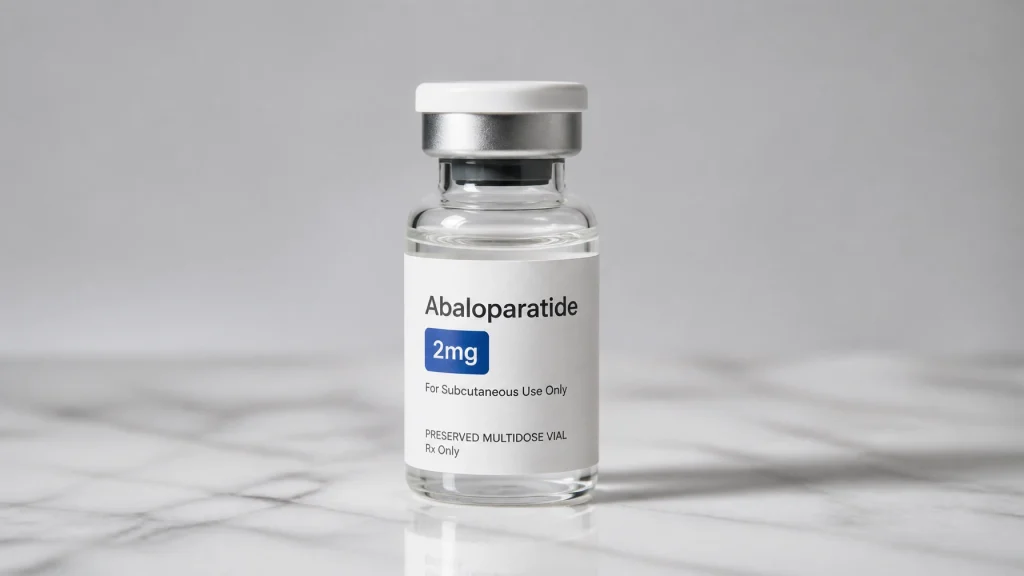
Abaloparatide is a synthetic N-terminal analog of parathyroid hormone-related protein (PTHrP). Unlike traditional treatments that merely slow down bone loss, Abaloparatide is a true anabolic peptide. It tells your body to actively build new, high-quality bone tissue.
The “RG” Receptor Secret
The magic happens at the PTH1 receptor (PTH1R). This receptor is like a high-tech toggle switch located on the surface of your osteoblasts (the builders).
Recent skeletal research has shown that this receptor can exist in two different “moods” or conformations: R⁰ and RG.
- The R⁰ State: When triggered, it causes a long, sustained signal. While this builds bone, it also eventually triggers the “cleanup crew” (osteoclasts), leading to higher bone resorption and a risk of hypercalcemia (too much calcium in the blood).
- The RG State: This is the “sweet spot.” Abaloparatide selectively binds with high affinity to this state, producing a rapid, transient burst of signaling.
By favoring the RG conformation, Abaloparatide effectively flips the switch to Bone Formation Mode without over-activating the resorption pathway. It’s like getting the benefits of a heavy workout without the systemic inflammation.