
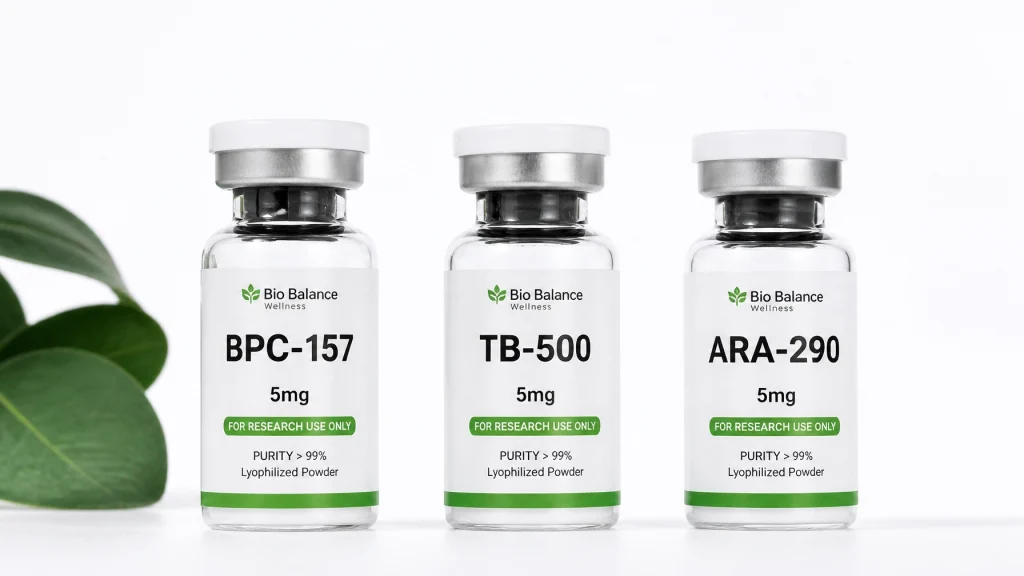
1. BPC-157: The Structural Site Foreman
Best for: Tendons, Ligaments, and Localised Gut Issues
Consider BPC-157 (Body Protection Compound-157) the chief site foreman of your body’s repair crew. This pentadecapeptide is naturally found in human gastric juice, acting as a master regulator of healing. Its primary superpower is angiogenesis: the process of building new blood vessels.
Think of an injury like a construction site in a remote area with no roads. No matter how many workers you have, you can’t fix the building if you can’t get the trucks in. BPC-157 “builds the roads” (blood vessels) so that oxygen and nutrients can reach the damaged tissue.
- Problem: You have a stubborn tendon or ligament injury (like an Achilles tear or rotator cuff strain) that isn’t getting enough blood flow.
- Solution: Focus on BPC-157. It specifically targets the upregulation of growth hormone receptors in tendon fibroblasts, essentially telling the “zippers” of your connective tissue to close faster.
- Availability: Usually found in 10mg or high-concentration 20mg vials for those managing more significant structural repairs.
2. TB-500: The Systemic Logistics Manager
Best for: Muscle Tears, Flexibility, and Widespread Inflammation
If BPC-157 is the foreman on a specific site, TB-500 (a synthetic version of Thymosin Beta-4) is the logistics manager for the whole city. While BPC-157 is fantastic at localized repair, TB-500 excels at systemic movement.
Its main trick is binding to G-actin, a protein that helps cells move. Imagine your repair cells are stuck in traffic; TB-500 gives them a police escort, allowing them to migrate rapidly across the body to wherever the damage is greatest.
- Problem: You have a large muscle strain, deep bruising, or “whole-body” stiffness and inflammation.
- Solution: TB-500 10mg is the gold standard here. It doesn’t just fix the hole; it ensures the entire surrounding “foundation” (the fascia and muscle fibers) remains flexible and doesn’t develop excessive scar tissue.
Watch: Understanding the “Healing Duo”
To see these two in action, check out these clinical breakdowns on how BPC-157 and TB-500 work synergistically to cover both localized and systemic repair.
- Video 1: Peptides for Injury Recovery: BPC-157 & TB-500 Explained
- Video 2: How to Choose Peptides for Different Injuries
