

The Metabolic Handbrake: Understanding NNMT
Before we talk about the solution, we have to identify the villain. In the world of weight management research, that villain is an enzyme called Nicotinamide N-methyltransferase (NNMT).
NNMT is primarily found in fat tissue (white adipose tissue) and the liver. When NNMT levels are high, they act like a “metabolic handbrake.” They slow down the rate at which your cells burn energy and, worse, they actually make fat cells more efficient at storing energy. In subjects with obesity or metabolic dysfunction, NNMT is often dialed up to eleven.
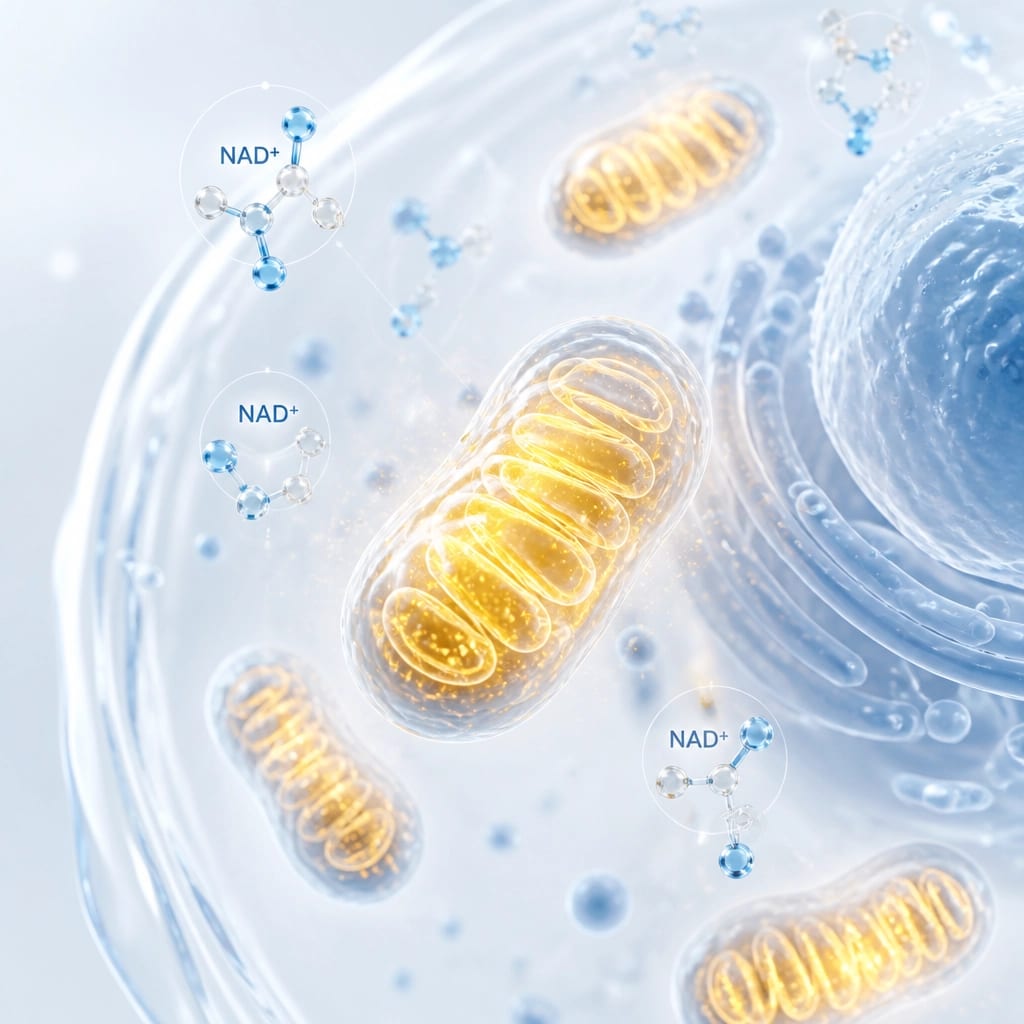
High NNMT levels also deplete a critical molecule: NAD+. You’ve probably heard of NAD+ in the context of longevity and anti-aging. It’s the “fuel” for your mitochondria. When NNMT is high, it steals the precursors your body needs to make NAD+, leaving your cells sluggish and your metabolism stalled.
Enter 5-amino-1MQ: The NNMT Disruptor
5-amino-1MQ is a small-molecule inhibitor specifically designed to combat this enzymatic bottleneck. Unlike traditional fat burners that try to “rev up” the heart rate or nervous system, 5-amino-1MQ works by simply taking the handbrake off.
When you introduce 5-amino-1MQ into a research protocol, it binds to the NNMT enzyme and shuts it down. The result?
- Increased NAD+ Levels: By stopping the enzyme that “wastes” nicotinamide, your cells can finally replenish their NAD+ stores.
- Boosted SAM Levels: It also preserves S-adenosylmethionine (SAM), which is vital for cellular signaling and repair.
- Fat Cell Shrinkage: Instead of just losing water weight, the research shows that 5-amino-1MQ helps fat cells actually shrink by increasing their internal energy expenditure.
