
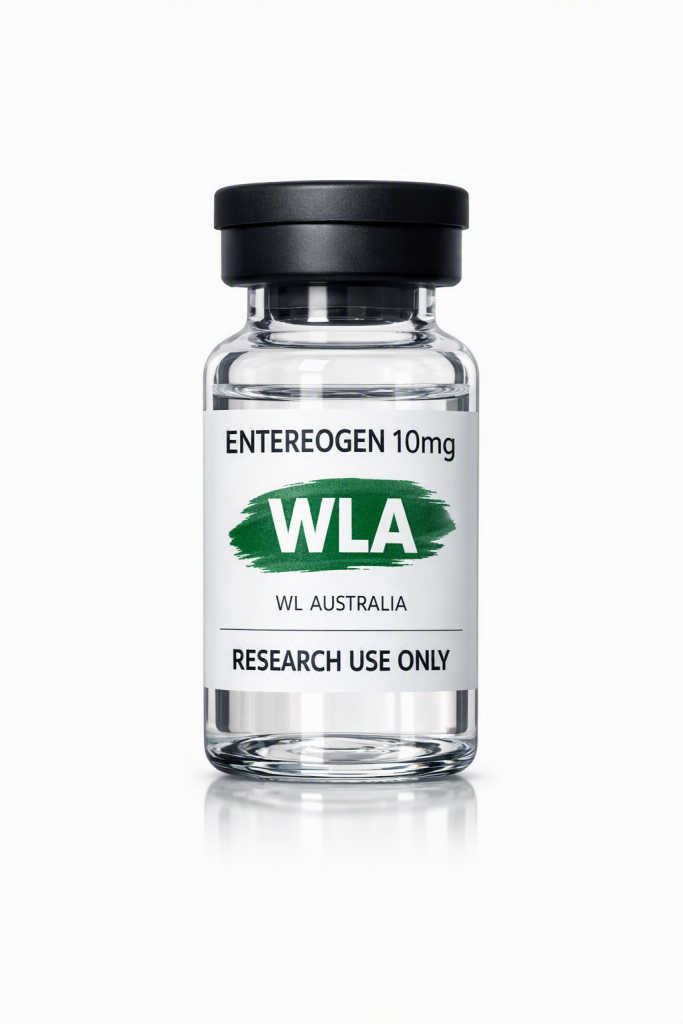
What is Enterogen?
The problem: digestive tissue is complex
Your digestive tract is not a simple tube. It is a layered biological system containing epithelial cells, mucus-producing cells, immune cells, nerves, blood vessels and a large microbial community.
These components must work as a team. The mucus layer acts like a protective coating. The epithelial cells form the main wall. Tight junctions: protein connections between neighbouring cells: act like zippers, helping control what can pass between cells.
If the zipper is too loose, the barrier may become less selective. If the lining cannot renew itself efficiently, recovery from everyday stress becomes more difficult.
The proposed solution: tissue-focused peptide signalling
Khavinson bioregulators are generally described as short chains of amino acids designed to interact with particular tissue systems. A useful analogy is a maintenance message sent to a construction site.
- Amino acids are the raw materials.
- Cells are the workers.
- The mucosal lining is the structure under repair.
- A bioregulator peptide is proposed as a signalling note or instruction.
This is different from a conventional nutrient. A vitamin may provide a tool or building material. A signalling peptide is proposed to influence how the cell uses its existing resources.
That is the theory behind Enterogen. However, proposed biological activity is not the same as proven clinical benefit.

Enterogen and the intestinal mucosal lining
The problem: the gut barrier must constantly renew
The intestinal lining is exposed to food, digestive enzymes, mechanical movement, microorganisms and chemical changes every day. Its cells are continually replaced, much like staff rotating through a high-pressure workplace.
This constant renewal is essential. The gut must remain flexible enough to absorb nutrients while maintaining an effective barrier.
Researchers examining intestinal bioregulators may therefore focus on:
- Mucosal integrity: the strength and condition of the protective lining.
- Epithelial renewal: the replacement of older intestinal surface cells.
- Protein synthesis: the process cells use to build proteins required for structure and function.
- Tight-junction regulation: the control points that help neighbouring cells join together.
- Digestive homeostasis: the balanced state in which digestion, absorption, immune activity and barrier function operate together.
The proposed research direction
The WL Australia product description presents Enterogen as a stomach- and intestinal-tissue-specific peptide bioregulator. It describes research interest in mucosal structure, protein synthesis and digestive function.
These areas are biologically plausible research targets. They should not be interpreted as proof that Enterogen can repair intestinal damage, resolve “leaky gut”, treat irritable bowel syndrome (IBS), or manage inflammatory bowel disease (IBD).
The research question is interesting. The human conclusion is not yet established.
