

The Problem: The “Thick Blood” Trap of Traditional EPO
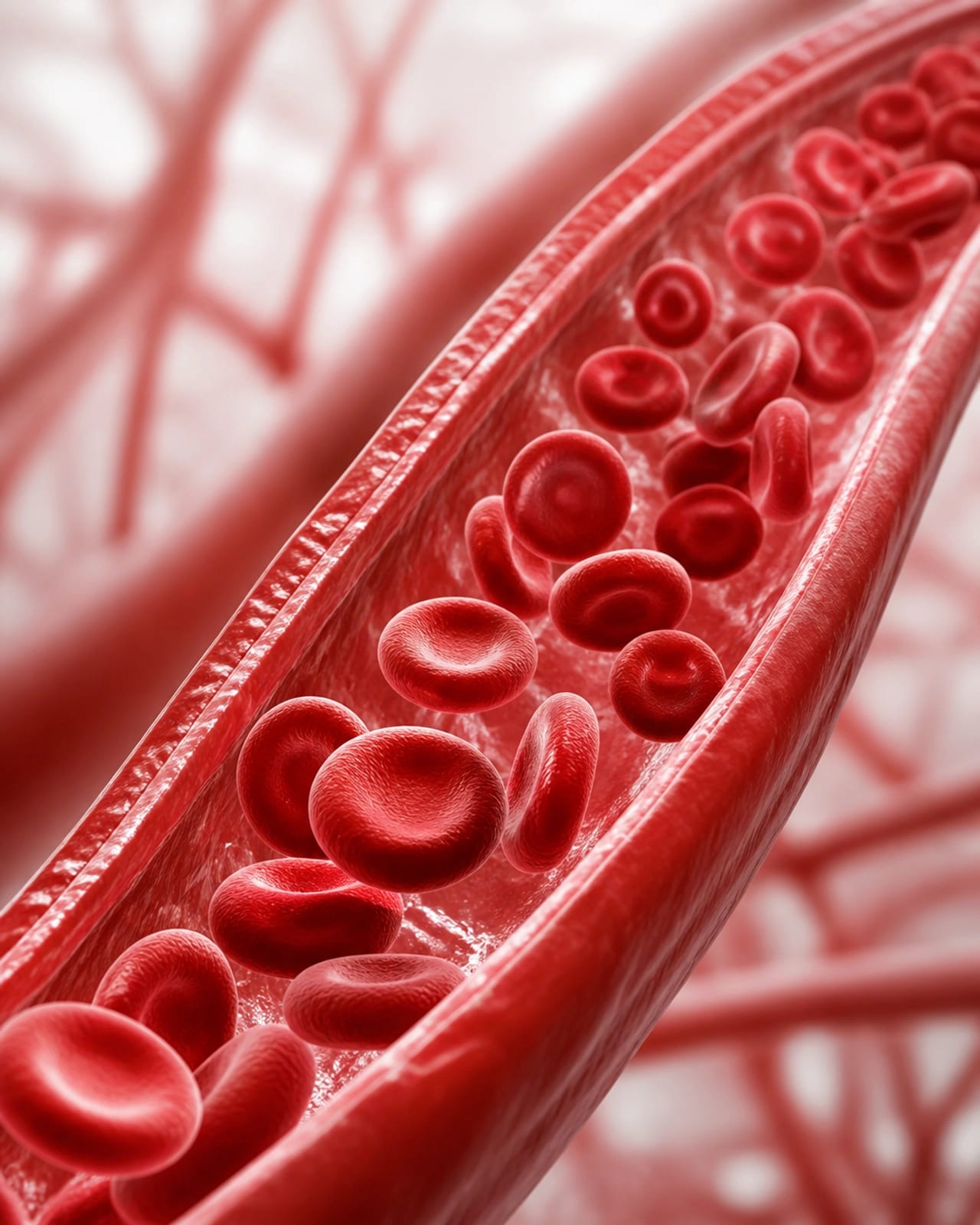
For years, the standard approach to increasing endurance was to stimulate erythropoiesis (pronounced eh-rith-row-poy-ee-sis). Erythropoiesis is the biological process where your bone marrow manufactures new red blood cells: the “delivery trucks” of your circulatory system.
While having more trucks seems like a great way to deliver more oxygen, there is a physical limit. If you flood the highway with too many trucks, the blood becomes thick and viscous. This creates a massive strain on the heart (the “fuel pump”) and increases the risk of “accidents” like blood clots or strokes.
Focus on the solution: Epobis represents a paradigm shift. It is a synthetic peptide derived from the human EPO sequence, but it has been engineered to be nonerythropoietic. This means it provides the protective and endurance-supporting benefits of EPO without forcing the body to produce excess red blood cells that thicken the blood.
Epobis: The Precision Tool for Oxygen Delivery
Epobis acts as a specialized key that only opens specific locks. In your body, there are different types of EPO receptors. One type handles the production of red blood cells (the “construction line”), while another type: the EPOR–CD131 heteroreceptor: focuses on protecting your tissues from damage during high-stress, low-oxygen (hypoxic) events.
Epobis is designed to ignore the construction line and focus entirely on tissue protection and cellular efficiency.
Problem-Solution: Overcoming the “Wall”
- The Problem: During intense physical or mental exertion, your tissues run out of oxygen faster than they can be replenished. This leads to cellular stress, inflammation, and eventual “failure” or hitting the wall.
- The Solution: Epobis reinforces the cellular walls. It makes your cells more resilient to low-oxygen environments, effectively allowing your “engine” to keep running smoothly even when the fuel gauge is dipping into the red.
[VIDEO PLACEHOLDER: Understanding How Peptides Protect Tissues Under Stress]
