
The Myostatin Brake: Identifying the Biological Bottleneck
Before you can optimize your biology, you must understand the frustration of the plateau. For many researchers and individuals aged 20 to 60, the primary obstacle to physical longevity is Sarcopenia (age-related muscle loss) and chronic tissue degradation. You might notice that injuries take longer to heal or that your strength gains have stalled despite perfect nutrition and training.
This isn’t a failure of effort; it is a failure of signaling. Your body is constantly receiving a “Stop” command from the TGF-β (Transforming Growth Factor beta) superfamily of proteins. These proteins, specifically Myostatin and Activin A, are the biological brakes that keep your muscle protein synthesis in check.
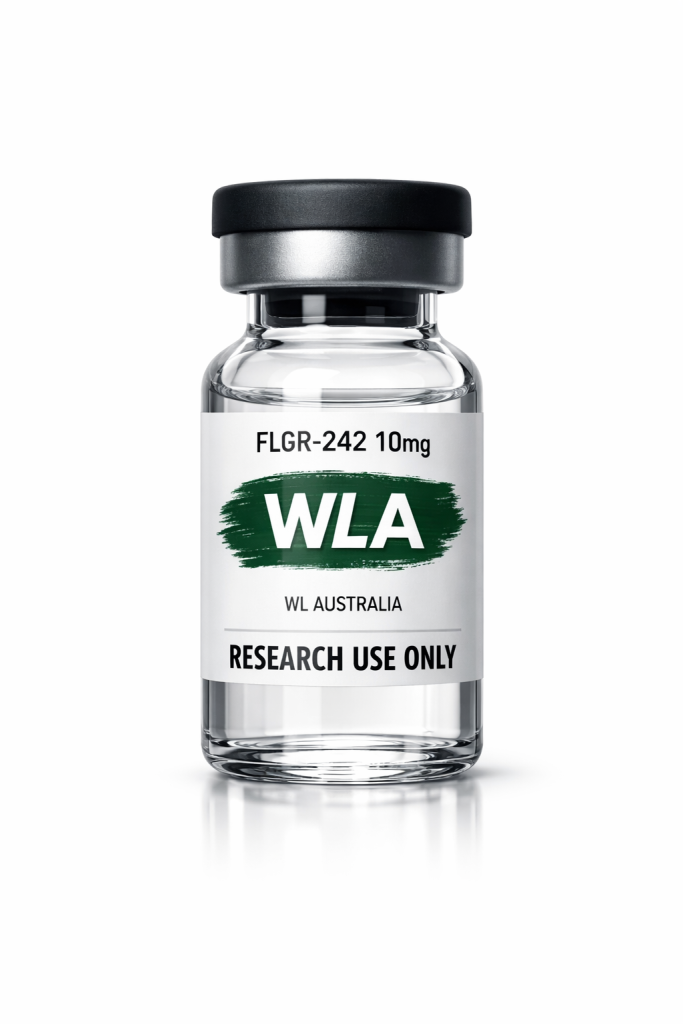
The Solution: FLGR 242 10mg is a recombinant follistatin-derived peptide designed to sequester these inhibitors. By binding to myostatin, FLGR 242 neutralizes the “Stop” signal, allowing your body to engage its natural anabolic machinery without interference.

How It Works: The Construction Site Metaphor
To visualize how FLGR 242 functions within your cells, imagine a busy construction site.
- The Blueprint: Your DNA.
- The Workers: Ribosomes and amino acids building muscle tissue.
- The Foreman: FLGR 242.
- The Safety Inspector: Myostatin.
In a normal scenario, the Safety Inspector (Myostatin) is constantly walking around the site, telling workers to slow down or stop because he’s worried about running out of resources. FLGR 242 steps in and distracts the Inspector, leading him away from the site. With the Inspector gone, the workers (your cells) can follow the Blueprint to its full potential, completing the build in record time.
Technically, this process is known as TGF-β Ligand Inhibition. FLGR 242 acts as a high-affinity antagonist. It literally “wraps” around the myostatin molecule, preventing it from docking into its receptor. When the receptor isn’t activated, the Smad2/3 signaling cascade: the pathway that suppresses growth: remains dormant.
[VIDEO: FLGR 242 Mechanism of Action and Myostatin Inhibition]
