
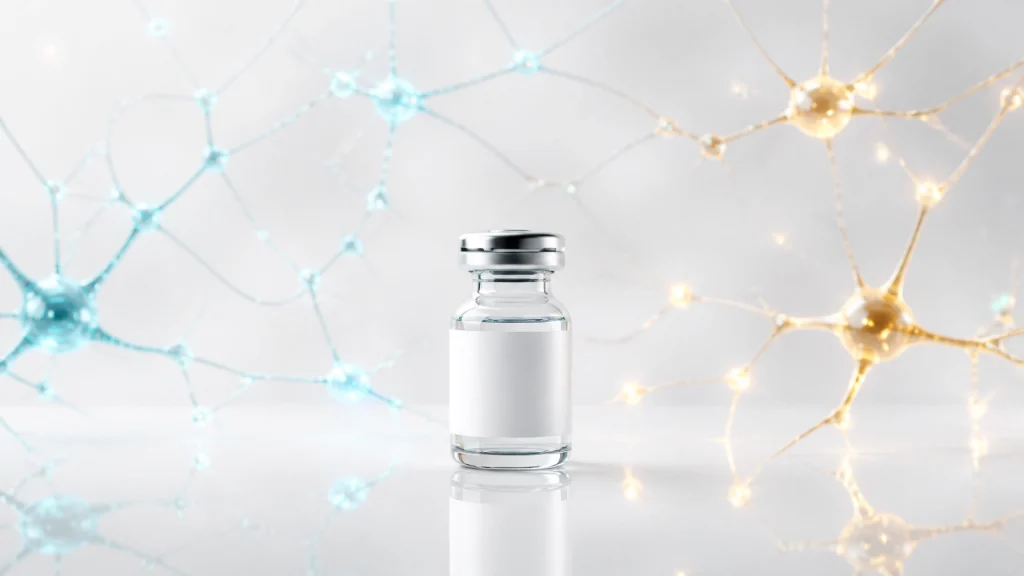
The Science of Scientific Luxury: What is FGL?
FGL is a specialized 15-amino acid sequence derived from the Neural Cell Adhesion Molecule (NCAM). In the high-stakes world of neurology, NCAM is the “glue” that holds our neural circuits together. It’s a glycoprotein that sits on the surface of neurons and glia, orchestrating everything from brain morphogenesis to activity-dependent remodeling.
FGL acts as a potent FGFR1 agonist (Fibroblast Growth Factor Receptor-1). By mimicking the natural interaction between NCAM and its receptor, FGL “tricks” the brain into a state of heightened growth and repair. Think of it as a high-tech software update for your neural hardware.

Product Classification & Contents:
- Classification: NCAM Mimetic / FGFR1 Agonist.
- Sequence: 15-amino acid fragment (FG Loop).
- Format: High-purity lyophilized powder for research application.
- Synergy: Often studied alongside other Bioregulators for comprehensive systemic optimization.
Unlock Your Cognitive Potential: Synaptic Plasticity
The term “synaptic plasticity” refers to the ability of the brain to change and adapt in response to experience. It’s the physiological basis for learning and memory. FGL research has shown that this peptide doesn’t just sit there, it actively builds better bridges between your neurons.
Revolutionize Transmission
Research indicates that FGL facilitates Long-Term Potentiation (LTP). This is the process by which synaptic connections become stronger with frequent activation. By engaging the NCAM–FGFR1 pathway, FGL enhances both the presynaptic release of neurotransmitters and the formation of new synapses.
In simple terms? It’s like upgrading from a dial-up connection to high-speed fiber optics for your thoughts.

