
The Problem: Biological Stagnation
As we cross the threshold of our 30s and 40s, a process called sarcopenia (age-related muscle loss) begins to take hold. Your muscles lose their “satellite cells”: the tiny repair crews responsible for fixing tears after a workout. At the same time, your heart may undergo cardiac hypertrophy, where the muscle walls thicken and become stiff, making it harder to pump blood effectively.
If you feel like your recovery time has doubled while your energy has halved, you are experiencing biological stagnation. GDF-11 offers a tiered strategy to resolve these frustrations by re-activating the youthful signaling pathways that have gone dormant.
Muscle Regeneration: The Renovation Crew
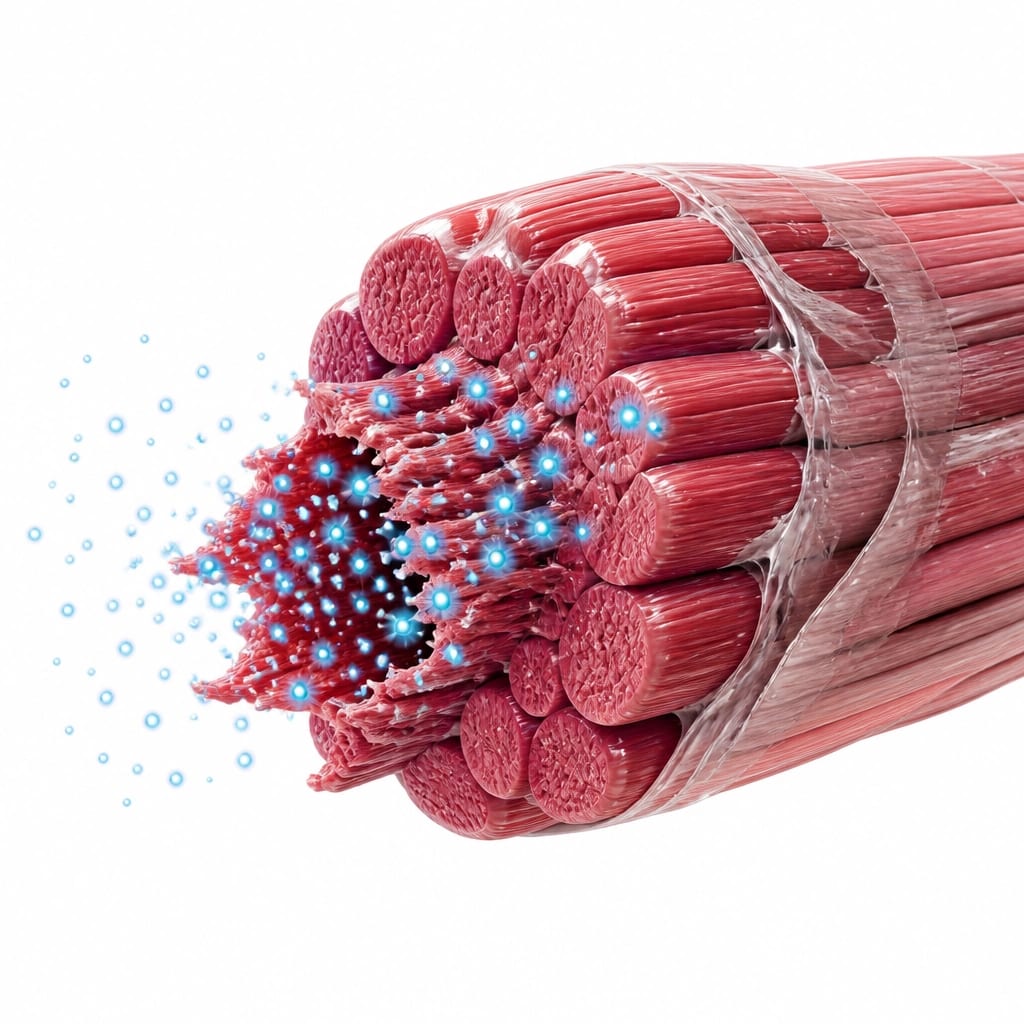
Focus on your muscle tissue as a house that hasn’t been renovated in decades. In a young body, satellite cells are like a professional renovation crew, constantly patching drywall and reinforcing the foundation. As GDF-11 levels decline, this crew goes on an indefinite lunch break.
GDF-11 acts as the whistle that calls the crew back to work. Research indicates that GDF-11 can:
- Restore Satellite Cell Function: It re-activates the stem cells in your muscles, allowing for faster repair of myofibers.
- Improve Myofiber Size: By signaling the growth of new muscle fibers, it helps reverse the thinning associated with age.
- Enhance Strength and Endurance: A body that repairs itself faster can perform longer and harder.
You can think of this as upgrading your body’s “repair and maintenance” budget. When you combine GDF-11 with high-quality recovery agents like the TB-500 Fragment, you create a synergy that maximizes tissue integrity.
[INSERT VIDEO PLACEHOLDER: HOW GDF-11 REPAIRS MUSCLE TISSUE]
