
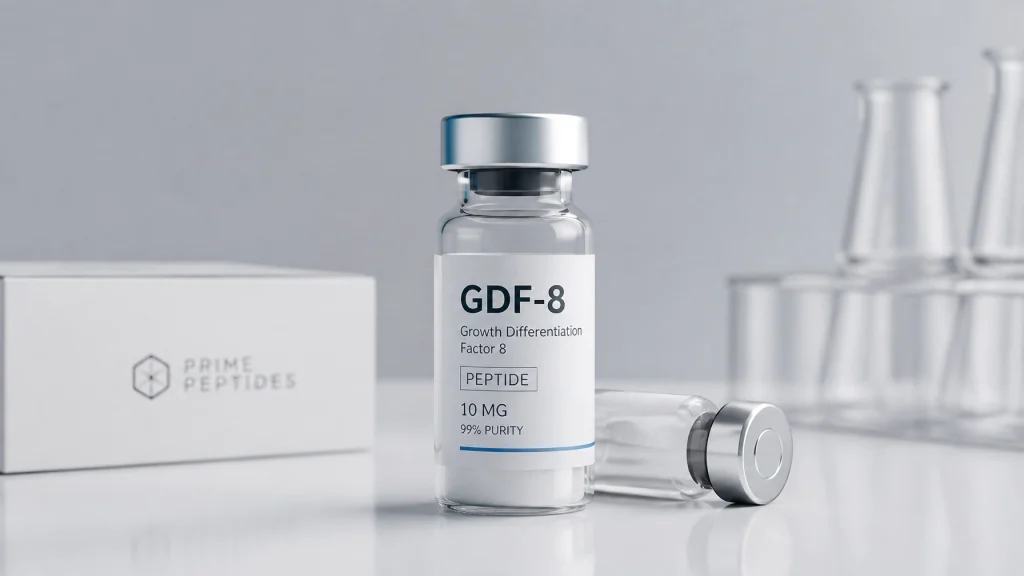
The Biological Governor: What is GDF-8?
GDF-8 (Growth Differentiation Factor 8) is a member of the TGF-beta superfamily of proteins. In simpler terms, it is a cytokine produced primarily in skeletal muscle cells that acts as a negative regulator. Its job? To ensure you don’t grow too much muscle.
While that might sound counter-productive to your goals, it was essential for our ancestors. Muscle is metabolically expensive; it requires massive amounts of calories to maintain. GDF-8 ensured humans didn’t carry more mass than they could fuel during times of scarcity. But in the modern era of metabolic research, “unlocking” this restriction has become a primary focus for researchers looking to combat muscle wasting, aging, and metabolic dysfunction.
How it Works: The Myostatin Pathway
GDF-8 works by binding to specific receptors, primarily the Activin type IIB receptor (ActRIIB). Once bound, it triggers a signaling cascade that halts the proliferation of myoblasts (the precursor cells that become muscle fibers).
When GDF-8 levels are high, muscle growth is stagnant. When they are low, or successfully inhibited, the biological brakes are released.
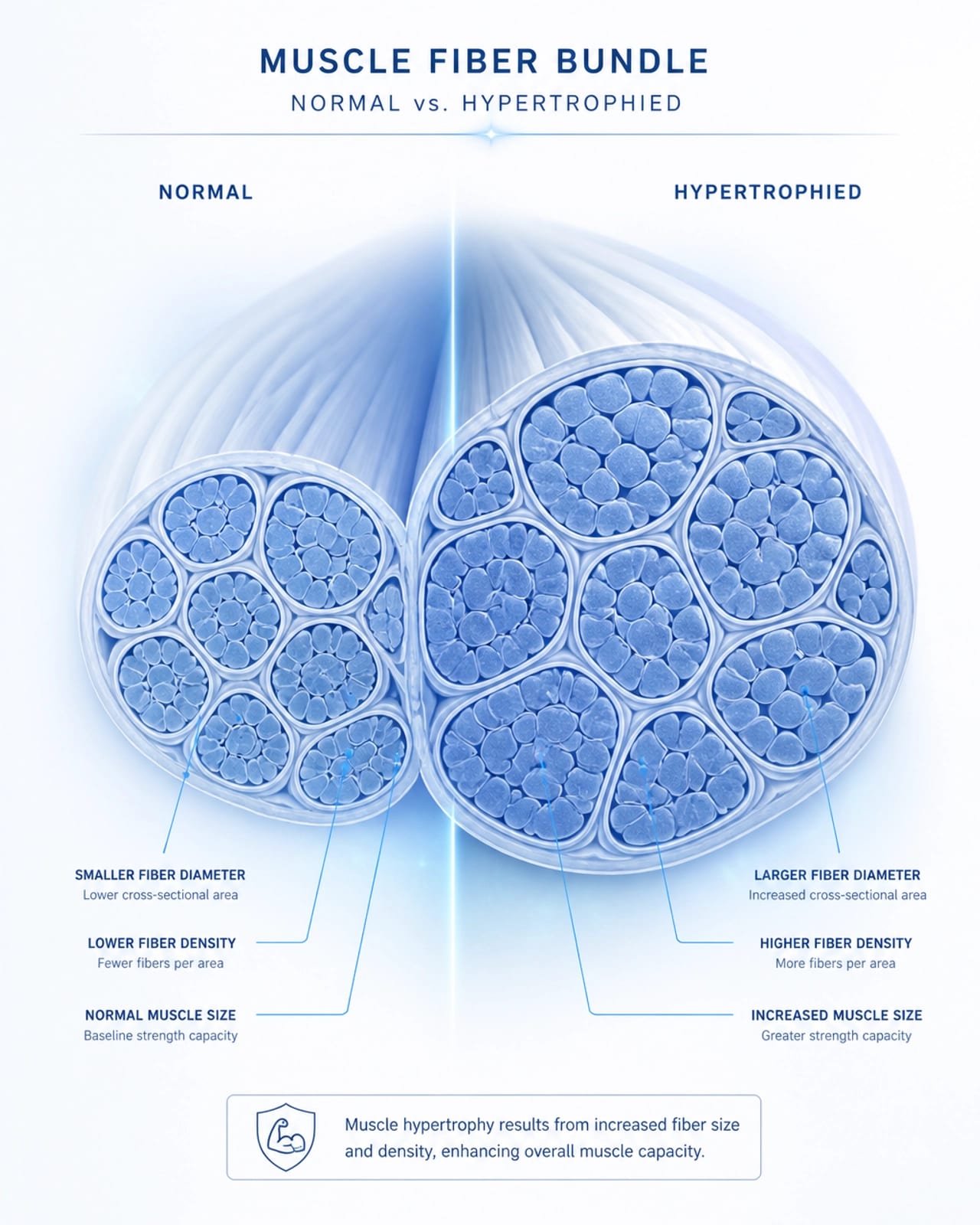
Revolutionize Your Reserch: Myostatin Inhibitors
To bypass this biological barrier, scientists have developed a range of compounds designed to intercept GDF-8 before it can bind to its receptor. At WLA, we provide access to the leading synthetic compounds utilized in this specific field of study.
1. ACE-031: The Soluble Receptor Trap
ACE-031 is a fusion protein that acts as a “decoy” receptor. It is essentially a soluble version of the ActRIIB receptor. When introduced into a research environment, GDF-8 binds to the ACE-031 molecules instead of the actual receptors on the muscle cells.
- Scientific Classification: ActRIIB-Fc fusion protein.
- Physical Contents: Lyophilized powder (1mg).
- Primary Function: Neutralization of myostatin and related ligands to facilitate hypertrophy.
2. Follistatin: The Natural Antagonist
Follistatin is a naturally occurring glycoprotein that is perhaps the most famous myostatin inhibitor. It doesn’t just block GDF-8; it also regulates other growth factors like activin. Research suggests that Follistatin can significantly shift the balance toward muscle protein synthesis.
3. ACE-083: Localized Inhibition
Unlike systemic inhibitors, ACE-083 is designed for localized action. This makes it a fascinating tool for researchers looking to observe the effects of myostatin regulation on specific muscle groups without affecting the entire systemic environment.
